Introduction
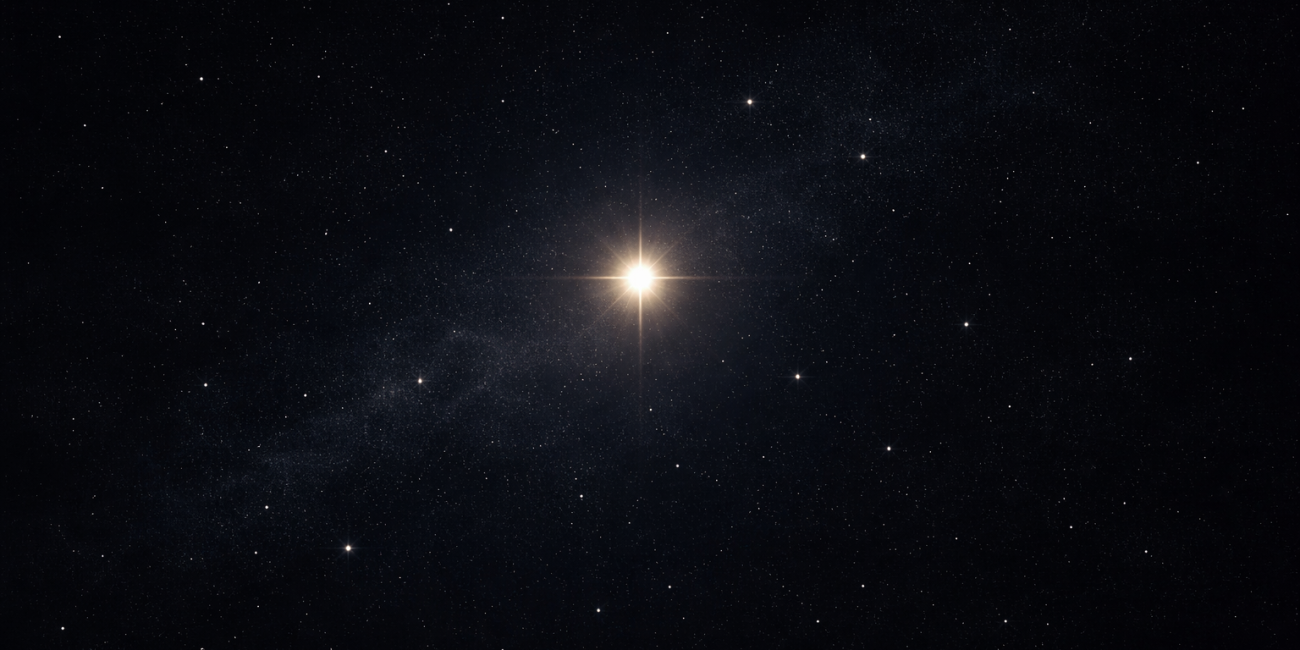
In the vast expanse of the cosmos, few mysteries challenge our understanding of time and creation as profoundly as the Methuselah star, also known as HD 140283. Located about 190 light-years away from Earth, this ancient star has puzzled astronomers for decades. Its estimated age appears to rival — and even surpass — the age of the universe itself. This paradox has made the Methuselah star a symbol of cosmic wonder and scientific curiosity.
Discovery and Early Studies
The Methuselah star was first identified in the early 20th century through spectroscopic surveys. Its unusual chemical composition — extremely low in metals — immediately caught the attention of astronomers. Metal-poor stars are rare in our galactic neighborhood, and they often signal formation in the earliest epochs of the universe. Over time, HD 140283 became a benchmark object for studying stellar evolution and galactic history.
What Is the Methuselah Star?
HD 140283 is a subgiant star in the constellation Libra. Unlike younger stars such as our Sun, it contains very few elements heavier than hydrogen and helium. This suggests it formed shortly after the Big Bang, before successive generations of stars enriched the cosmos with heavier elements. Its brightness and distance make it relatively easy to study, offering astronomers a rare window into the early universe.
Age estimates place Methuselah at around 12 billion years, though earlier studies suggested up to 14.5 billion years. Since the universe itself is thought to be 13.8 billion years old, this raised a profound paradox: could a star be older than the universe?
How Astronomers Measure Stellar Ages
Determining the age of a star is complex. Astronomers rely on several methods:
- Parallax measurements: Precise distance calculations allow scientists to determine intrinsic brightness.
- Spectroscopy: By analyzing light, astronomers measure chemical composition and temperature.
- Stellar evolution models: Comparing observed properties with theoretical models helps estimate age.
Small uncertainties in these methods can lead to large differences in age estimates. For Methuselah, refinements in parallax data from the Hubble Space Telescope helped reduce its estimated age to about 12 billion years, resolving much of the paradox but leaving it among the oldest known stars.
Comparisons with Other Ancient Stars
Methuselah is not alone in its ancient status. Other stars, such as SMSS J031300.36−670839.3 in the Milky Way halo, also show signs of extreme age. Globular clusters, dense groups of stars orbiting our galaxy, contain populations nearly as old as the universe itself. Yet Methuselah stands out because it is relatively close to Earth, making it easier to study in detail.
The Star That Defies Time
The Methuselah star earned its nickname because it seems to defy time itself. If it truly were older than the universe, it would force scientists to rethink the Big Bang model. While most agree the star is not literally older than the cosmos, its extreme age makes it a living fossil of the early universe, a reminder of how much we still have to learn.
Implications for Cosmology
The paradox of Methuselah’s age has profound implications. If age estimates were correct at 14.5 billion years, it would challenge the Big Bang theory and force a reevaluation of cosmic timelines. Even at 12 billion years, the star provides critical evidence about early star formation, galactic evolution, and the chemical history of the universe. It underscores the importance of refining models and measurements to better understand our cosmic origins.
Cultural Resonance and Cosmic Wonder
Beyond science, Methuselah captures the human imagination. The idea of a star older than the universe resonates with our fascination for ancient relics and timeless mysteries. It symbolizes endurance, survival, and the vastness of cosmic time. For storytellers, educators, and dreamers, Methuselah is a reminder that the universe is full of wonders waiting to be uncovered.
Future Research
Upcoming telescopes such as the James Webb Space Telescope (JWST) and the Extremely Large Telescope (ELT) will provide even more precise data on ancient stars. These instruments may refine Methuselah’s age further, confirm its chemical composition, and reveal new insights into the earliest epochs of star formation. As technology advances, the mystery of Methuselah may finally be resolved — or deepened.
Scientific Debates and Ongoing Questions
The Methuselah star continues to spark debates among astronomers and cosmologists. Some researchers argue that uncertainties in stellar models mean its age could still be slightly overestimated. Others suggest that the star’s unusual chemical composition may point to unique formation conditions in the early universe. These discussions highlight the dynamic nature of science: every new measurement refines our understanding, but also opens new questions. The Methuselah paradox reminds us that cosmic history is not a closed book, but a story still being written with each discovery.
YouTube Shorts
Conclusion
The Methuselah star remains one of astronomy’s most fascinating enigmas. Whether it is 12 billion years old or slightly more, it stands as a cosmic time capsule, offering a glimpse into the earliest chapters of existence. For scientists, it’s a challenge to refine models and measurements. For dreamers, it’s a reminder that the universe is full of mysteries waiting to be uncovered.