Introduction
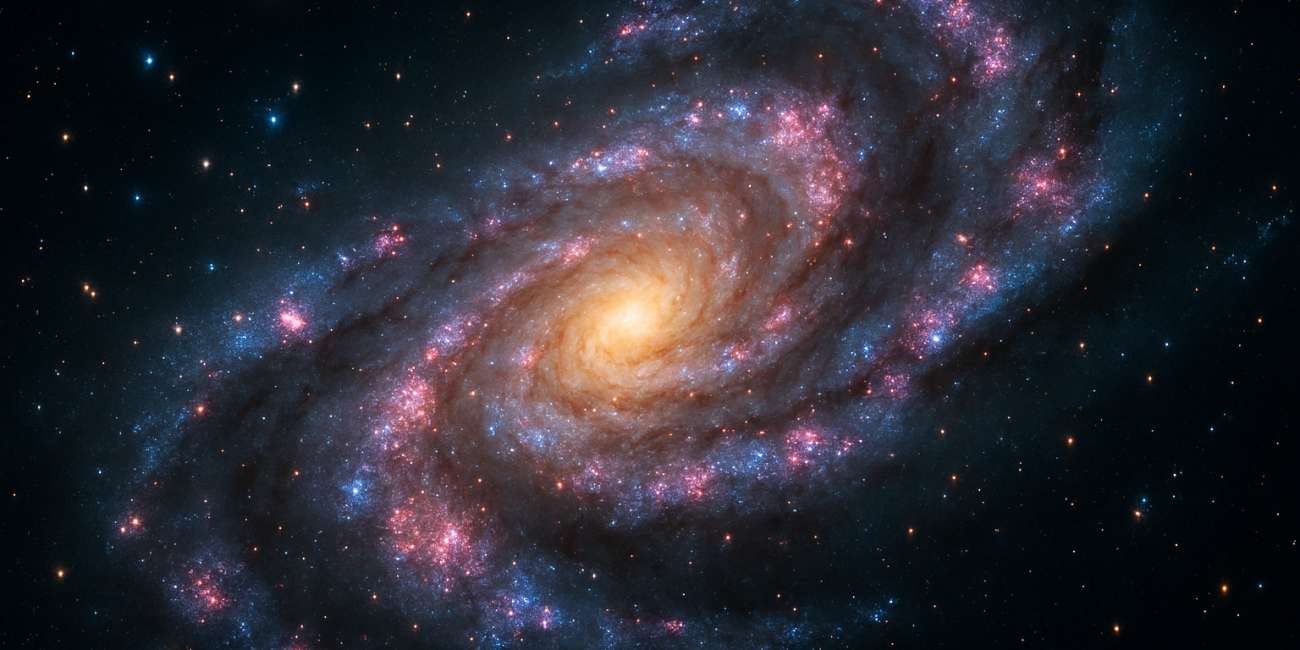
Astronomers using the James Webb Space Telescope have unveiled a spectacular spiral galaxy located 65 million light-years away. This galaxy is glowing with stellar nurseries—regions where new stars are actively forming. The discovery highlights the dynamic and evolving nature of galaxies, reminding us that the universe is far from static.
The James Webb Space Telescope’s infrared vision revealed glowing dust clouds and strands of gas tracing the galaxy’s spiral arms. These details show how galaxies recycle material, turning interstellar gas into new generations of stars. This discovery offers a live view of star birth processes and cosmic evolution.
Why This Galaxy Matters
At 65 million light-years, this galaxy is close enough for Webb to capture extraordinary detail. The light we see today began its journey when dinosaurs still roamed Earth, linking cosmic history with our planet’s past. Its spiral arms are dotted with stellar nurseries, making it a living laboratory for understanding how galaxies evolve. For astronomers, this proximity provides a rare opportunity to study star formation in real time, offering insights into how galaxies sustain themselves across billions of years.
The discovery also emphasizes the importance of Webb’s mission. By observing galaxies at different distances, scientists can compare nearby galaxies like this one with ancient galaxies billions of light-years away. This comparison helps trace how star formation has changed across cosmic time, revealing the broader story of the universe’s evolution.
The Science of Stellar Nurseries
Stellar nurseries are dense regions of gas and dust where gravity pulls material together until nuclear fusion ignites, creating new stars. In this galaxy, Webb’s instruments revealed warm dust clouds glowing in infrared light, clumps of gas collapsing under gravity, and bright knots of newborn stars illuminating their surroundings. These nurseries are crucial for understanding the life cycle of galaxies—how they grow, age, and recycle material.
The process begins when interstellar gas cools and condenses. As gravity takes over, the material collapses into dense cores. When the pressure and temperature reach critical levels, nuclear fusion ignites, and a star is born. Webb’s infrared vision allows scientists to peer through the dust that usually hides these early stages, giving us a direct view of stellar birth. This makes discoveries like this galaxy invaluable for both astrophysics and cosmology.
Galaxies in Motion
Galaxies are not static islands of stars. They interact, collide, and evolve. Discoveries like this show that even “quiet” spiral galaxies are sites of intense activity. By comparing nearby galaxies with distant ones billions of light-years away, astronomers can trace how star formation has changed across cosmic time. This helps answer fundamental questions: How do galaxies grow? How do they recycle material? And how does star formation influence the larger structure of the universe?
In the case of this spiral galaxy, Webb’s observations reveal a balance between stability and change. While its spiral arms maintain a recognizable structure, the star-forming regions within them are dynamic, constantly reshaping the galaxy’s appearance. This duality—order and chaos—captures the essence of cosmic evolution.
Public Engagement: Why It Resonates
Space discoveries captivate audiences because they connect science with wonder. The idea that light from this galaxy began its journey when dinosaurs roamed Earth sparks imagination. For educators, science communicators, and enthusiasts, this discovery is a perfect example of how astronomy bridges deep time and human curiosity. It reminds us that the universe is not just a backdrop but an active participant in the story of existence.
Cosmic A2Z’s mission is to make these discoveries accessible to everyone. By presenting updates in engaging formats—whether through YouTube Shorts, articles, or social media—we ensure that cosmic knowledge reaches audiences worldwide. This galaxy’s story is not just about science; it’s about inspiring wonder and sparking curiosity in the next generation of explorers.
Conclusion: The Universe Alive with Stars
The James Webb Space Telescope continues to transform our understanding of the cosmos. This spiral galaxy, glowing with newborn stars, is a reminder that galaxies are living systems, constantly evolving and reshaping themselves. Each discovery adds a new chapter to the story of the universe, showing us that cosmic evolution is ongoing and vibrant.
Cosmic A2Z will keep bringing you Daily Cosmic Updates, ensuring you never miss the latest wonders of the universe. From star birth to cosmic collisions, the universe is alive—and we’re here to share its story.