Blue Sunsets, White Suns, and Alien Skies: What Sunsets Look Like Across the Solar System
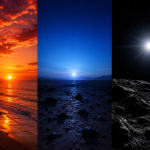
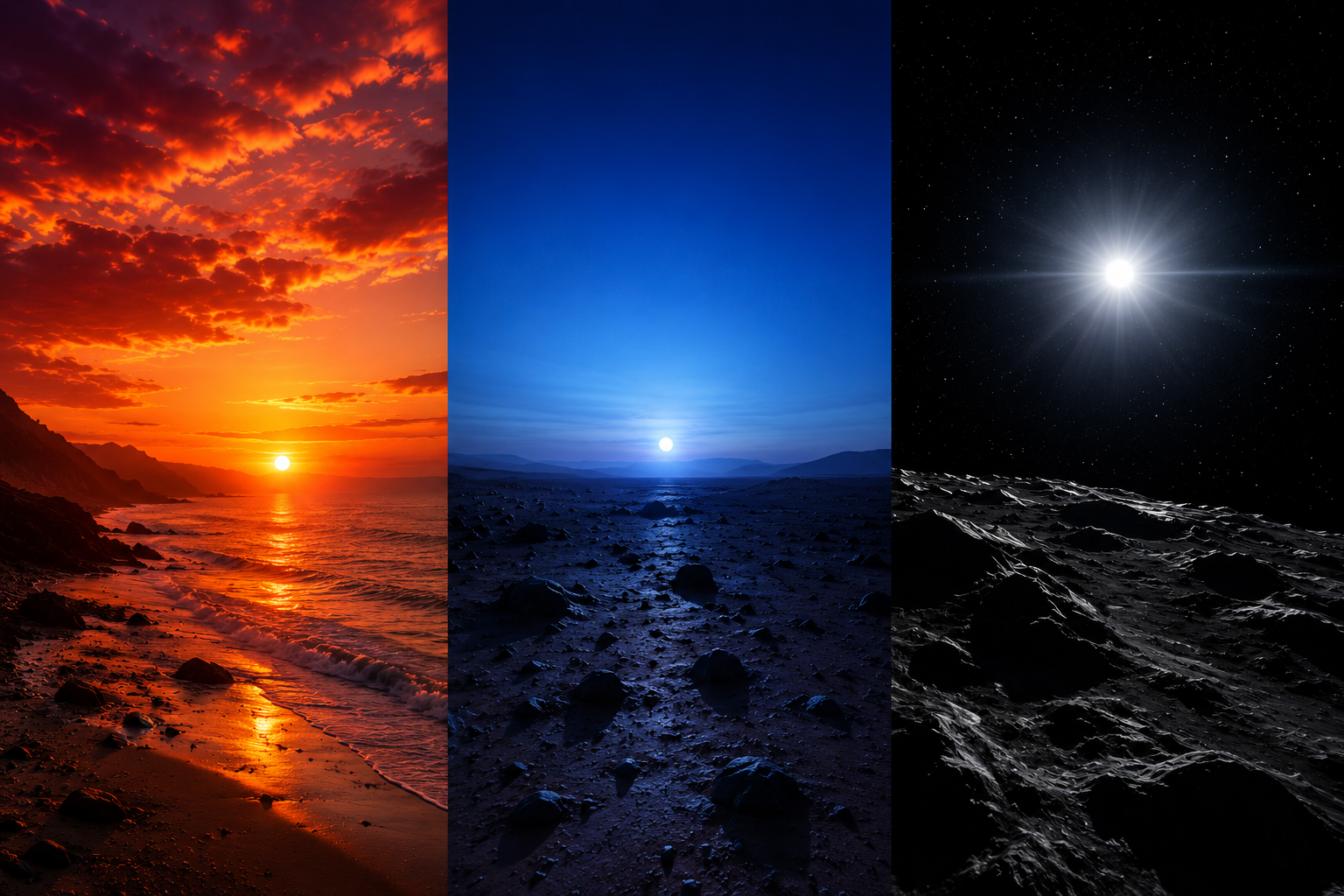
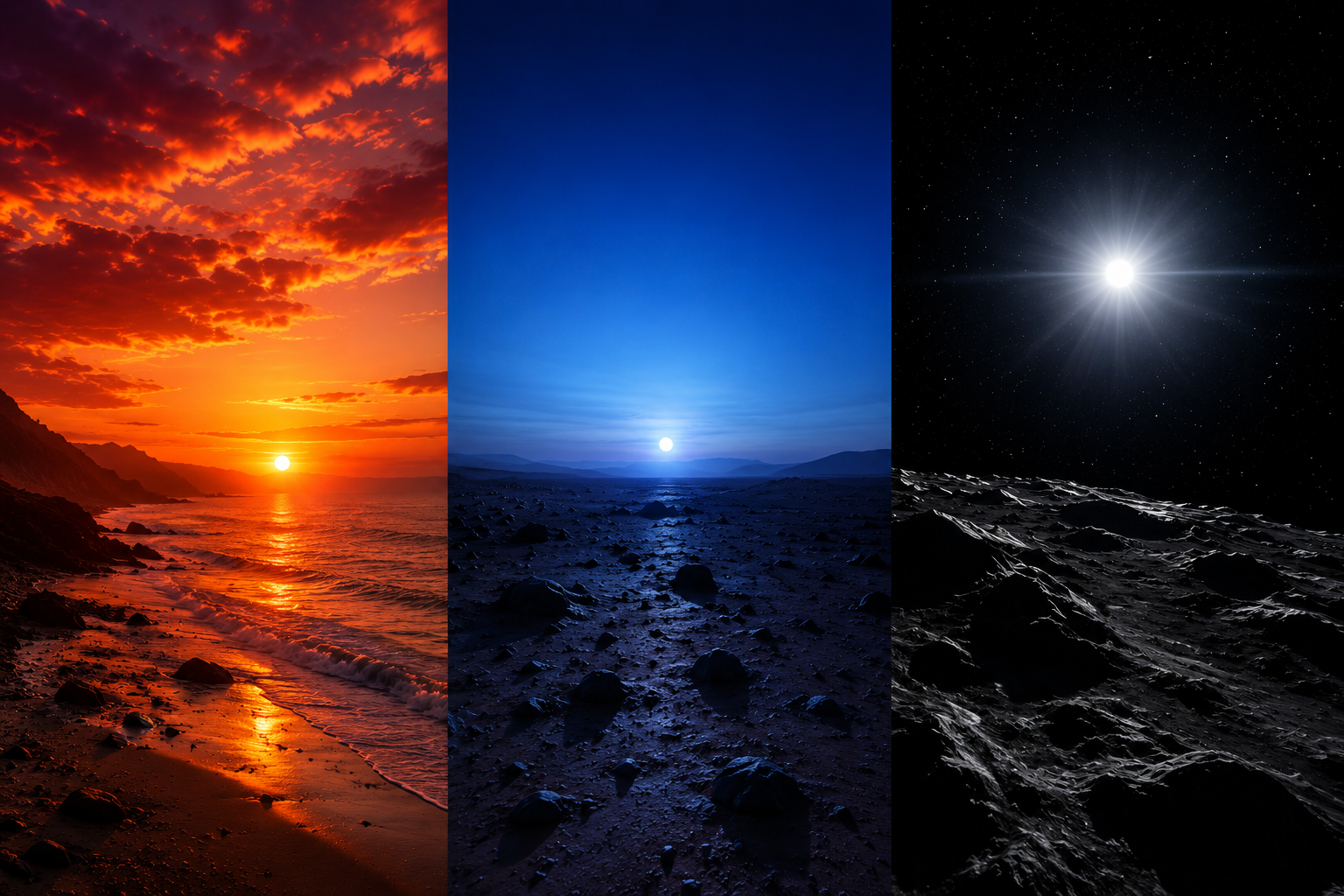
On Earth, sunsets glow red. On Mars, they turn blue. In space, the Sun shines white. But what about the rest of the Solar System?
Imagine Standing on Another World
It's evening.
You look toward the horizon as the Sun slowly sinks below distant mountains.
On Earth, the sky erupts into shades of orange, gold, and crimson. The moment feels familiar because humans have watched it for thousands of years.
But if you were standing on Mars, the sunset would surprise you.
Instead of red and orange, a soft blue glow would surround the setting Sun.
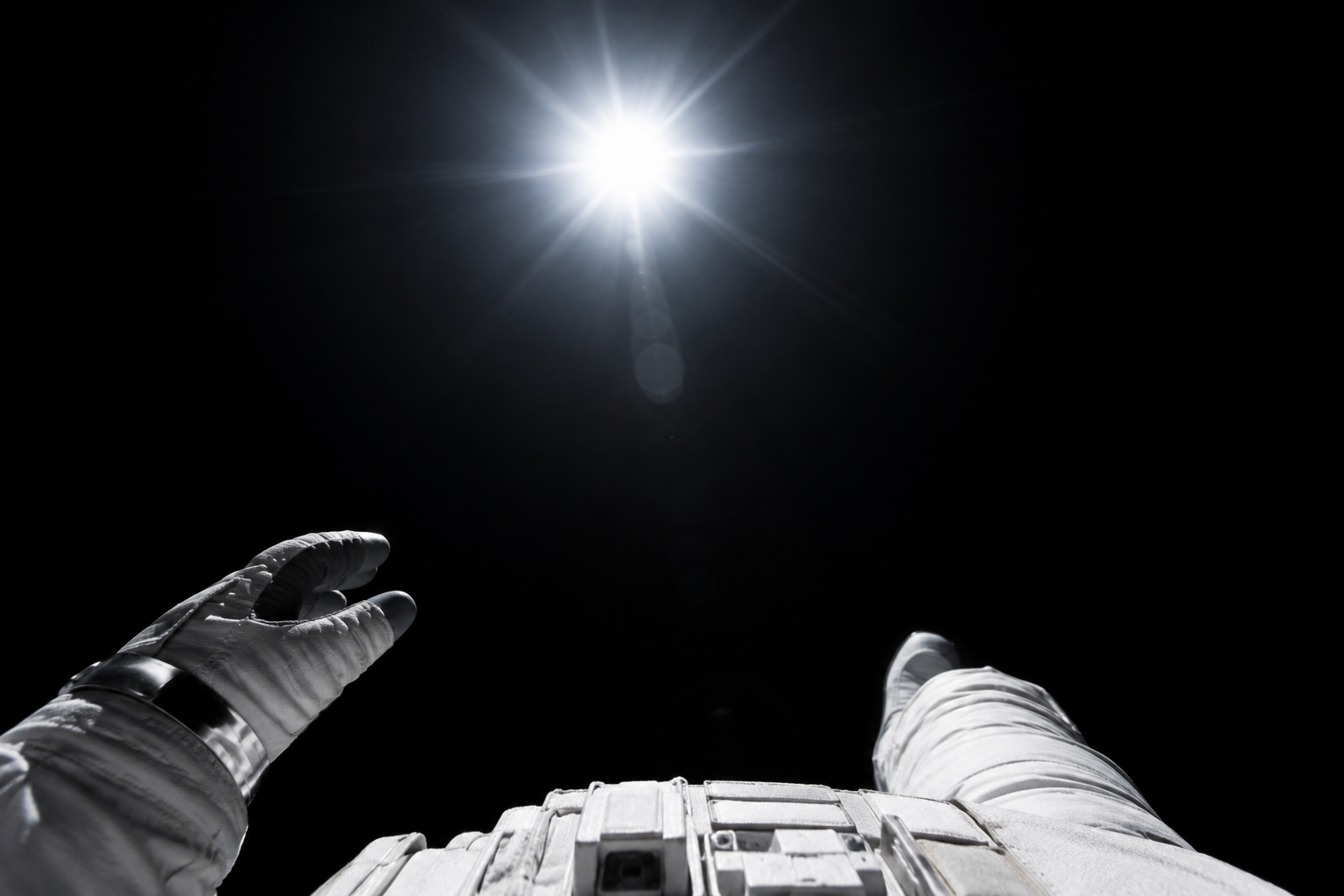
And if you were floating in space above any atmosphere at all, the Sun would appear white.
The deeper scientists explore the Solar System, the more they discover that sunsets are not universal. Every world paints the sky differently.
Understanding those differences reveals something remarkable: a planet's atmosphere can completely transform the color of its sky.
Why Earth Has Red and Orange Sunsets
Most people assume the Sun is yellow.
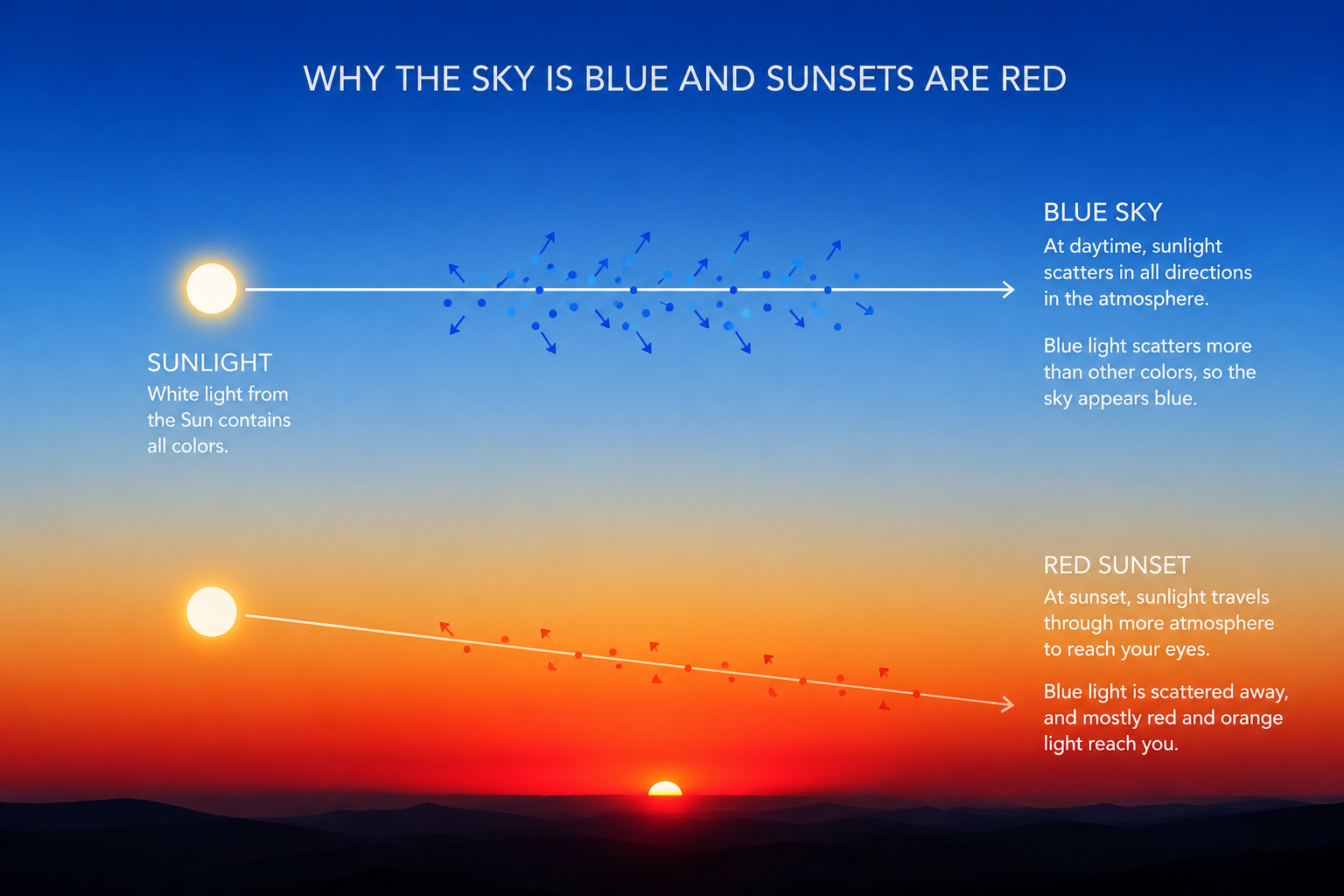
In reality, sunlight contains all visible colors mixed together, which appears white. Earth's atmosphere changes what we see. NASA explains that shorter blue wavelengths scatter more easily through the atmosphere, leaving more red and orange light visible when the Sun is near the horizon.
During sunset, sunlight travels through a much thicker layer of air.
As blue light scatters away, the remaining light becomes increasingly orange and red.
That is why:
- Midday Sun appears yellowish-white
- Sunrise appears orange
- Sunset appears deep red
The colors we love are actually created by Earth's atmosphere rather than the Sun itself.
Mars: The Planet with Blue Sunsets
Now travel nearly 225 million kilometers from Earth.
Mars is famous for its rusty red landscapes, so most people expect red sunsets.
The reality is the opposite.
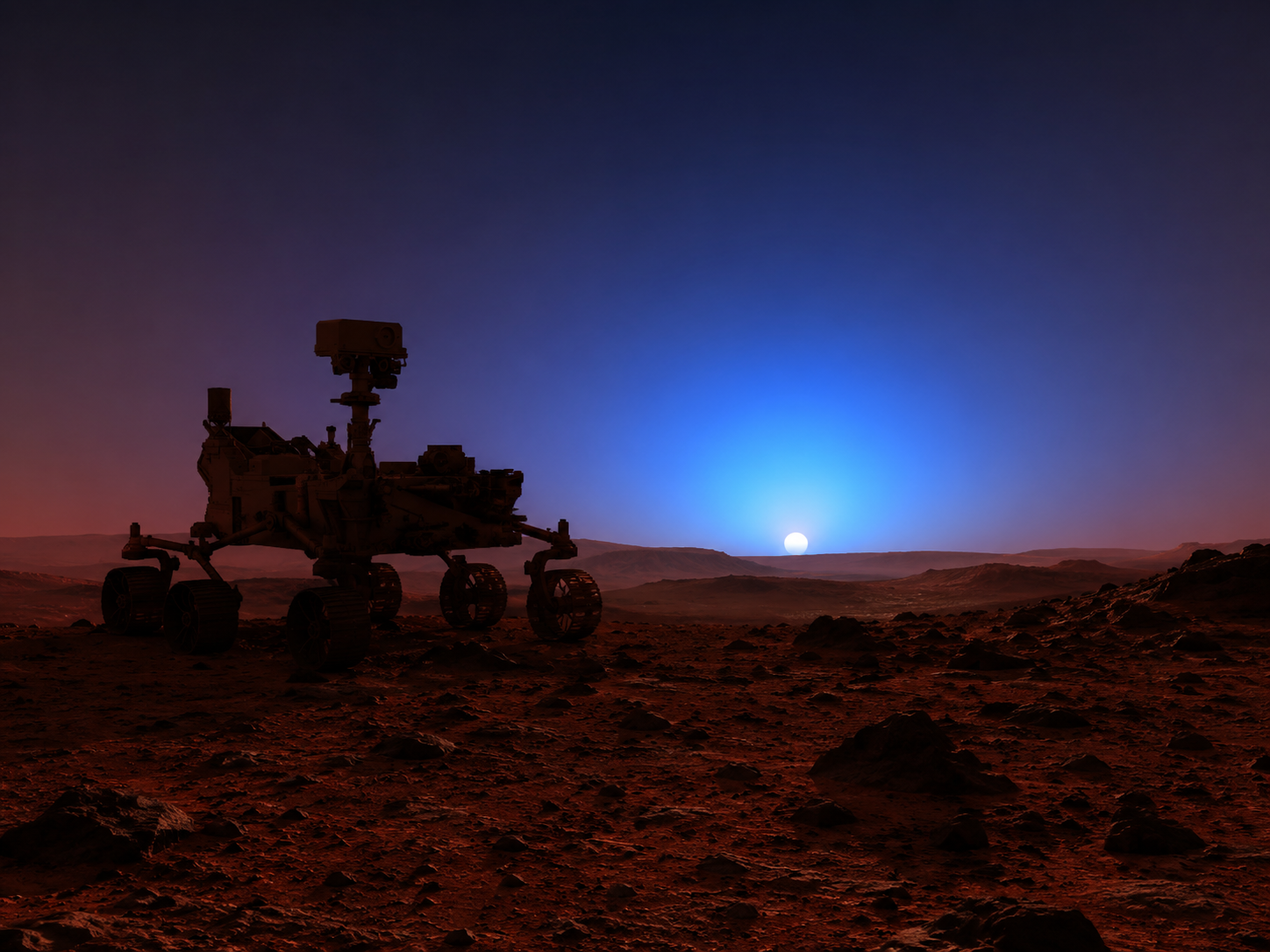
NASA rover observations show that Martian sunsets often display a distinctive blue glow around the Sun. Fine dust particles in the thin Martian atmosphere scatter light differently than Earth's atmosphere does. Blue light remains concentrated near the setting Sun while other colors spread across the sky.
Imagine standing beside the Perseverance rover.
The dusty landscape glows reddish-brown.
The sky appears butterscotch during the day.
Then sunset arrives.
A blue halo emerges around the Sun, creating one of the strangest and most beautiful scenes in the Solar System.
Scientists study these sunsets because they reveal information about Martian dust and weather patterns.
Space: The Sun's True Color
Astronauts aboard spacecraft often report something unexpected.
The Sun looks white.
Without an atmosphere to scatter light, the Sun's full spectrum reaches your eyes directly. NASA explains that sunlight is essentially white when viewed from space.
This surprises many people because books, cartoons, and weather icons usually show a yellow Sun.
In reality:
- Earth atmosphere → Sun appears yellowish
- Sunrise and sunset → Sun appears orange/red
- Space → Sun appears white
The Sun itself has not changed.
Only the viewing conditions have.
What Would Sunsets Look Like on Other Worlds?
Scientists can make educated predictions based on atmospheric composition.
Some worlds would offer views unlike anything seen on Earth.
Venus: A Sunset Hidden Behind Clouds
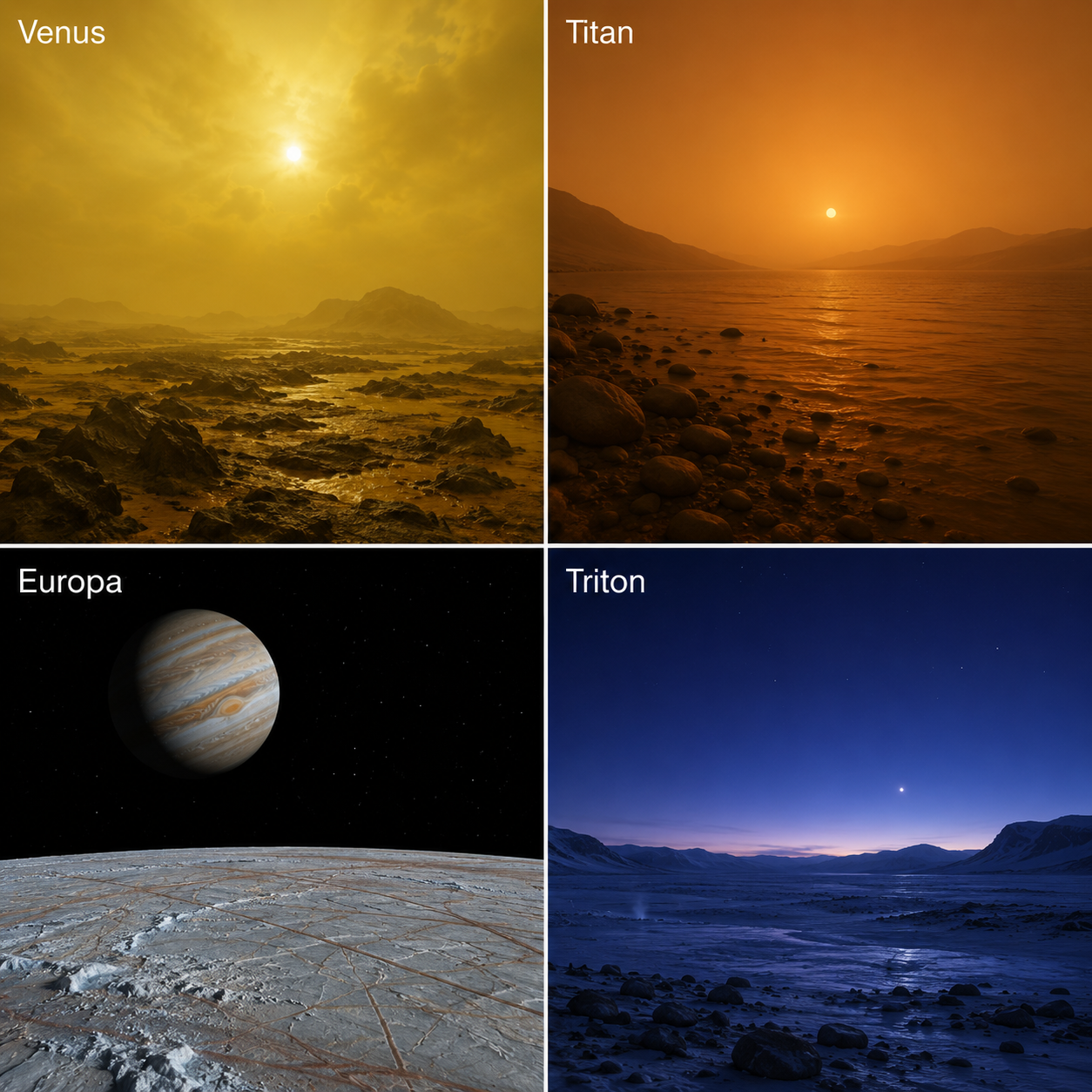
Venus possesses an atmosphere about 90 times denser than Earth's.
Thick clouds of sulfuric acid permanently cover the planet.
If you could safely stand on the surface, the Sun would appear dim and blurred.
The sky would likely glow yellowish-orange, and sunsets would be difficult to distinguish because sunlight is already heavily scattered by the dense atmosphere.
Venus may have one of the least dramatic sunsets despite being Earth's nearest planetary neighbor.
Titan: Saturn's Orange Moon
Titan, the largest moon of Saturn, has a thick nitrogen atmosphere wrapped in hydrocarbon haze.
If humans stood there, the sky would appear orange or copper-colored.
The Sun would look faint because Titan receives only about 1% of the sunlight Earth receives.
A sunset on Titan would likely occur through layers of orange haze, creating an eerie twilight unlike any place in the inner Solar System.
Europa: A Sunset Above an Ice World
Europa, one of Jupiter's major moons, has only a very thin atmosphere.
Because there is little air to scatter light, the sky would remain mostly black even during daytime.
Imagine standing on endless frozen plains.
The Sun would set against a black sky filled with stars.
Meanwhile, Jupiter would dominate the horizon as a giant striped world hundreds of times larger than Earth's Moon appears from our planet.
Triton: Neptune's Frozen Moon
Triton orbits far beyond the orbit of Neptune.
The Sun there would appear as an intensely bright star rather than a large disk.
Sunsets would be dim, cold, and blue-tinted due to the moon's thin nitrogen atmosphere and extreme distance from the Sun.
The twilight could last for a long time because sunlight is already weak at such distances.
Uranus and Neptune: The Blue Giants
These planets have atmospheres rich in methane.
Methane absorbs red wavelengths of light, which is why both worlds appear blue.
If a floating observer could witness a sunset there, the colors would likely be dominated by shades of blue and cyan.
The exact appearance remains uncertain because these are gas giants without solid surfaces, but atmospheric physics suggests very unusual sunsets compared with Earth.
The Solar System Is a Gallery of Different Skies
One of astronomy's most beautiful lessons is that sunsets are not a universal experience.
Earth's fiery sunsets come from our atmosphere.
Mars creates blue sunsets through airborne dust.
Titan bathes its landscape in orange haze.
Europa offers sunsets against a black sky.
And in space itself, the Sun reveals its true white color.
Every atmosphere tells a different story.
Every sky follows different rules.
The colors we see above our heads are not simply properties of the Sun—they are signatures of the world beneath our feet.
Watch: Alien Sunsets Across the Solar System
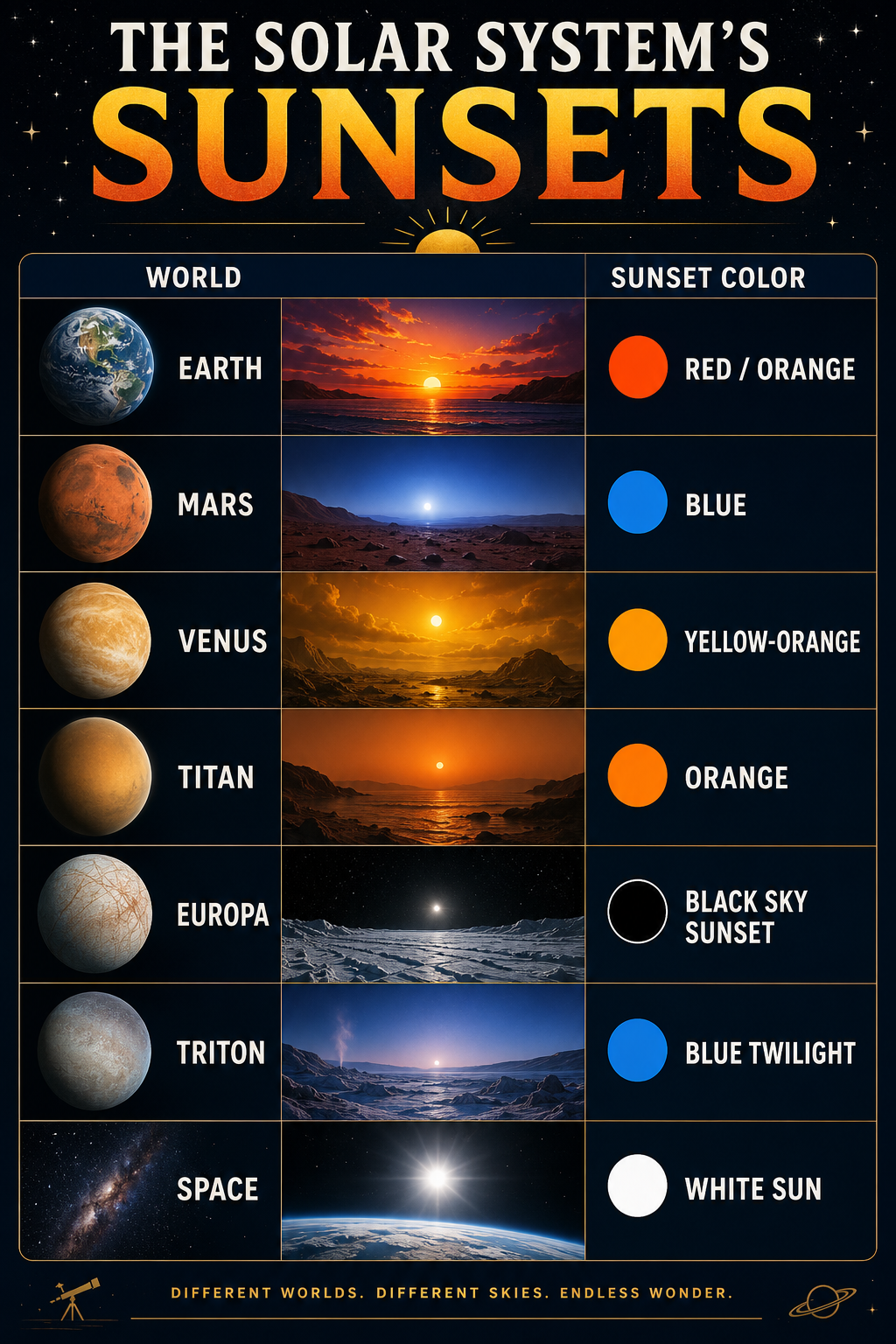
Want to see how sunsets might appear across different worlds? Explore a short visual journey through Earth's red horizons, Mars' blue twilight, and the extraordinary skies found throughout our Solar System.
30 - second visual exploration of alien sunsets and the true color of the Sun.
Conclusion
The next time you watch a sunset, remember that you are witnessing a uniquely Earthly phenomenon.
Somewhere on Mars, a blue sunset may be glowing above a dusty horizon.
Somewhere around Saturn, Titan's orange haze may be swallowing the distant Sun.
And far beyond Neptune, twilight may unfold beneath skies humans have never seen with their own eyes.
The universe doesn't just give us different planets.
It gives us different ways to experience light itself.
Sources
- NASA Science – "What Do Sunrises and Sunsets Look Like on Mars?"
- NASA Science – "What Color Is the Sun?"
- NASA Mars Rover observations and atmospheric studies
- Recent reporting on Martian blue sunsets and solar color observations