




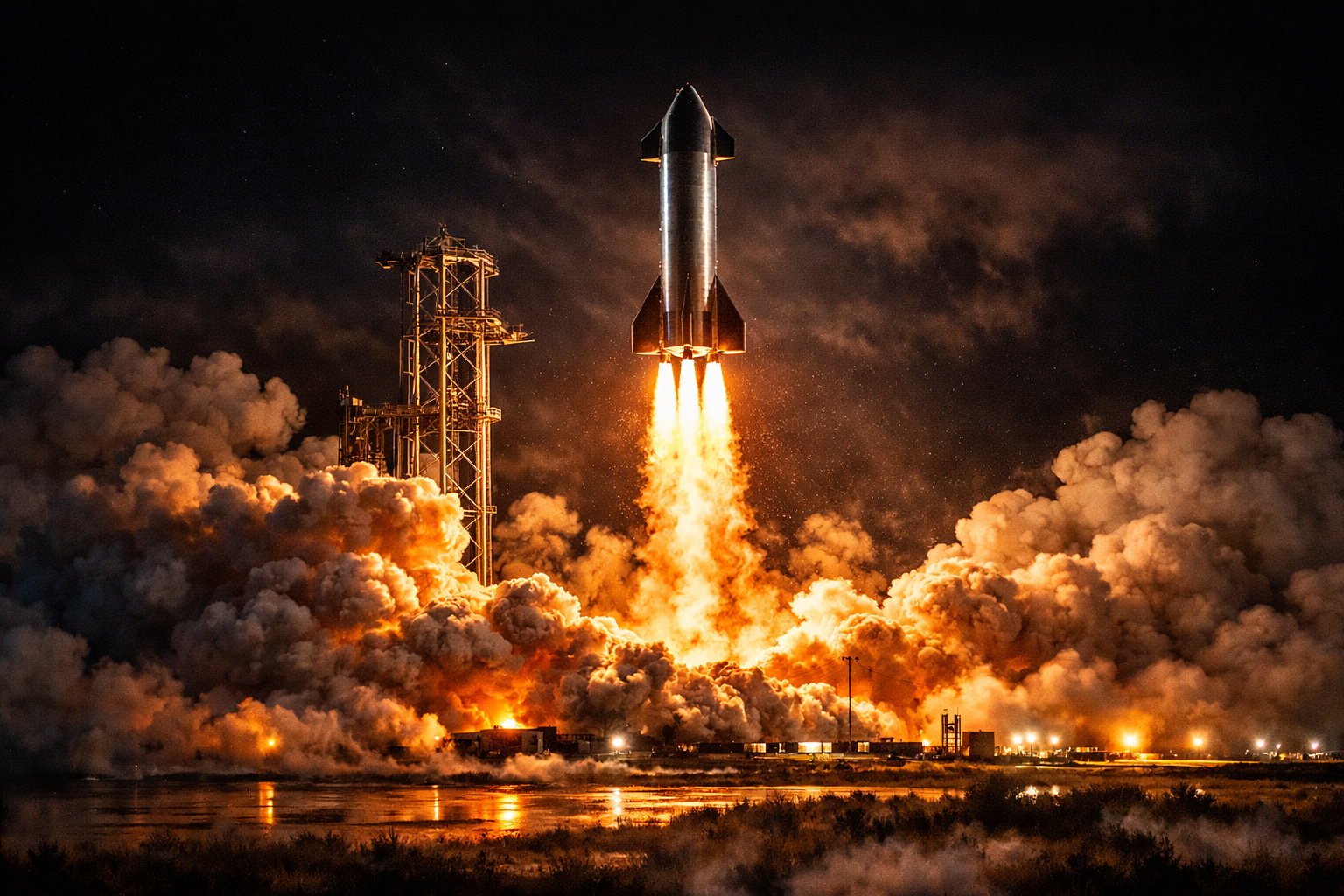
Starship V3 Fastest Test Flight — Artemis Moon Base & Shenzhou 23 Launch
Introduction
Cosmic Update – May 25, 2026 | Cosmic A2Z
Humanity’s journey into deep space has entered a dramatic new phase. Within just a few days, three historic milestones reshaped the future of space exploration: SpaceX launched the fastest and most advanced Starship test flight ever attempted, NASA prepared to unveil its long-term Artemis Moon Base strategy, and China successfully launched the Shenzhou 23 mission carrying Hong Kong’s first astronaut into orbit.
These are not isolated achievements. Together, they represent the beginning of a new era — one where nations and private companies are racing not only to explore space, but to live there permanently. The Moon is no longer just a distant destination visited briefly by astronauts. It is rapidly becoming the next frontier for human civilization, scientific discovery, resource extraction, and geopolitical influence.
For decades, deep-space exploration was slowed by enormous costs and technological limits. But reusable rockets, advanced robotics, artificial intelligence, and international competition are now accelerating progress at unprecedented speed. What once sounded like science fiction — lunar cities, industrial stations in orbit, and missions to Mars — is gradually turning into engineering reality.
The events of May 22–25, 2026, may someday be remembered as the week humanity truly committed itself to becoming an interplanetary species.
🚀 SpaceX Starship V3: The Fastest Flight Yet
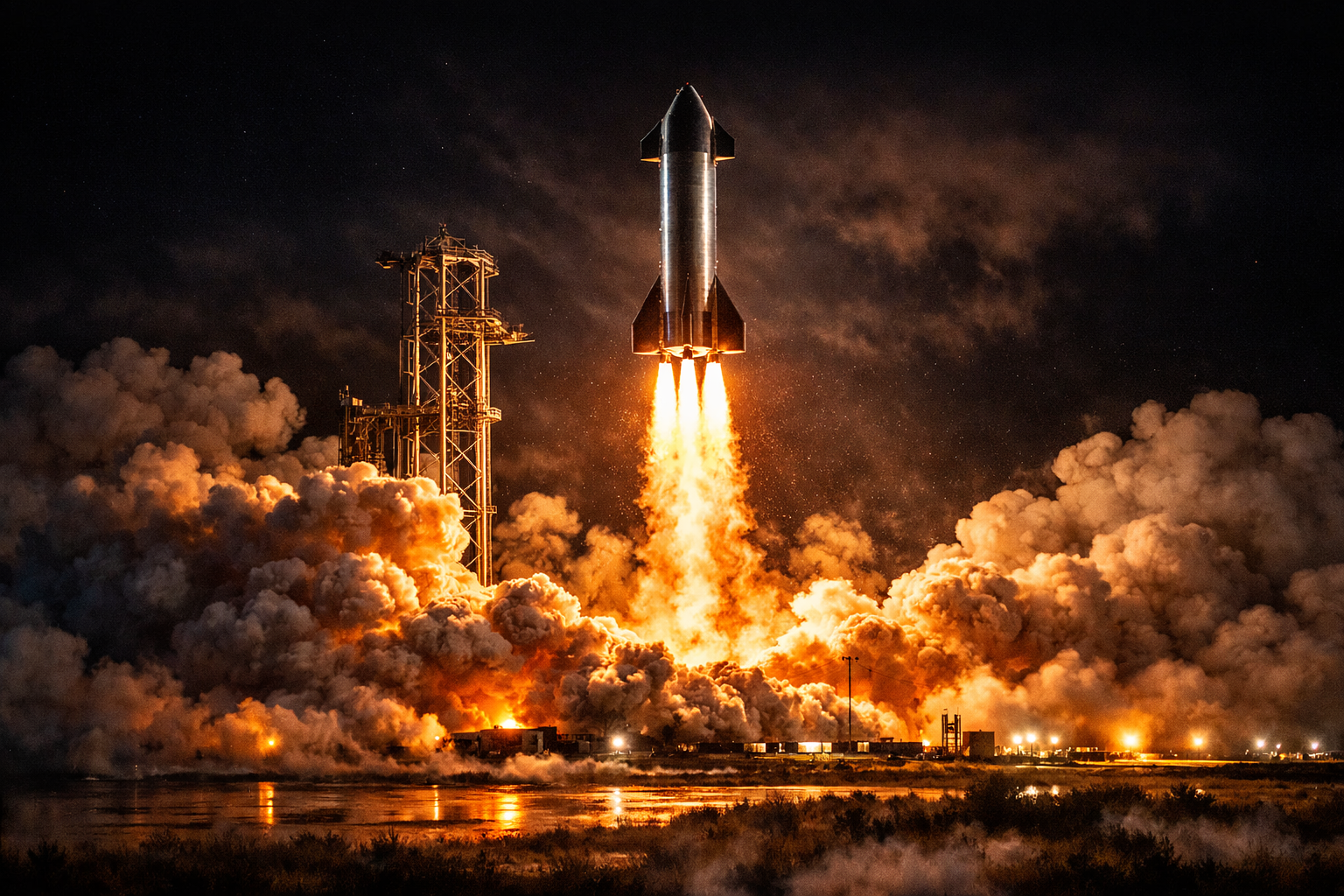
On May 22, 2026, SpaceX launched its massive Starship V3 rocket from Starbase in Boca Chica, Texas. Towering nearly 400 feet tall, Starship remains the most powerful rocket system ever built. The launch drew worldwide attention as millions watched the giant stainless-steel vehicle ignite with the thunder of all 33 Raptor 3 engines roaring simultaneously.
This mission was designed to push the limits of speed, reliability, and survivability. Unlike earlier test flights that suffered from severe technical problems, Starship V3 demonstrated major engineering improvements across nearly every stage of flight.
The Super Heavy booster lifted the rocket smoothly through the atmosphere, reaching maximum ascent velocity faster than any previous Starship test. Engineers closely monitored the upgraded engine systems, which featured improved cooling channels, stronger fuel plumbing, and more advanced onboard flight software.
One of the mission’s biggest milestones came during stage separation. In earlier flights, this critical maneuver created instability and mechanical stress. But during the V3 mission, separation occurred almost flawlessly. The upper stage continued climbing toward suborbital space while the Super Heavy booster attempted its return sequence.
Although the booster ultimately failed during reignition and was lost over the Gulf of Mexico, the mission was still widely viewed as a major success. Spaceflight experts emphasized that experimental programs depend on iterative learning, and SpaceX gathered enormous amounts of flight data that will help refine future missions.
Meanwhile, the Starship upper stage continued operating successfully despite one engine shutting down mid-flight. The vehicle maintained stability, adjusted thrust automatically, and completed simulated payload deployment exercises before splashing down in the Indian Ocean.
That resilience may be the mission’s most important achievement. Spacecraft designed for lunar and Martian travel cannot depend on perfect conditions. They must survive unexpected failures and continue functioning during extreme situations. Starship V3 proved that the system is becoming increasingly robust — exactly what NASA needs for future Artemis lunar missions.
Beyond technical achievements, the launch also demonstrated how rapidly private spaceflight has evolved. Just two decades ago, reusable heavy-lift rockets seemed nearly impossible. Today, SpaceX is testing vehicles capable of carrying over 100 tons of cargo and potentially transporting large groups of astronauts to the Moon and Mars.
Starship is more than a rocket. It is the foundation of SpaceX founder Elon Musk’s vision for a multiplanetary civilization. If the program succeeds, future generations could see fleets of Starships transporting supplies, habitats, and settlers beyond Earth.
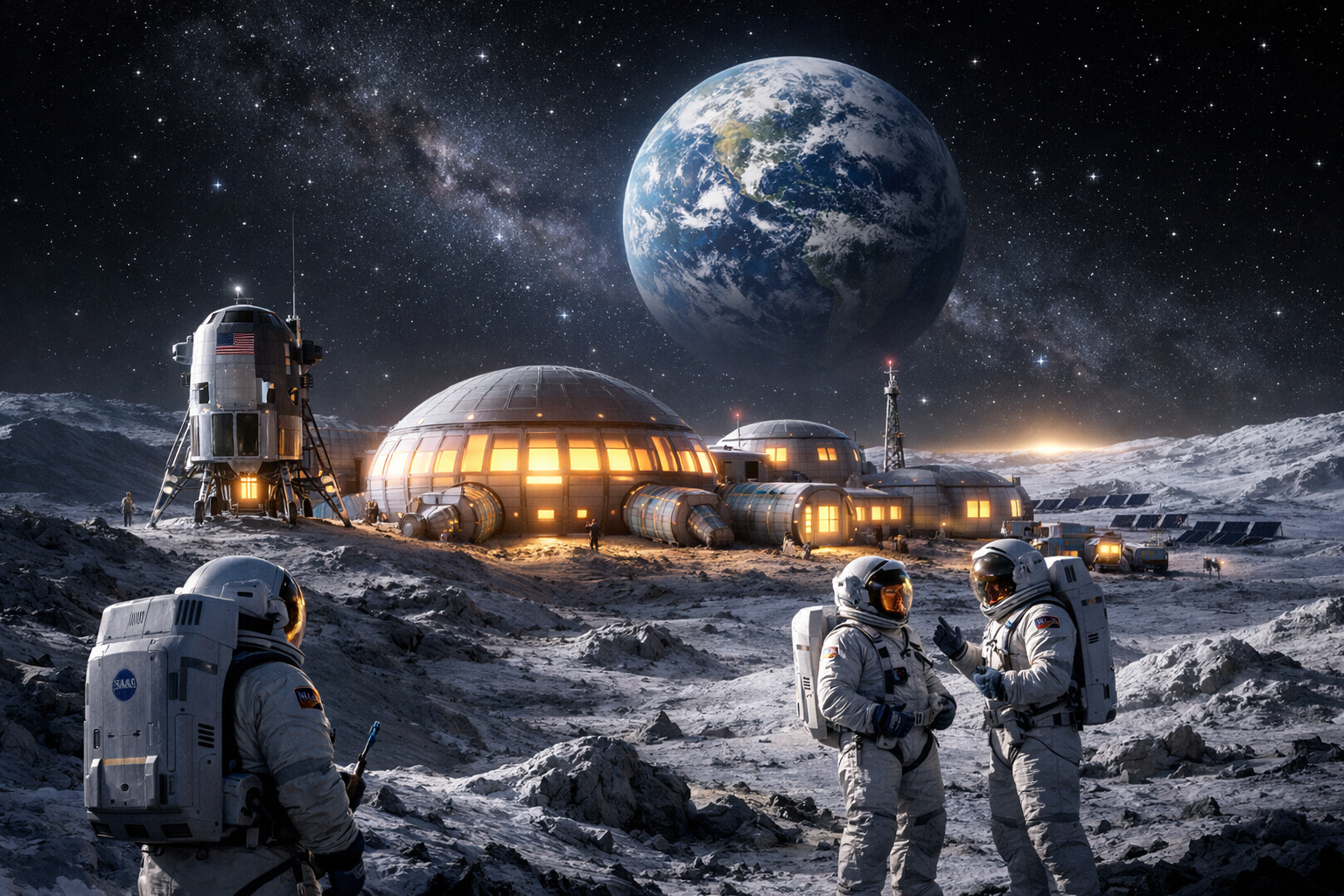
🌕 NASA’s Artemis Moon Base: Building Humanity’s First Lunar Settlement
While Starship pushes transportation technology forward, NASA is preparing the next major step: establishing a permanent human presence on the Moon.
NASA’s upcoming Artemis Moon Base strategy focuses on the lunar South Pole, one of the most scientifically valuable regions on the Moon. Unlike the dry equatorial landing zones explored during the Apollo era, the South Pole contains permanently shadowed craters believed to hold vast deposits of frozen water ice.
Water changes everything in space exploration. It can provide drinking water, breathable oxygen, and even rocket fuel through hydrogen extraction. Instead of transporting every resource from Earth at enormous expense, astronauts may eventually use local lunar materials to sustain long-term missions.
The Artemis roadmap outlines a gradual, multi-phase expansion of lunar infrastructure. The first stage involves robotic missions scouting terrain, analyzing ice deposits, and testing autonomous construction systems. Advanced rovers and AI-powered machines could begin preparing landing zones before astronauts even arrive.
The second phase introduces semi-permanent habitats powered by solar energy systems positioned near areas of near-continuous sunlight. These habitats would support rotating astronaut crews conducting geological studies, resource extraction experiments, and biological research under reduced gravity conditions.
Eventually, NASA envisions a fully operational lunar outpost functioning almost like a small scientific town. Future bases may include underground shelters for radiation protection, 3D-printed structures made from lunar soil, nuclear backup power systems, and advanced communication networks linking Earth and Moon operations in real time.
The Moon Base is not simply about prestige. It serves as a critical training ground for Mars exploration. Living on another world presents enormous challenges: isolation, radiation exposure, limited supplies, psychological stress, and extreme environmental conditions. The Moon allows scientists to study these problems relatively close to Earth before attempting the far more dangerous journey to Mars.
NASA also hopes the Artemis program will encourage international cooperation. Multiple nations and private companies are expected to contribute technologies, robotics, transportation systems, and scientific equipment. In many ways, Artemis represents the beginning of a permanent human economy beyond Earth.
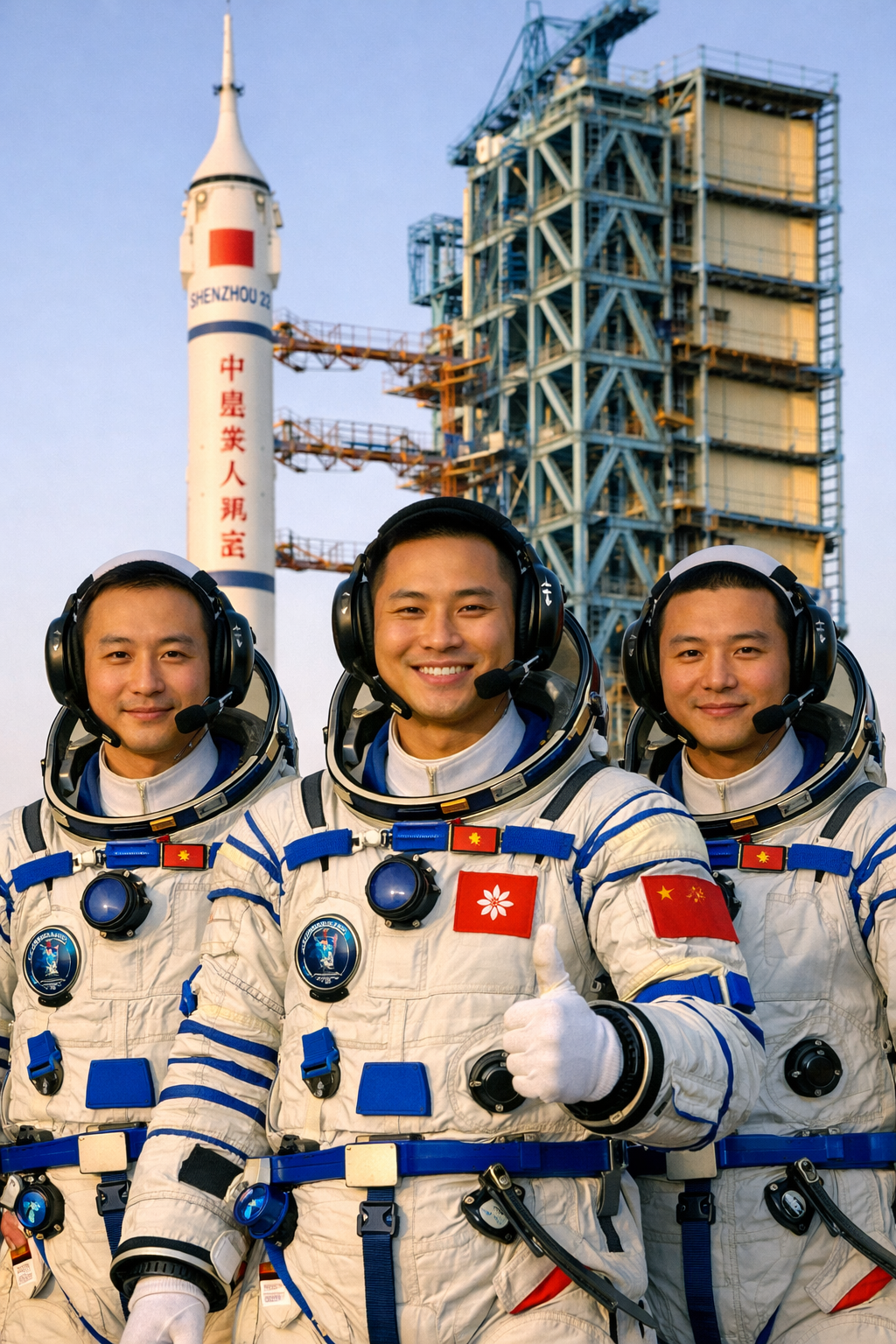
🇨🇳 China’s Shenzhou 23: Hong Kong Reaches Space
On May 24, 2026, China added another major achievement to its rapidly expanding space program with the successful launch of Shenzhou 23. The spacecraft carried three astronauts to the Tiangong Space Station, continuing China’s long-term strategy of establishing itself as a leading space power.
The mission became especially historic because one crew member, Lai Ka-ying, became the first astronaut from Hong Kong to travel into space. Her participation symbolizes the growing integration of Hong Kong into China’s national scientific and technological ambitions.
The crew will spend approximately six months aboard Tiangong, conducting experiments in medicine, life sciences, microgravity manufacturing, and materials research. One astronaut is expected to remain for a full year, marking China’s first extended-duration human spaceflight mission.
China’s space program has advanced remarkably quickly over the past two decades. Once dependent on limited technology, the country now operates its own independent space station, advanced lunar probes, Mars missions, and increasingly sophisticated launch systems.
Beijing has made no secret of its long-term ambitions. China plans to land astronauts on the Moon before 2030 and eventually establish its own lunar research base. Missions like Shenzhou 23 are essential preparation for that future. Long-duration missions help scientists understand how the human body adapts to space over extended periods — knowledge critical for deep-space travel.
The success of Tiangong also demonstrates China’s growing technological independence in orbit. While the International Space Station approaches the later stages of its operational life, Tiangong could become one of the world’s primary platforms for human space research in the coming decades.
🌍 A New Global Space Race
Taken together, these developments reveal a profound shift in human history. Space exploration is no longer dominated by a single superpower. Instead, multiple nations and private companies are competing simultaneously, each pursuing different visions of the future.
Unlike the Cold War space race of the 20th century, today’s competition combines science, economics, military strategy, and commercial opportunity. The Moon’s resources — including water ice, helium-3, and rare minerals — may someday become economically valuable. Whoever establishes infrastructure first could gain enormous strategic advantages.
Private companies are also changing the balance of power. Firms like SpaceX have demonstrated that commercial innovation can sometimes move faster than traditional government programs. Reusable rockets are dramatically lowering launch costs, making space more accessible than ever before.
At the same time, international tensions are shaping lunar ambitions. The United States and China both view space leadership as a symbol of technological and geopolitical strength. Future Moon bases could become centers of both cooperation and rivalry.
Yet despite competition, these missions also reflect humanity’s shared curiosity. Every rocket launch, lunar rover, and orbital station expands human knowledge about survival beyond Earth. The technologies developed for space exploration often create breakthroughs benefiting life on Earth, from communications systems to medical innovations.
🎥 Watch the YouTube Shorts Version
🛰️ Conclusion
The week of May 22–25, 2026, may ultimately be remembered as one of the defining moments of the modern space age. SpaceX demonstrated the growing power of reusable super-rockets with Starship V3’s fastest test flight yet. NASA advanced plans for humanity’s first permanent lunar settlement through the Artemis Moon Base strategy. And China’s Shenzhou 23 mission highlighted the rapid rise of a new space superpower.
Together, these achievements show that humanity is no longer merely visiting space. Step by step, mission by mission, humanity is preparing to live there.