
Introduction
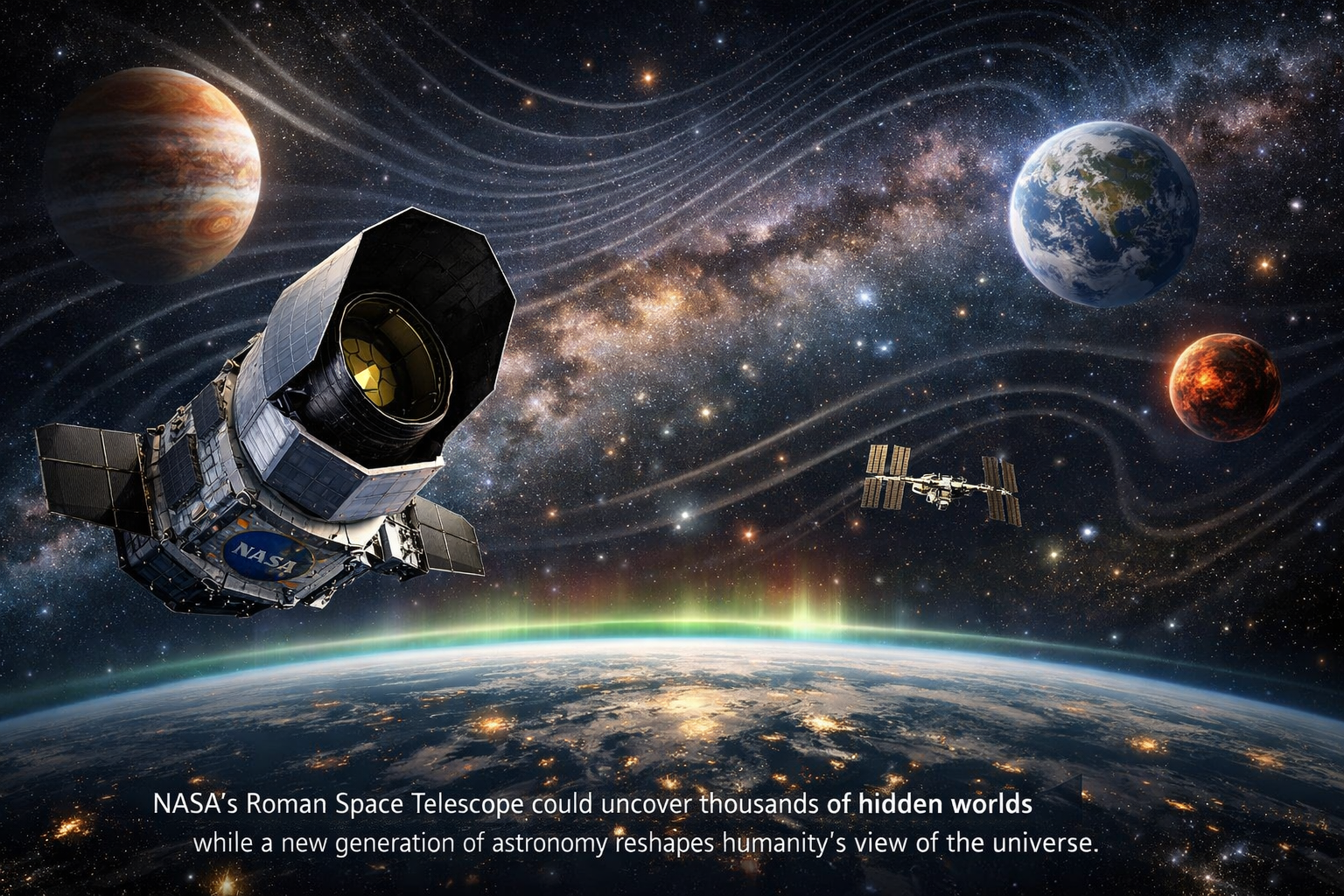
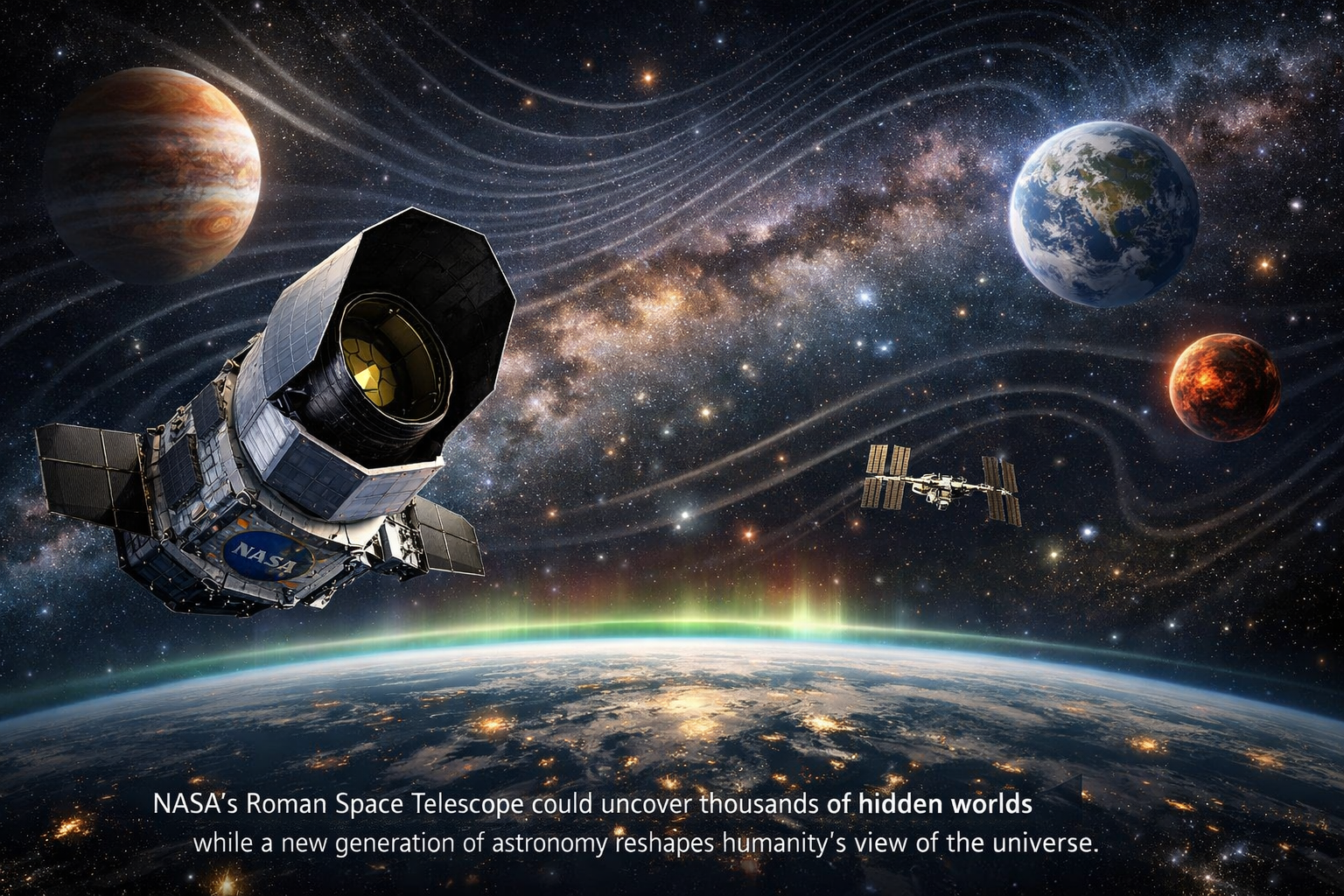
Cosmic Update – May 28, 2026: Humanity’s search for alien worlds is entering an exciting new chapter. NASA’s upcoming Nancy Grace Roman Space Telescope is preparing to revolutionize exoplanet science by potentially discovering up to 100,000 planets beyond our solar system. At the same time, researchers are improving gravitational-wave detectors with advanced calibration techniques inspired by audio engineering, while astronauts aboard the International Space Station continue sharing spectacular aurora views from orbit.
Together, these breakthroughs reveal how rapidly space science is advancing. From hunting distant worlds to detecting ripples in spacetime and observing Earth’s glowing magnetic shield, modern astronomy is opening windows into parts of the universe that once seemed impossible to study.
As scientists continue pushing the boundaries of technology and exploration, the universe appears more alive, mysterious, and interconnected than ever before.
A New Era of Exoplanet Discovery
For decades, astronomers have searched for planets orbiting stars beyond our Sun. These distant worlds, known as exoplanets, range from massive gas giants larger than Jupiter to rocky Earth-like planets that may potentially support life.
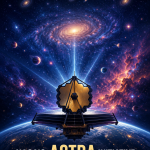
Now, NASA’s Nancy Grace Roman Space Telescope is expected to dramatically expand our understanding of these hidden worlds.
Unlike earlier missions that focused on smaller regions of space, Roman will observe enormous areas of the Milky Way with exceptional precision. Scientists believe the telescope could detect around 100,000 exoplanets, making it one of the most powerful planet-hunting missions ever launched.
This next-generation observatory is designed to work alongside other major missions, including the James Webb Space Telescope, but with a different specialty. While Webb focuses on detailed observations of specific objects, Roman will perform large-scale surveys capable of discovering entirely new populations of planets.
The telescope is expected to use a method known as gravitational microlensing, a fascinating effect predicted by Einstein’s theory of relativity.
How Gravitational Microlensing Helps Find Hidden Planets
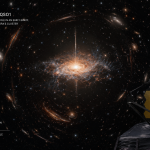
Gravitational microlensing occurs when a star passes in front of another distant star. The gravity of the foreground star bends and magnifies the light behind it, acting almost like a cosmic magnifying glass.
If a planet is orbiting the foreground star, it creates an additional signal in the light pattern. By carefully analyzing these tiny distortions, astronomers can detect planets that would otherwise remain invisible.
This method is especially valuable because it can discover planets that orbit far from their stars — worlds that are difficult to find using traditional detection techniques.
Roman’s advanced instruments will allow scientists to monitor millions of stars simultaneously, dramatically increasing the chances of discovering previously unknown planets across the galaxy.
Some of these worlds may resemble Earth. Others could be icy giants, rogue planets wandering through interstellar space, or strange planetary systems unlike anything in our own solar neighborhood.
Every new discovery helps scientists better understand how planetary systems form and evolve.
Why Discovering More Exoplanets Matters
The discovery of thousands of exoplanets over the last few decades has already transformed astronomy. Before the 1990s, scientists did not know whether planets around other stars were common or rare.
Today, we know the galaxy is filled with them.
But Roman could push this understanding much further by revealing entire categories of planets that current telescopes struggle to detect.
Finding more exoplanets helps scientists answer some of humanity’s oldest questions:
- How common are Earth-like worlds?
- Could life exist elsewhere in the universe?
- Is our solar system unusual or typical?
- How do planets form around different types of stars?
The answers may reshape humanity’s understanding of its place in the cosmos.
Astronomers are particularly interested in planets located within a star’s “habitable zone,” where temperatures may allow liquid water to exist. Although Roman itself may not directly confirm alien life, it could identify many promising targets for future missions.
In many ways, the telescope represents another major step toward answering whether humanity is truly alone in the universe.
Scientists Are Improving Gravitational-Wave Detection
While astronomers prepare to search for distant planets, physicists are also improving humanity’s ability to study another cosmic phenomenon: gravitational waves.
These waves are ripples in spacetime caused by massive events such as black hole collisions or neutron star mergers. First predicted by Albert Einstein over a century ago, gravitational waves were directly detected for the first time in 2015.
Since then, observatories such as LIGO and Virgo have opened an entirely new field of astronomy.
Now, researchers are experimenting with innovative calibration techniques inspired by audio engineering and music production. Just as sound engineers remove noise and fine-tune recordings to isolate subtle sounds, scientists are working to improve the sensitivity of gravitational-wave detectors.
Detecting gravitational waves is extraordinarily difficult because the signals are incredibly faint. Tiny vibrations from Earth itself — including traffic, weather, or even distant ocean waves — can interfere with measurements.
Advanced calibration methods help researchers separate genuine cosmic signals from background noise.
This process allows detectors to capture clearer information about violent cosmic events occurring billions of light-years away.
As gravitational-wave astronomy becomes more precise, scientists hope to uncover new insights into black holes, neutron stars, dark matter, and even the early universe itself.
Stunning Aurora Views from the International Space Station
Meanwhile, astronauts aboard the International Space Station continue providing breathtaking reminders of Earth’s beauty and fragility.
Orbiting hundreds of kilometers above the planet, crew members regularly capture incredible images of auroras shimmering across Earth’s atmosphere.
Auroras occur when charged particles from the Sun interact with Earth’s magnetic field. These particles collide with gases in the atmosphere, producing glowing curtains of green, purple, and red light.
From the ground, auroras are already spectacular. But from space, the phenomenon becomes even more dramatic.
Astronauts often describe auroras as glowing rivers of light flowing around Earth’s horizon.
These displays are more than beautiful natural phenomena. They are visible evidence of Earth’s magnetic field protecting our planet from harmful solar radiation.
Without this magnetic shield, life on Earth would face far harsher conditions.
Recent solar activity has increased the frequency and intensity of auroral displays, giving astronauts even more opportunities to photograph these mesmerizing events from orbit.
Their images not only inspire millions of people online but also remind humanity how connected we are to the broader cosmic environment.
The Universe Is Entering a New Age of Discovery
The combination of exoplanet exploration, gravitational-wave astronomy, and advanced space observation highlights how quickly science is evolving.
Only a few generations ago, humanity had never seen Earth from space, detected another planet around a distant star, or measured ripples in spacetime.
Today, these achievements are becoming part of everyday scientific progress.
NASA’s Roman Space Telescope could soon reveal thousands upon thousands of previously unknown worlds. Gravitational-wave observatories are allowing scientists to “hear” collisions between black holes across the universe. Meanwhile, astronauts continue offering breathtaking perspectives of Earth from orbit.
Together, these discoveries are reshaping humanity’s understanding of reality itself.
The universe is no longer a silent, distant backdrop. It is an active, dynamic place filled with hidden planets, invisible forces, cosmic storms, and extraordinary mysteries waiting to be explored.
Conclusion
Humanity stands at the edge of a remarkable era in astronomy and space exploration. The upcoming Roman Space Telescope may uncover up to 100,000 distant planets, dramatically expanding our knowledge of the Milky Way and bringing us closer to answering whether life exists beyond Earth.
At the same time, improved gravitational-wave detectors are helping scientists explore the deepest and most violent events in the universe, while astronauts aboard the International Space Station continue reminding us of Earth’s beauty through stunning aurora imagery.
Each breakthrough represents more than scientific progress. Together, they reflect humanity’s endless curiosity and desire to understand the cosmos.
As new missions launch and technology advances, the coming years may reveal discoveries even more astonishing than anything we can currently imagine.