
Introduction
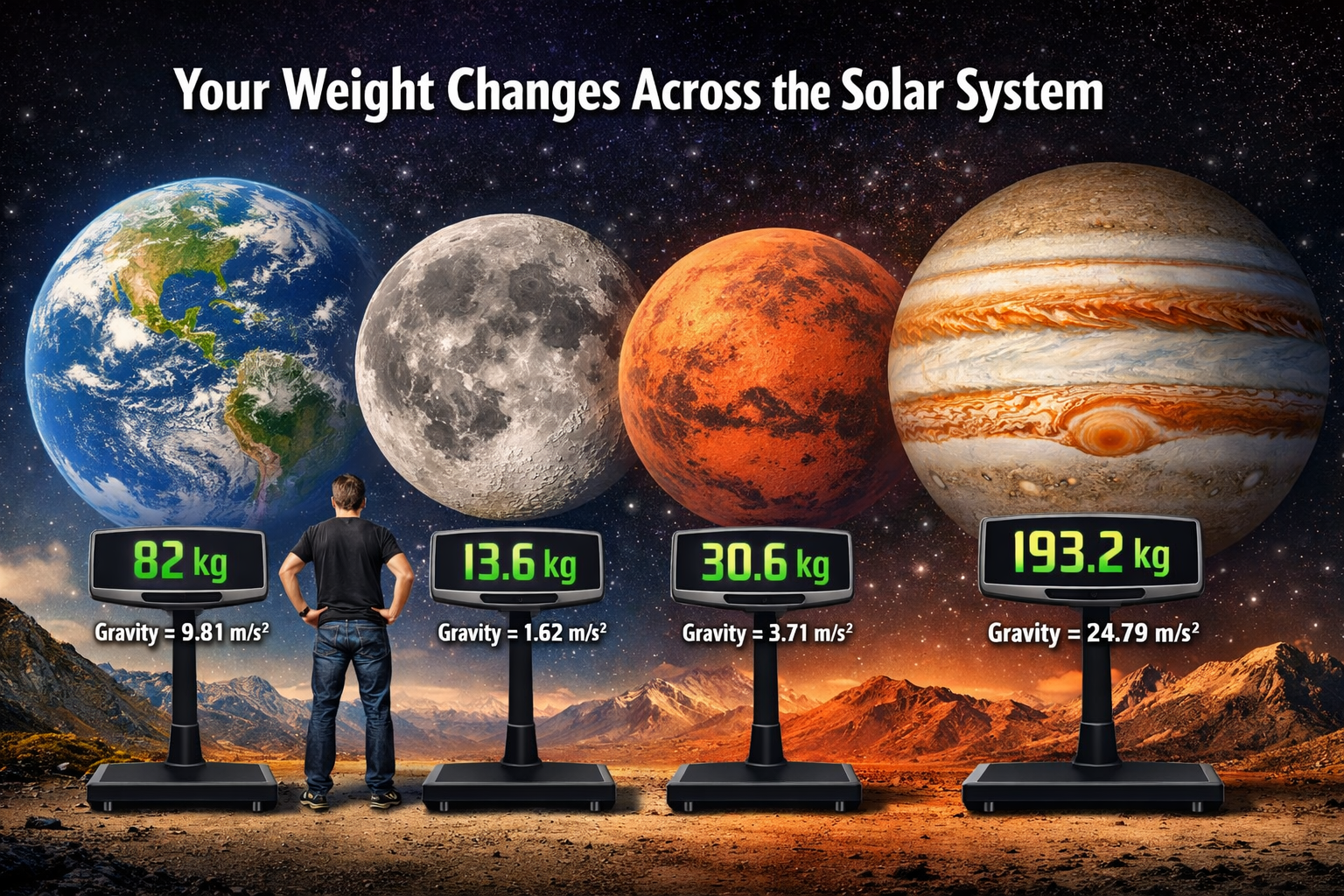
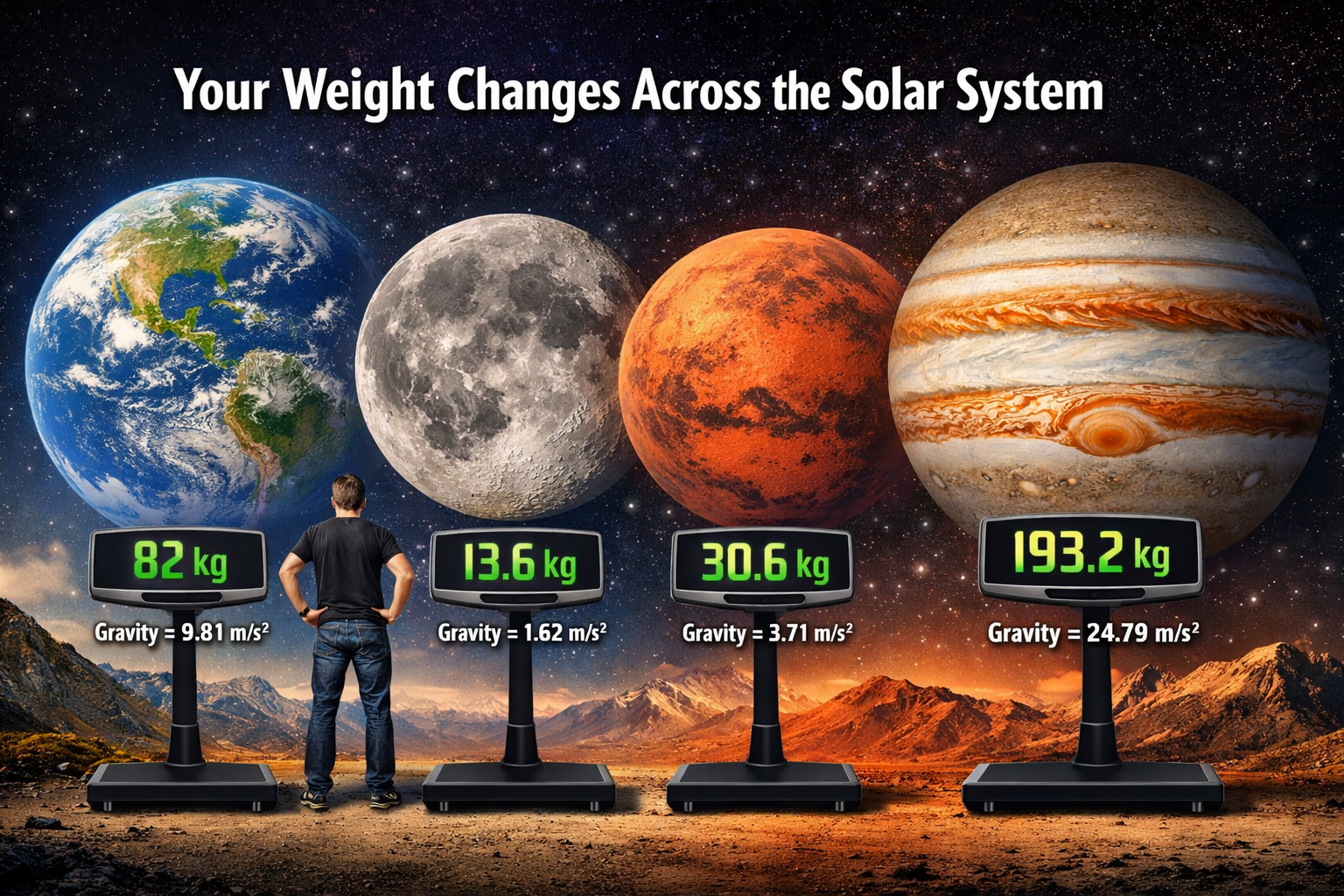
Imagine stepping onto the Moon and suddenly feeling six times lighter. A jump that barely lifts you on Earth could send you soaring through lunar dust. Now imagine standing near Jupiter, where gravity is so powerful that simply moving would feel exhausting.
Physics allows us to understand these incredible differences across the solar system. One of the most fascinating discoveries for students is that your weight changes depending on where you are, even though your body itself stays exactly the same.
On Earth, your mass might be 60 kg, but your weight changes because every planet has a different gravitational pull. The Moon makes you feel feather-light, Mars gives you superhuman jumps, and Jupiter would make you feel incredibly heavy.
In this student-friendly guide, we’ll explore:
- the difference between mass and weight,
- why gravity changes across planets,
- how to calculate weight using physics,
- and what life would feel like on different worlds.
🧮 Mass vs. Weight: The Key Difference
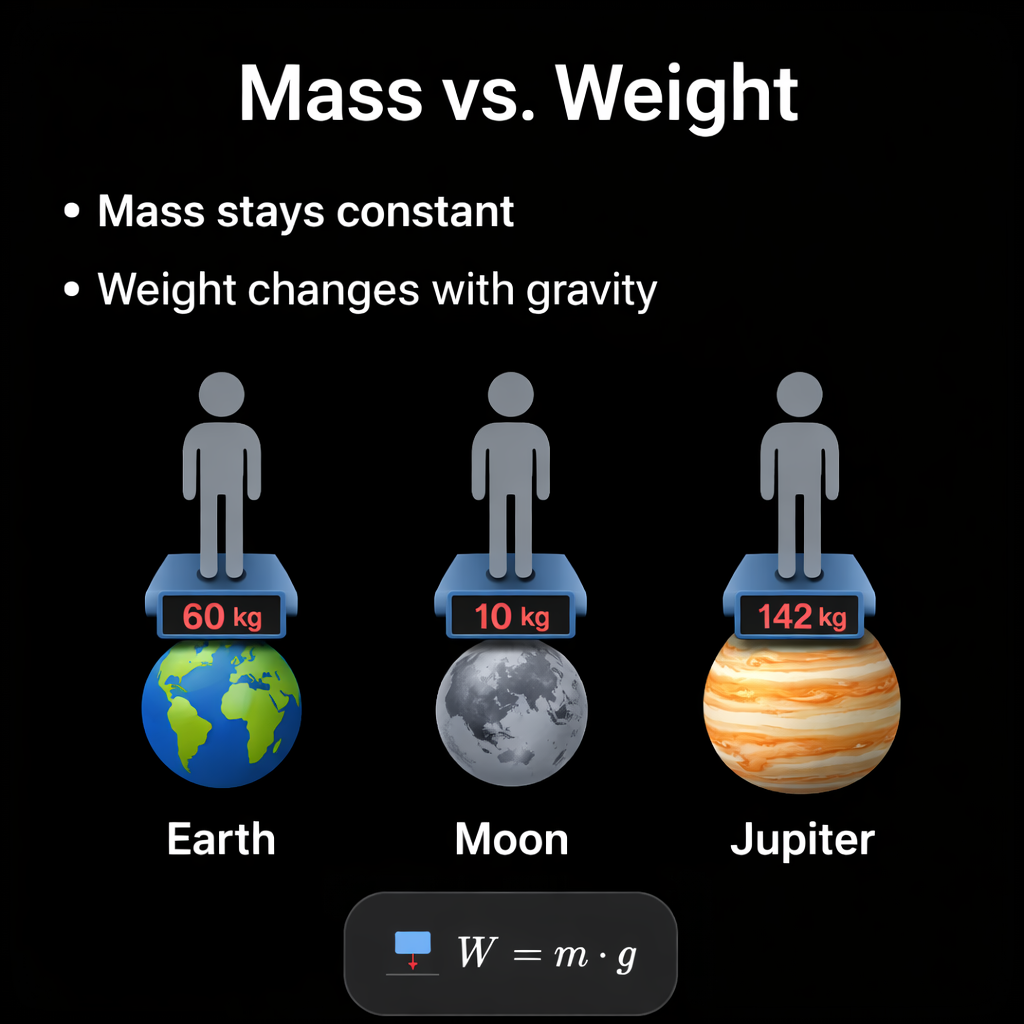
Many students think mass and weight are the same thing — but physics tells us they are completely different.
Mass
Mass is the amount of matter inside your body.
Measured in kilograms (kg)
Never changes
The same everywhere in the universe
If your mass is 60 kg on Earth, it is still 60 kg on Mars, Jupiter, or the Moon.
Weight
Weight is the force of gravity pulling on your mass.
Measured in Newtons (N)
Changes depending on gravity
Different on every planet
The formula for weight is:
W = mg
Where: W = Weight (Newtons), m = Mass (kg), g = Gravitational acceleration (m/s²)
In simple words: Your body stays the same, but the planet’s gravitational pull changes how heavy you feel.
🌍 Earth: Our Gravity Baseline
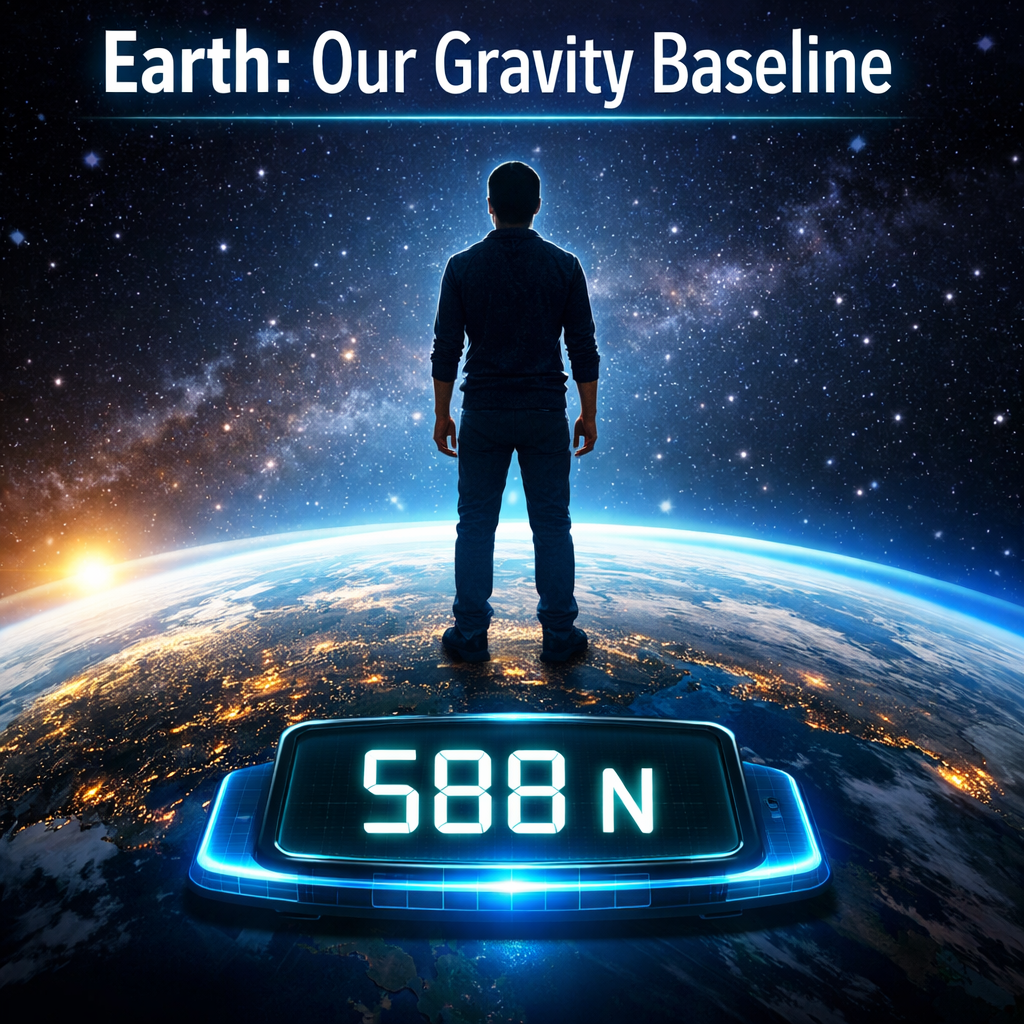
Earth’s gravity is:
9.8 m/s²
For a person with a mass of 60 kg:
W = 60 × 9.8 = 588 N
This is your normal Earth weight.
Earth acts as the baseline for comparing gravity across the solar system.
Its gravity is strong enough to hold our atmosphere, keep oceans on the surface, and prevent humans from floating into space.
Our muscles, bones, and bodies evolved under Earth’s gravity, which is why everything feels natural here.
🌕 The Moon: Six Times Lighter
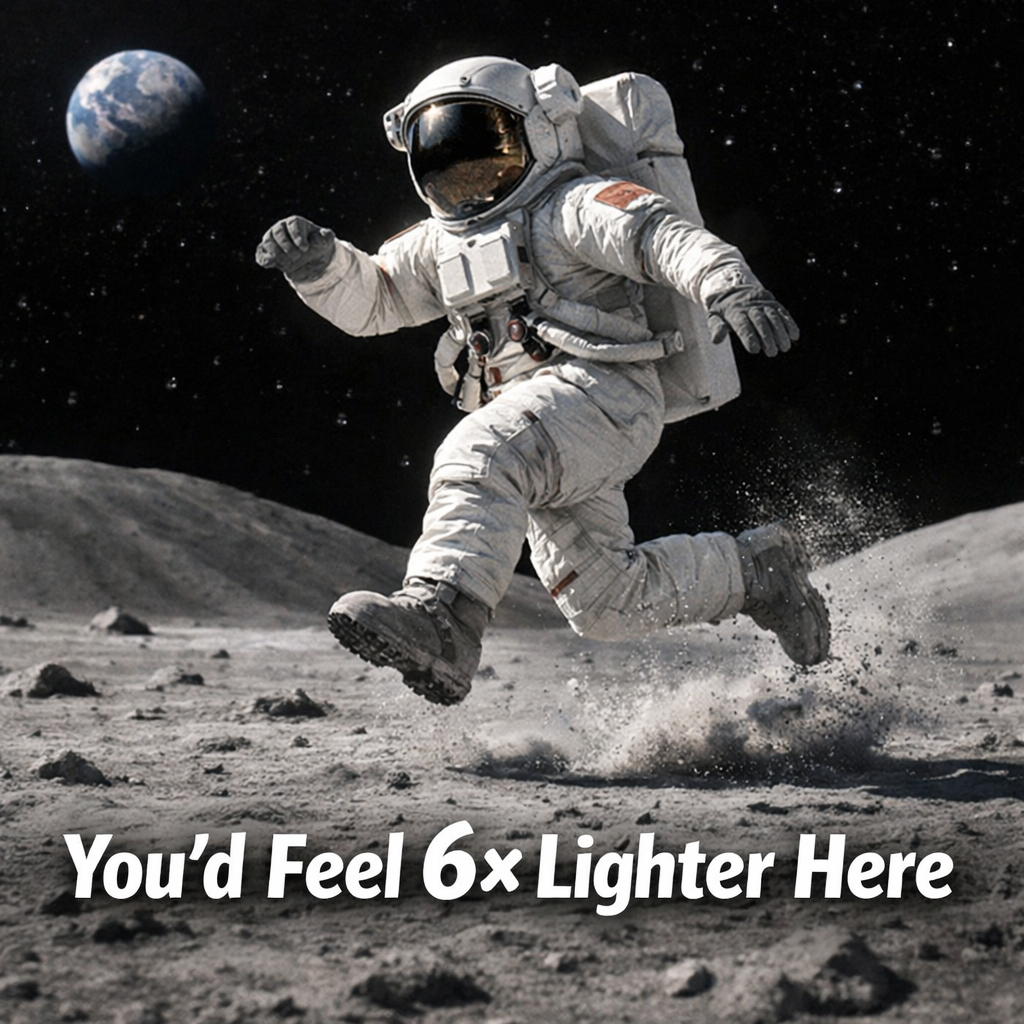
The Moon’s gravity is much weaker:
1.6 m/s²
Your weight becomes:
W = 60 × 1.6 = 96 N
A normal Earth scale would display roughly 10 kg, even though your actual mass remains 60 kg.
Because the Moon is much smaller and less massive than Earth, its gravitational pull is weaker.
This is why astronauts during the Apollo missions could jump higher, move slowly through the air, and lift heavy equipment more easily.
Imagine carrying your school bag on the Moon — it would feel almost weightless.
🔴 Mars: The Planet of Giant Jumps
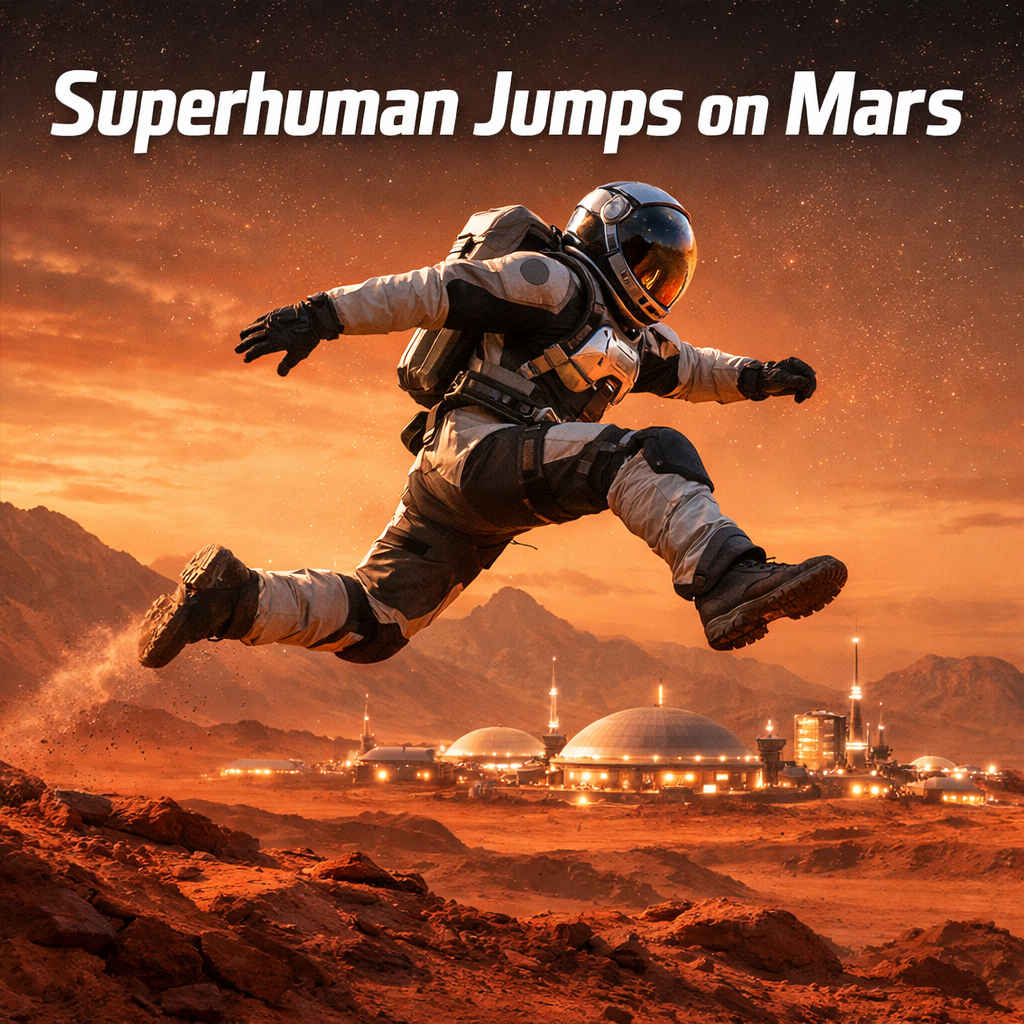
Mars has stronger gravity than the Moon, but still much weaker than Earth.
3.7 m/s²
Your weight on Mars:
W = 60 × 3.7 = 222 N
An Earth scale would show about 22 kg.
Mars has about one-third of Earth’s gravity, meaning you could jump much higher, objects would feel lighter, and movement would require less effort.
Scientists are actively studying how humans might survive long-term under Martian gravity.
One major concern is that lower gravity can weaken muscles and bones over time.
Fun Fact: Sports on Mars would look incredible. Basketball with giant jumps, football kicks traveling enormous distances, or parkour with slow-motion flips.
🟠 Jupiter: Crushing Gravity
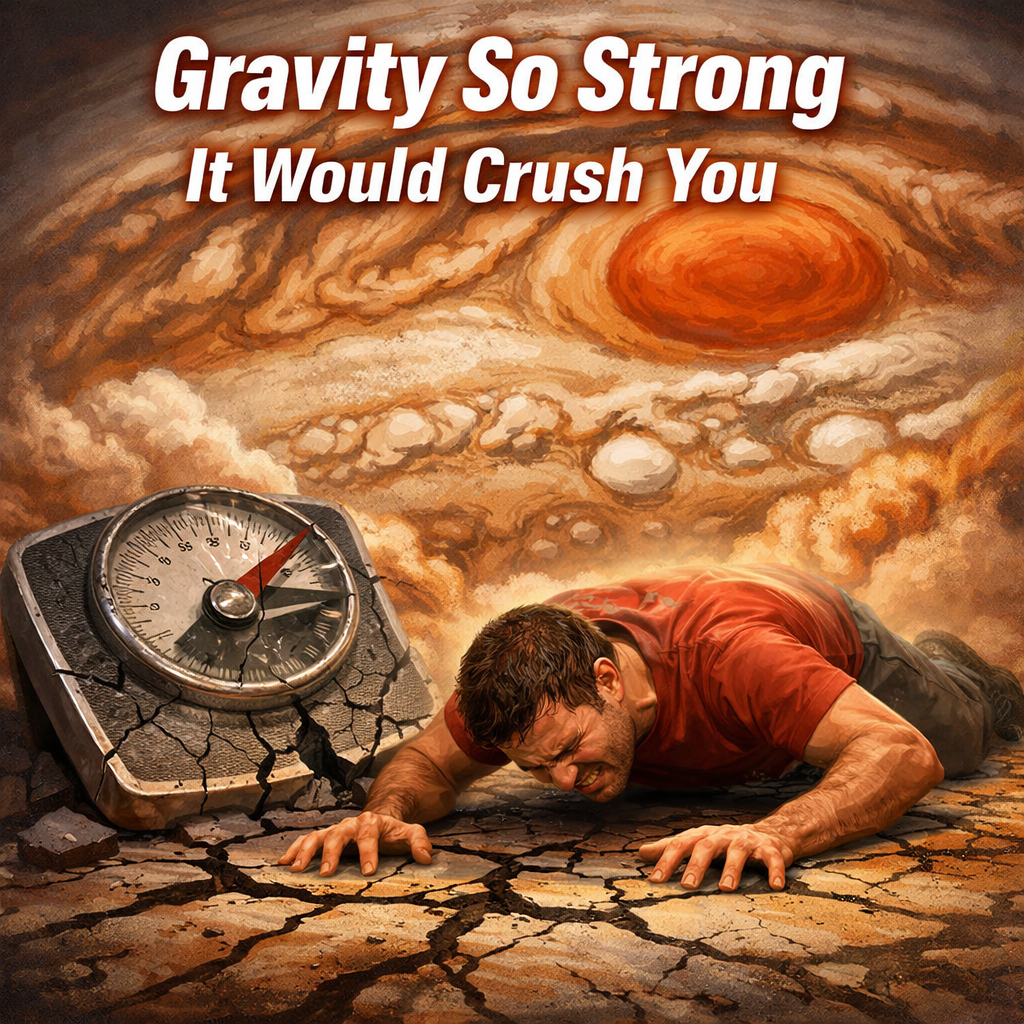
Jupiter is the largest planet in the solar system, and its gravity is enormous.
24.8 m/s²
Your weight would become:
W = 60 × 24.8 = 1488 N
An Earth scale would display around 150 kg.
Jupiter’s immense mass creates an extremely strong gravitational pull.
In reality, Jupiter is a gas giant, so there is no solid ground to stand on.
But this calculation shows just how powerful gravity becomes on massive planets.
🌌 Why Gravity Changes on Different Planets
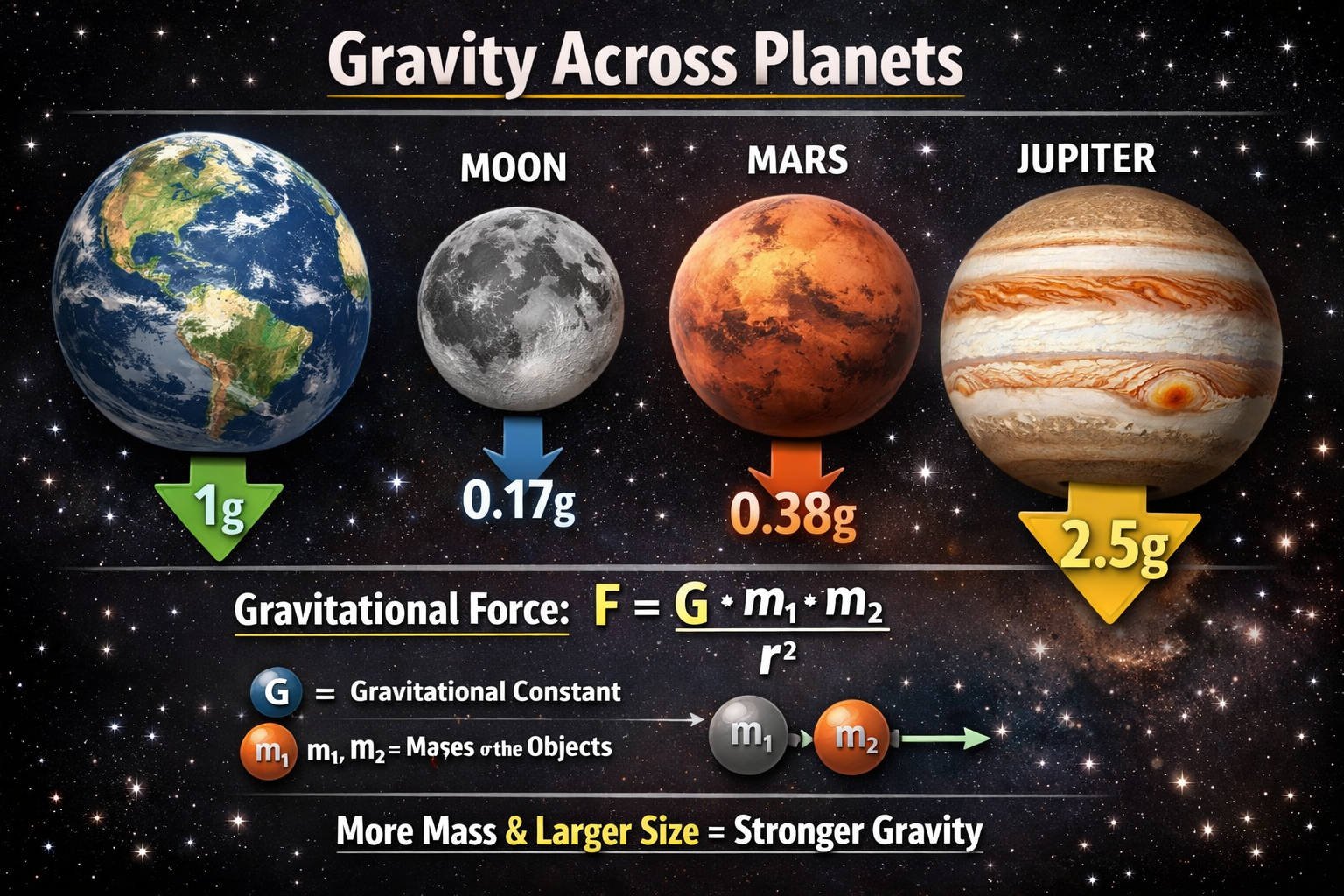
Gravity depends mainly on the planet’s mass and distance from its center.
F = G(m₁m₂ / r²)
Larger planets usually have stronger gravity. Smaller worlds have weaker gravity.
Distance also matters — gravity weakens farther from the center.
📊 Quick Gravity Comparison
| World | Gravity (m/s²) | How You’d Feel |
|---|---|---|
| Earth | 9.8 | Normal |
| Moon | 1.6 | Extremely light |
| Mars | 3.7 | Light and agile |
| Jupiter | 24.8 | Extremely heavy |
🚀 Real-World Applications
Astronaut Training
Spacecraft Design
Human Survival in Space
Different gravity levels affect muscles, bones, balance, and blood circulation.
❓ Student FAQ
Do you weigh less on the Moon? Yes.Because the Moon’s gravity is only about one-sixth of Earth’s gravity, your weight becomes dramatically smaller.
Why is Jupiter’s gravity so strong? Jupiter is the largest planet in the solar system. Its enormous mass creates a very powerful gravitational pull.
Does your mass ever change? No.Your mass stays constant everywhere in the universe. Only your weight changes.
Why do astronauts float in space? Astronauts float because spacecraft orbit Earth in continuous free fall, creating microgravity conditions.
Could humans survive on Mars? Possibly. But long-term exposure to lower gravity could weaken muscles and bones over time.
✨ Conclusion
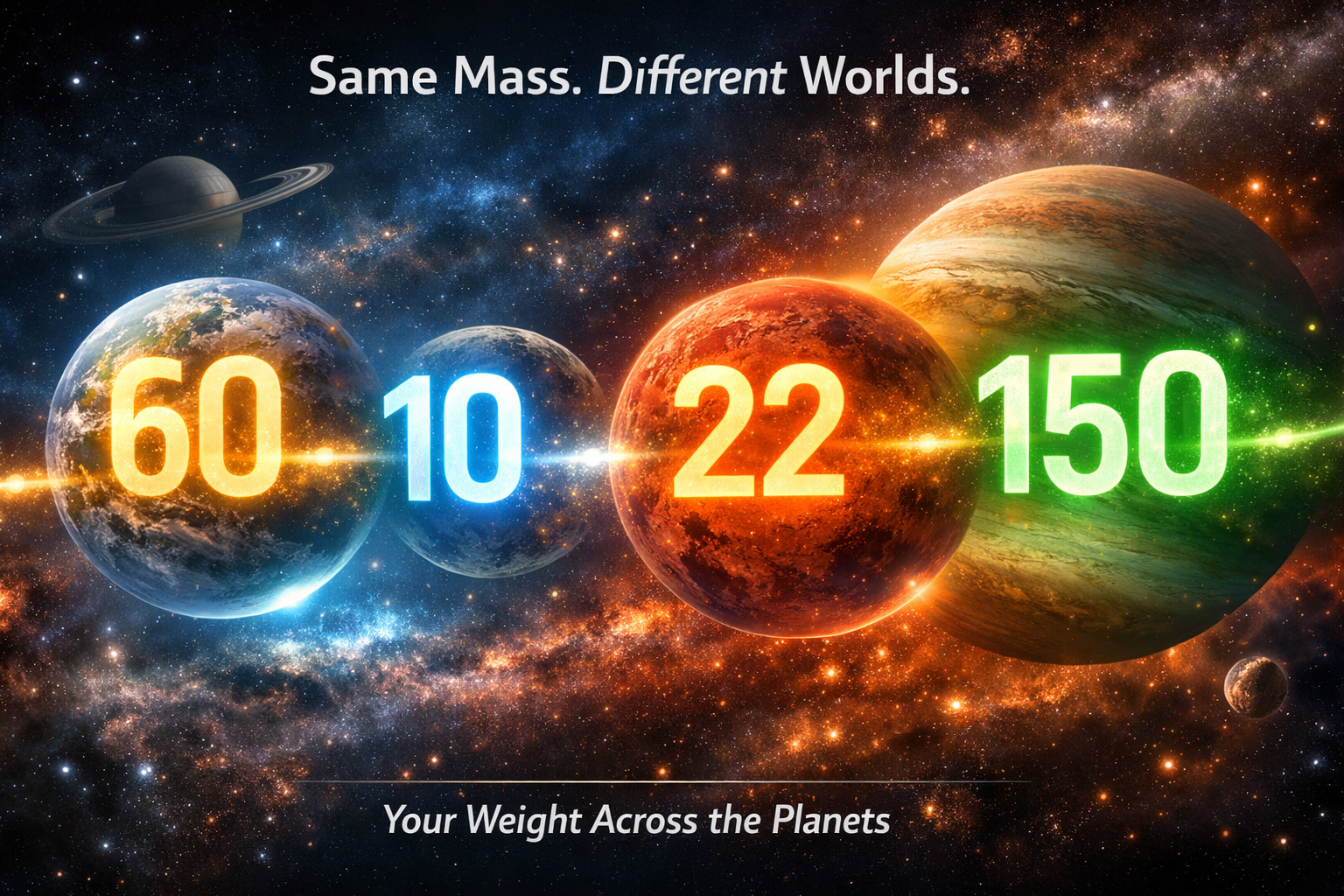
Your mass never changes, but your weight depends entirely on gravity.
This simple physics idea explains why astronauts float, why planets feel different, why rockets require energy, and how humans might live on other worlds.
The universe may look beautiful from afar, but physics reveals that every planet creates a completely different experience for the human body.
So next time you step onto a scale, remember: somewhere else in the solar system, the number could be wildly different.