Cosmic Update – May 23, 2026:
Two extraordinary cosmic stories are unfolding at once. NASA’s Juno spacecraft has revealed Jupiter’s moon Thebe in unprecedented detail, exposing a colossal crater that makes it look uncannily like the Death Star from Star Wars. And tonight, Earth’s own Moon will perform a rare celestial trick — a lunar occultation, where it passes directly in front of a distant star, erasing it from the sky. Together, these events remind us that the universe is stranger, darker, and more beautiful than we ever imagined.
🚀 Thebe: Jupiter’s “Death Star” Moon
The Flyby That Changed Everything
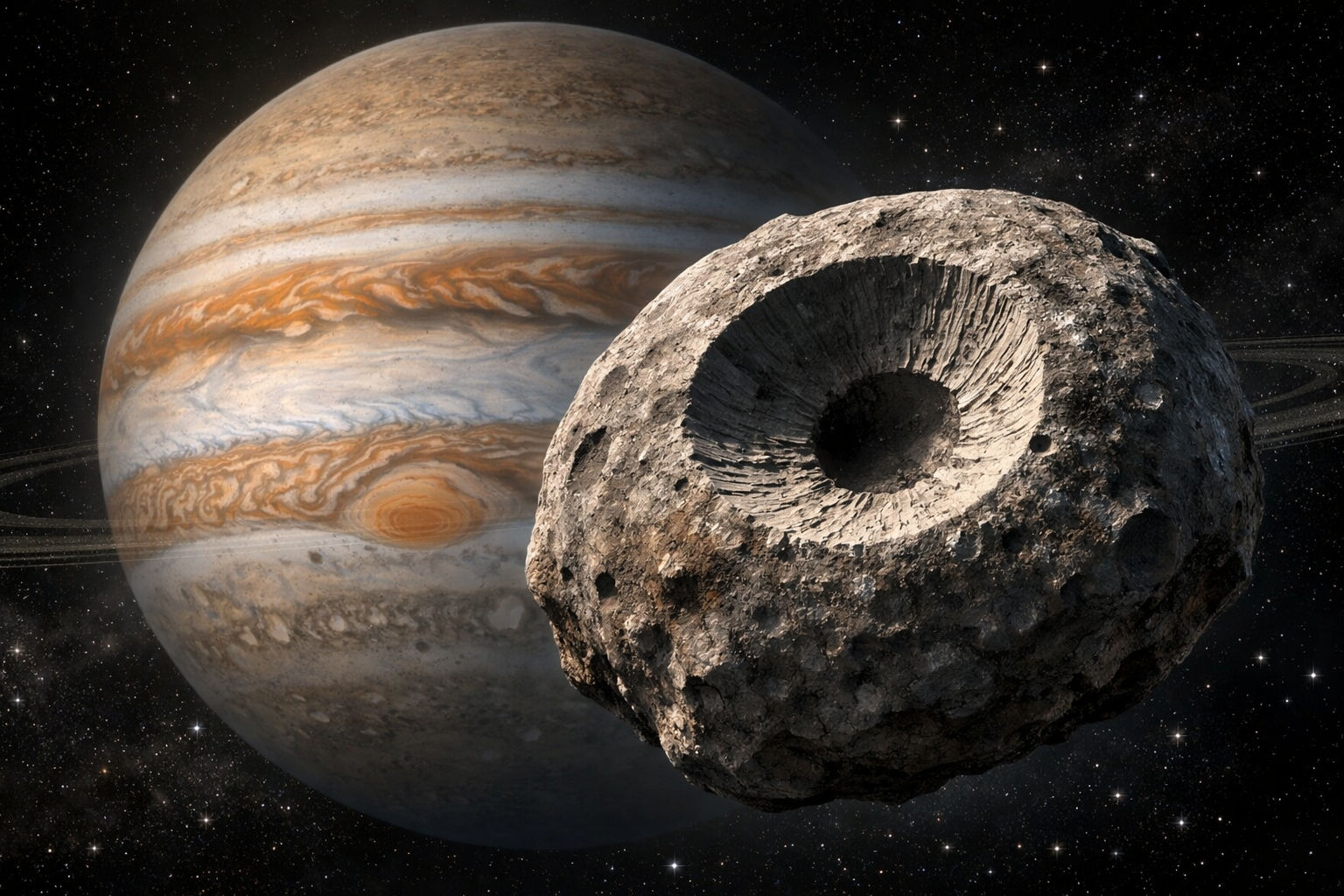
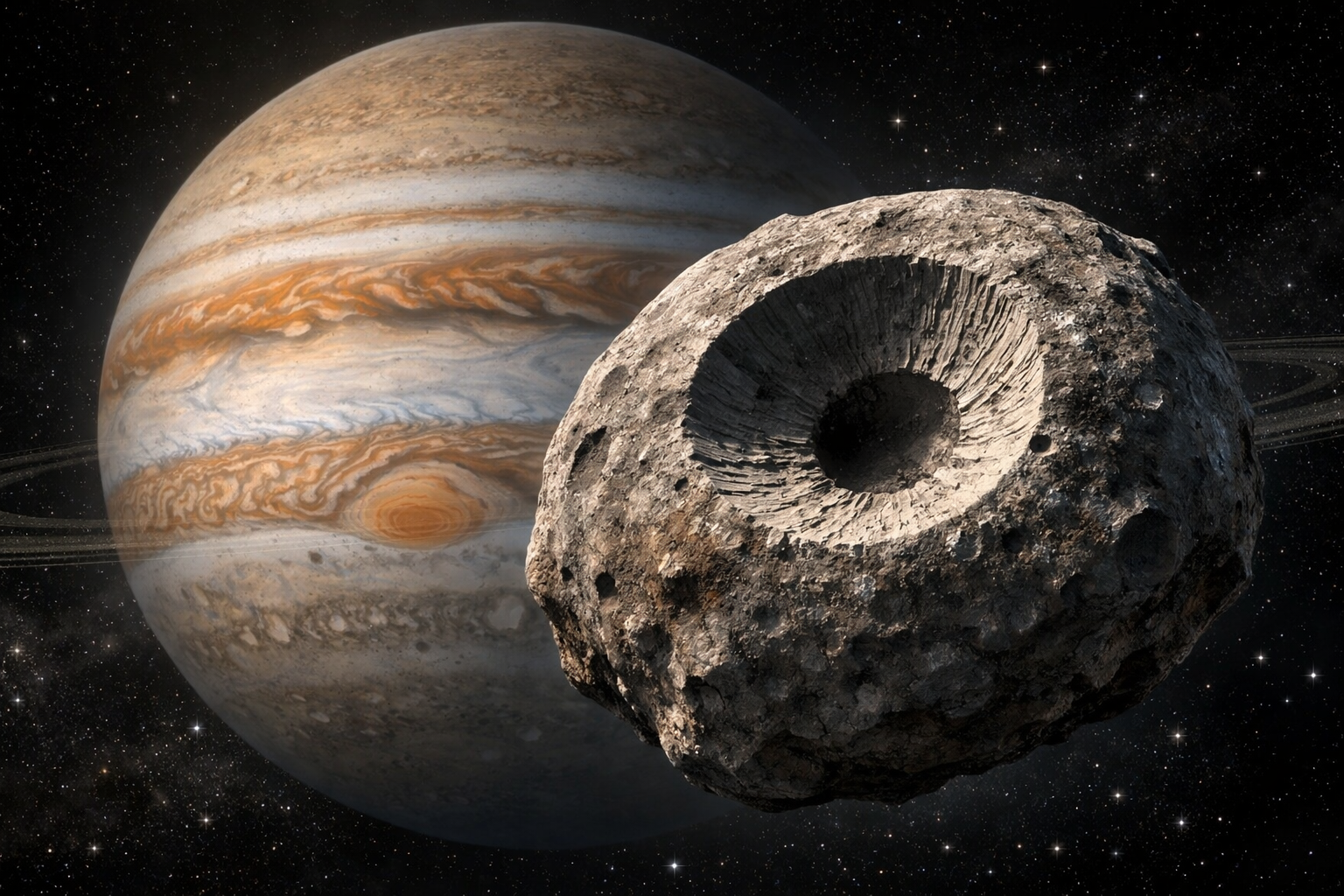
On May 1, 2026, NASA’s Juno spacecraft executed its closest flyby of Thebe, a small and relatively obscure moon of Jupiter. Passing just 5,000 kilometers away, Juno’s Stellar Reference Unit (SRU) camera captured images at a resolution of about 3 kilometers per pixel. What those images revealed stunned scientists: a massive crater covering nearly 40% of Thebe’s surface.
The crater’s size and shape immediately drew comparisons to the Death Star, the iconic battle station from Star Wars. Juno project scientist Steve Levin even joked that Jupiter now has its own “Death Star moon.” But beyond the pop-culture resemblance, the discovery carries profound scientific importance.
Why Thebe Matters
Thebe is not one of Jupiter’s famous Galilean moons like Io, Europa, Ganymede, or Callisto. Instead, it is a much smaller body, only about 100 kilometers across, orbiting at the outer edge of Jupiter’s faint gossamer ring. Despite its size, Thebe plays a crucial role in maintaining that ring. Dust and debris shed from Thebe feed the gossamer ring, helping scientists understand how moons and rings interact in giant planetary systems.
Studying Thebe’s orbit and composition may answer key questions:
- Is Thebe a captured asteroid?
- Could it be a fragment of a larger body shattered long ago?
- Or is it an accumulation of ring material that coalesced into a moon?
Each possibility offers insights into how planetary systems evolve.
Thebe’s Place in Myth and Science
Thebe is named after a mythological nymph, a lover of Zeus (the Greek counterpart of Jupiter). Its orbit lies about 222,000 kilometers from Jupiter, completing a revolution in just over 16 hours. Until Juno’s flyby, Thebe was little more than a faint speck in telescope images. Now, it has become a symbol of how even the smallest worlds can hold cosmic secrets.
🌕 Tonight’s Rare Lunar Occultation
What Is a Lunar Occultation?
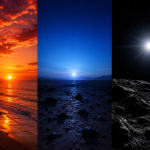
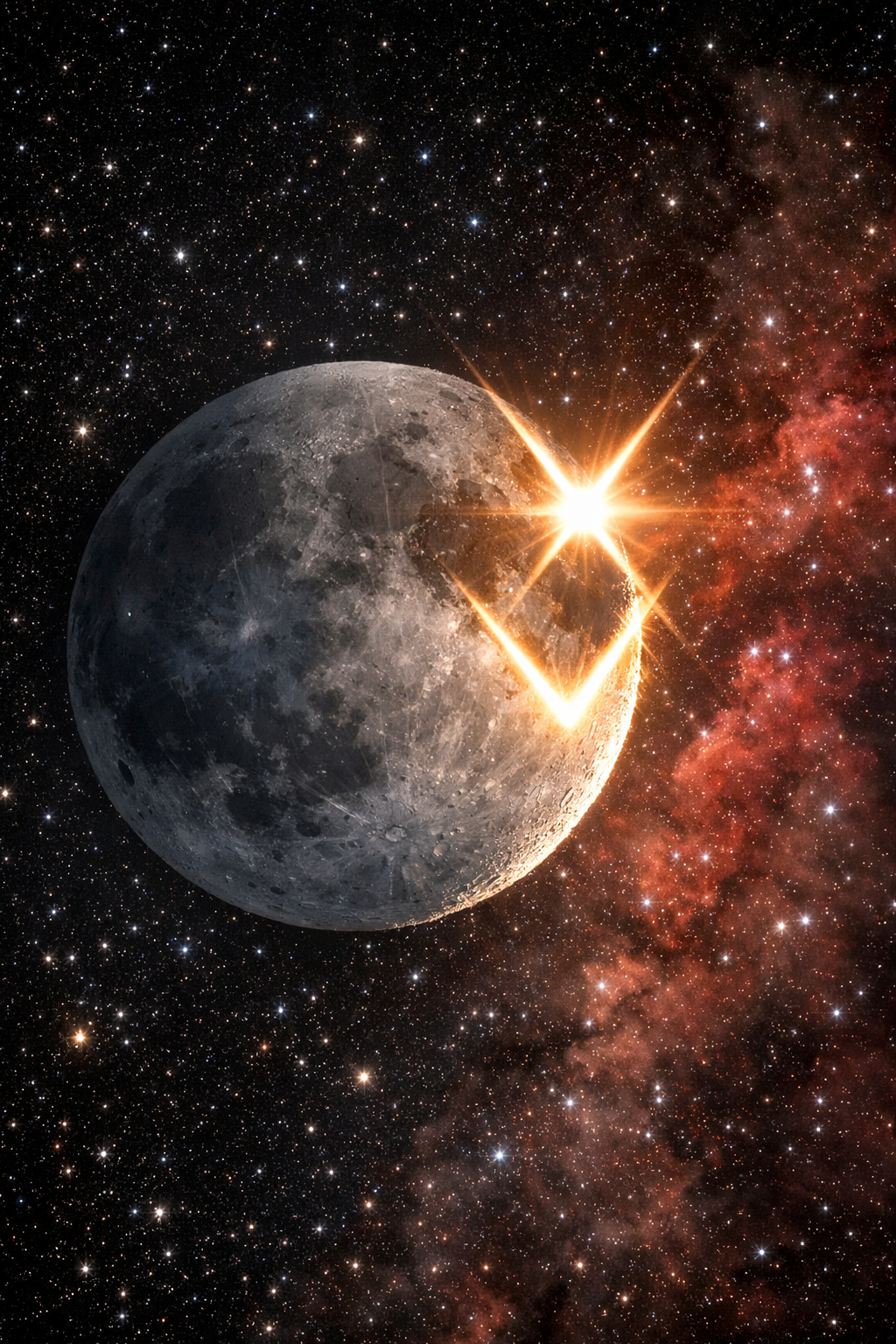
A lunar occultation occurs when the Moon passes directly in front of a star, temporarily blocking it from view. To observers on Earth, the star seems to vanish suddenly, only to reappear minutes later. These events are rare and depend on precise alignments of the Moon’s orbit and Earth’s vantage point.
On May 23, 2026, such an occultation will be visible in parts of Asia, including Bangladesh. As the Moon slides in front of the star, observers may notice glowing “X” and “V” patterns along the lunar edge. These patterns are caused by sunlight striking mountain ridges and crater rims at just the right angle, creating a breathtaking illusion of cosmic geometry.
Why Occultations Matter
For astronomers, occultations are more than visual spectacles. They provide opportunities to measure the Moon’s profile with extreme precision. By timing when the star disappears and reappears, scientists can refine models of the Moon’s topography. Occultations also help in studying distant stars, as the sudden disappearance can reveal details about their size and brightness.
For casual skywatchers, however, tonight’s event is pure magic. It’s a reminder that the night sky is dynamic, not static — stars can vanish, planets can align, and moons can reveal hidden wonders.
🔭 Cosmic Connections
Linking Thebe and the Occultation
At first glance, Thebe’s crater and a lunar occultation seem unrelated. One is a discovery made by a spacecraft orbiting Jupiter, the other a celestial event visible from Earth. Yet both highlight the same truth: the universe is full of surprises waiting to be uncovered.
Thebe shows us that even small moons can reshape planetary rings and challenge our understanding of celestial mechanics. The occultation shows us that the familiar Moon can still perform tricks that astonish and delight. Together, they remind us that exploration happens both through spacecraft and through our own eyes.
Juno’s Broader Mission
Launched in 2011, Juno has spent years studying Jupiter’s atmosphere, magnetic field, and moons. Its SRU camera, originally designed for navigation, has become a powerful science tool. It previously detected “shallow lightning” in Jupiter’s clouds, revealing new details about the planet’s weather systems. Now, with Thebe’s crater, Juno has added another chapter to its legacy of discovery.
🌌 Why These Events Matter for Humanity
Inspiring Curiosity
Discoveries like Thebe’s crater inspire curiosity not just among scientists but among the public. The resemblance to the Death Star bridges science and culture, making astronomy accessible to fans of science fiction. It shows that the universe often mirrors our imagination, or perhaps that our imagination mirrors the universe.
Connecting Earth and Space
The lunar occultation connects us directly to cosmic events. Unlike spacecraft discoveries, which require advanced technology, occultations can be observed with the naked eye. They remind us that the universe is not distant — it is happening above us, every night.
Building a Cosmic Perspective
Together, these events encourage us to adopt a cosmic perspective. They show that the universe is vast, interconnected, and full of phenomena that challenge our understanding. They remind us that exploration is not just about reaching other planets but about appreciating the wonders visible from Earth.
Conclusion
NASA’s Juno spacecraft has unveiled a moon that looks like the Death Star, while tonight Earth’s Moon will erase a star from the sky in a rare occultation. These events, separated by millions of kilometers yet united by cosmic wonder, remind us that the universe is stranger, darker, and more beautiful than we ever imagined.
Follow Cosmic A2Z for daily cosmic updates — because every day, the universe writes a new story.