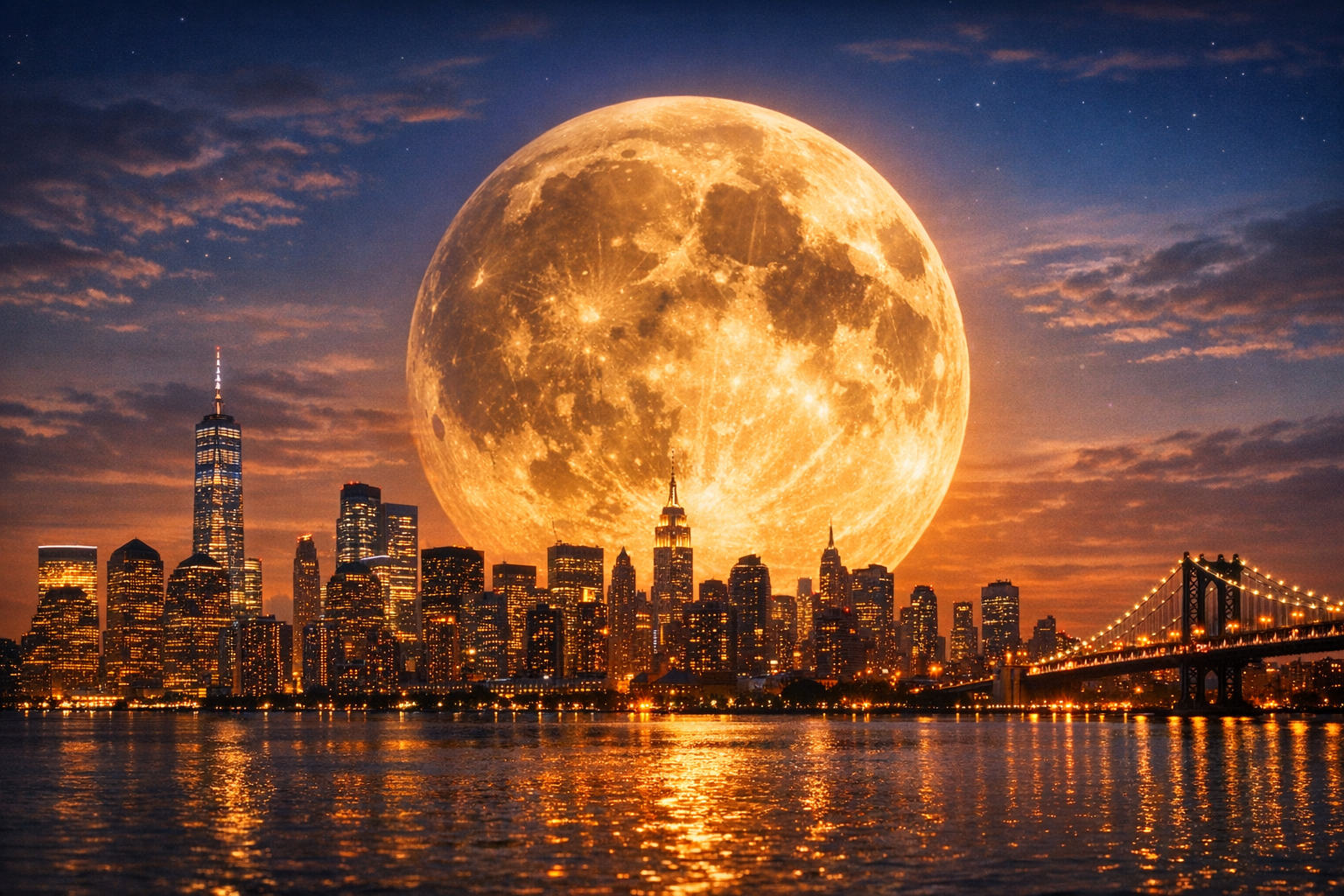
Cosmic Lesson: Supermoon Explained — Why the Moon Looks Bigger and Brighter
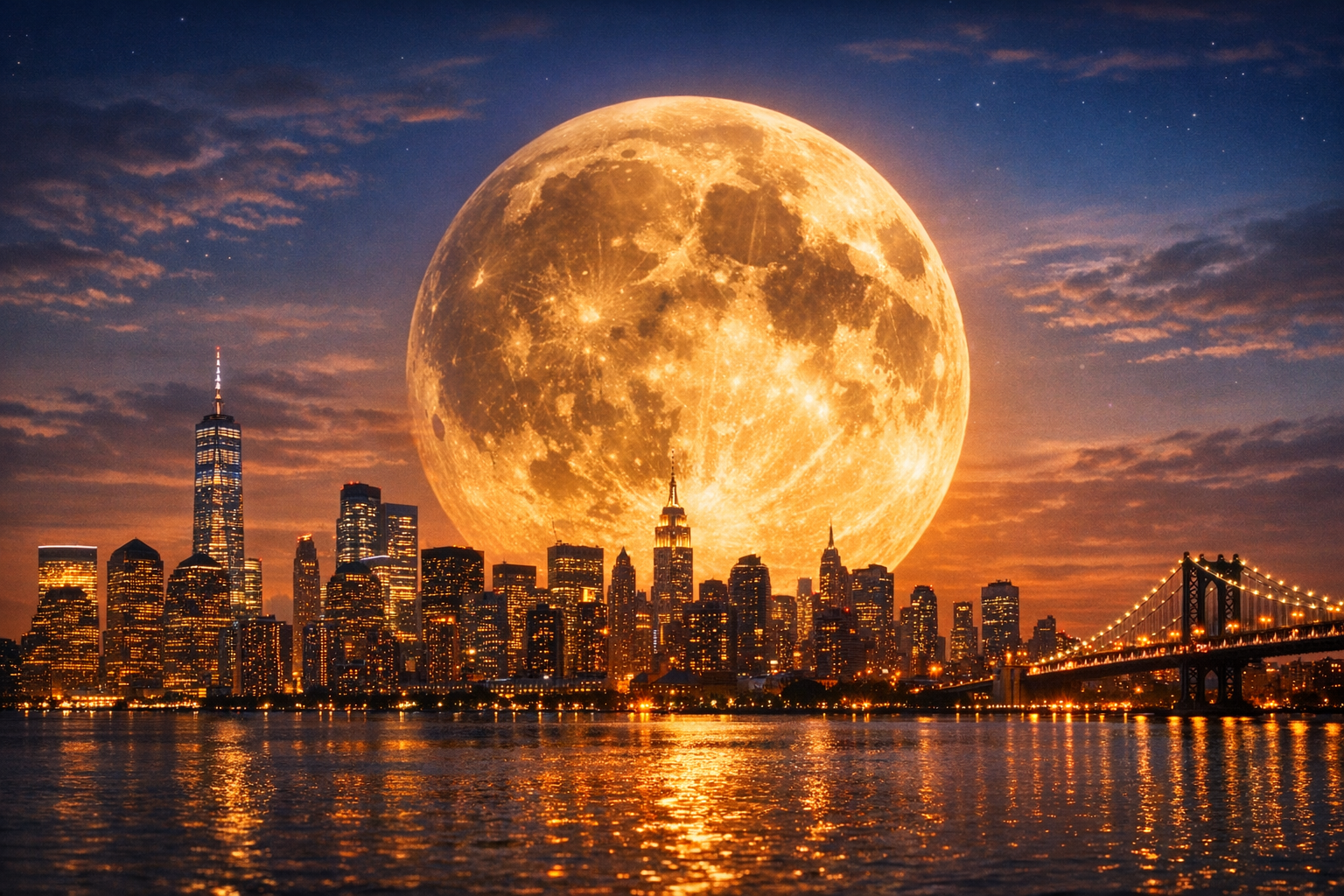
A supermoon is one of the most beautiful sky events you can witness with your own eyes. No telescope. No special equipment. Just you, the sky, and a Moon that suddenly looks huge, glowing, and impossibly close. But what actually causes this dramatic change? Why does the Moon sometimes appear larger than usual? And is it really closer to Earth, or is it just an illusion?
This Cosmic Lesson breaks it all down in simple, friendly language — perfect for kids, beginners, and curious readers of all ages. By the end, you’ll understand the science, the myths, the visuals, and the real effects a supermoon has on Earth.
1. What Exactly Is a Supermoon?
A supermoon happens when two things occur at the same time:
The Moon is full
The Moon is at perigee — the closest point in its orbit around Earth
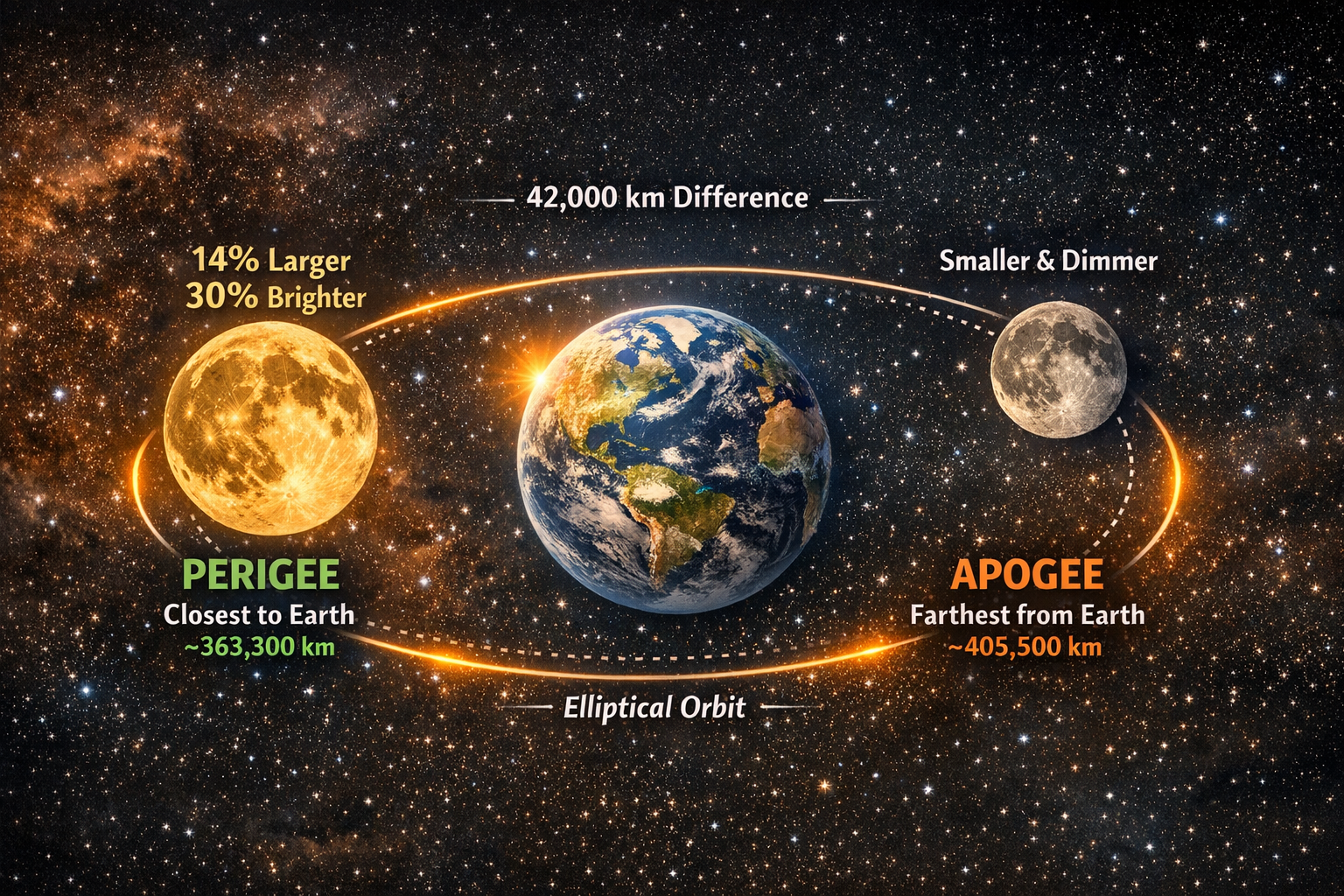
The Moon’s orbit isn’t a perfect circle. It’s an ellipse, meaning sometimes the Moon is closer to us and sometimes farther away.
Closest point (Perigee): ~363,300 km
Farthest point (Apogee): ~405,500 km
That’s a difference of more than 42,000 km — enough to make the Moon appear:
Up to 14% larger
Up to 30% brighter
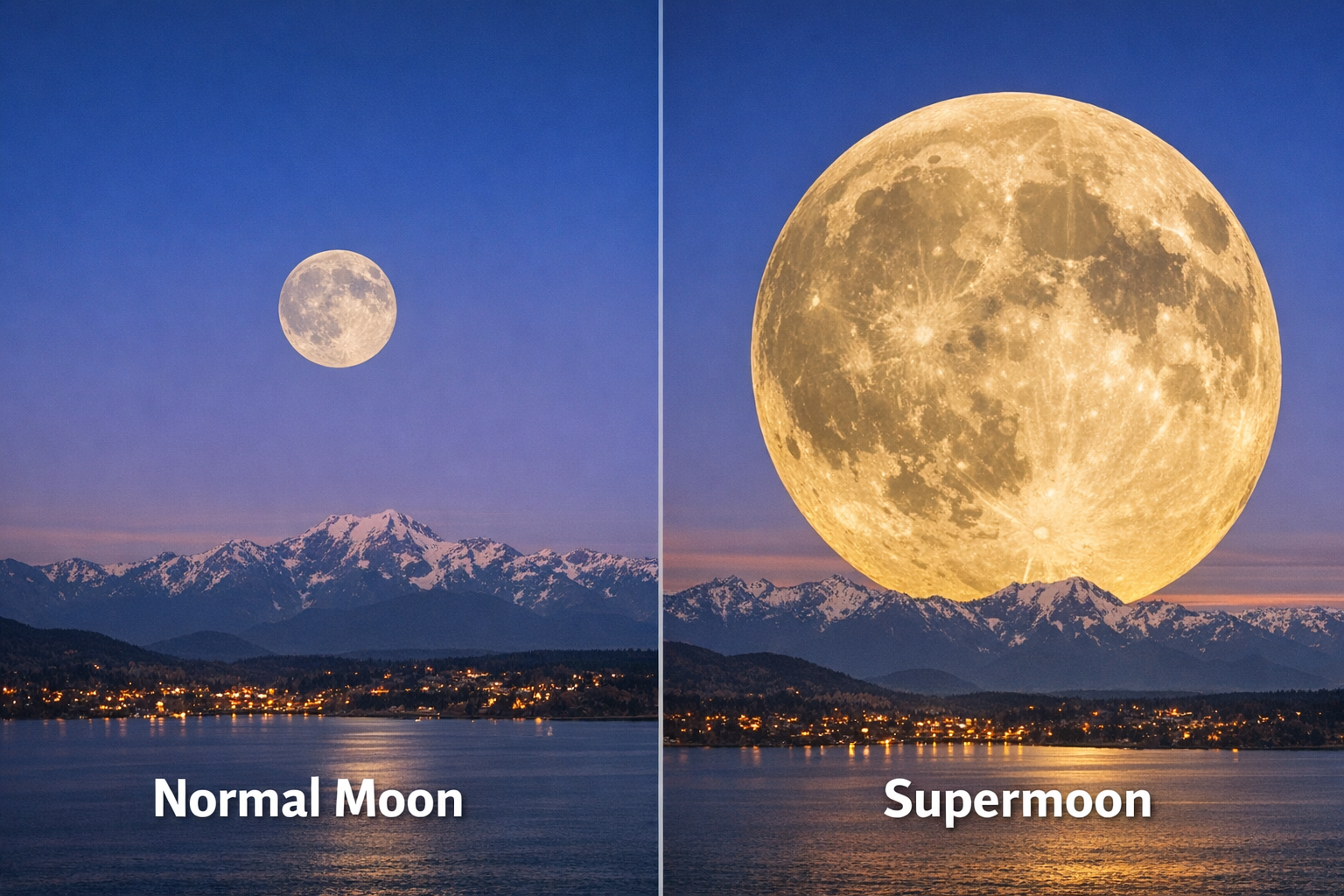
This is why a supermoon feels so dramatic. It’s not your imagination — the Moon really is closer.
2. Why the Moon Looks Even Bigger Near the Horizon
You’ve probably noticed that the Moon looks huge when it rises. This is called the Moon Illusion, and it’s one of the oldest optical tricks in human history.
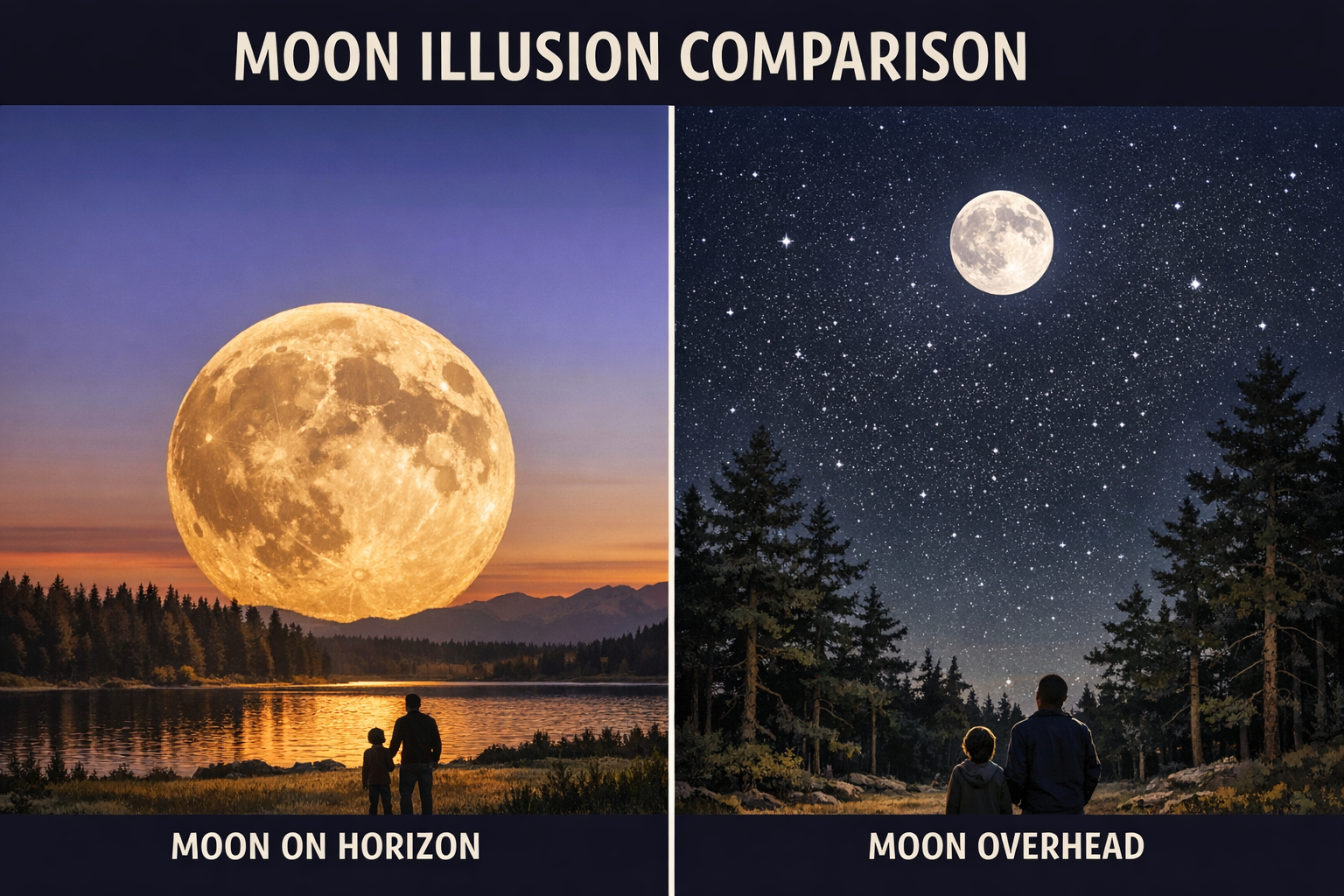
Here’s why it happens:
When the Moon is low, your brain compares it to buildings, trees, mountains, and the horizon.
When it’s high in the sky, there’s nothing to compare it to — so it looks smaller.
A supermoon amplifies this effect. That’s why photographers love capturing the Moon rising behind city skylines or mountains.
If you want the most dramatic view, watch the supermoon right at moonrise.
3. How Often Do Supermoons Happen?
Supermoons are not rare. In fact, they happen 3–4 times every year.
Why so many?
Because the Moon reaches perigee once every 27.3 days, and full moons happen every 29.5 days. These cycles sometimes line up — and when they do, we get a supermoon.
Some years have:
A single supermoon
A pair of supermoons
A “supermoon season” with three or four in a row
Each one is slightly different because the Moon’s orbit slowly shifts over time.
4. Types of Supermoons
Not all supermoons are the same. Astronomers classify them into two main types:
1. Full Supermoon The most famous kind — the Moon is full and closest to Earth.
2. New Supermoon Invisible to the eye, but still affects tides. This is when the Moon is new (dark) and at perigee.
Most people only talk about full supermoons because they’re visible and photogenic.
5. Do Supermoons Affect Earth?
Yes — but not in the dramatic way movies suggest.
A. Tides Become Higher (Perigean Spring Tides)
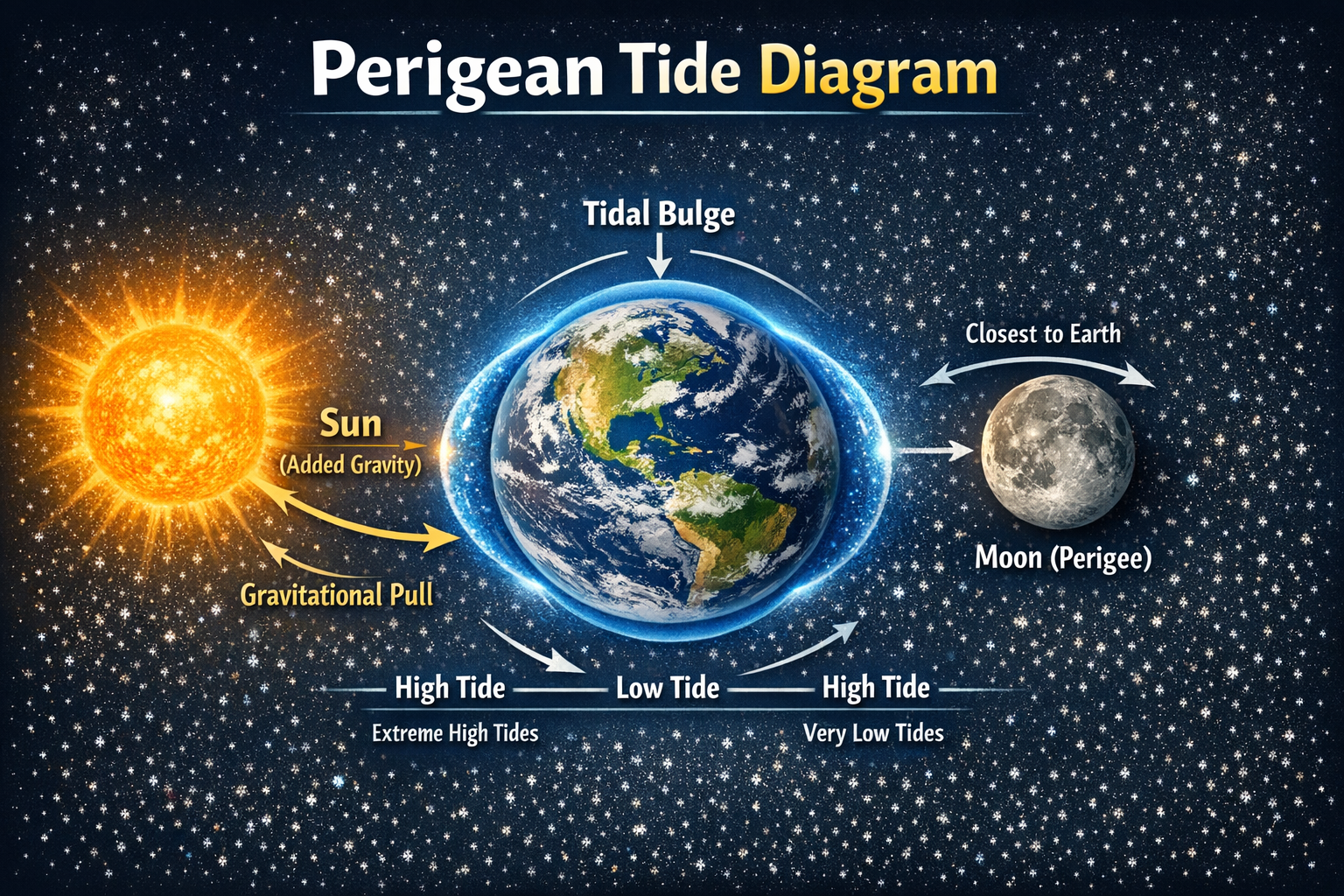
The Moon’s gravity pulls on Earth’s oceans. When the Moon is closer, tides become slightly stronger.
This can cause:
Higher-than-normal high tides
Lower-than-normal low tides
Minor coastal flooding in some areas
B. No Evidence of Earthquakes or Volcanoes
Despite myths, scientists have found no strong link between supermoons and natural disasters.
C. Wildlife Behavior
Some animals that rely on moonlight — like sea turtles and birds — may behave differently during brighter nights.
But overall, the effects are gentle and natural.
6. How to Watch a Supermoon
You don’t need a telescope. You don’t need special glasses. You don’t need to travel.
Just follow these simple tips:
1. Watch at Moonrise or Moonset
This is when the Moon looks biggest due to the Moon Illusion.
2. Find a Clear Horizon
Beaches, rooftops, open fields, and city viewpoints are perfect.
3. Add Foreground Objects
For photography, include:
Buildings
Trees
Mountains
Bridges
Skylines
This makes the Moon look even larger and more cinematic.
4. Use a Smartphone or Camera
Modern phones can capture supermoons beautifully. Use “Night Mode” or “Pro Mode” if available.
5. Check Local Weather
Clouds can hide the Moon — so plan ahead.
7. Why Supermoons Matter to Humans
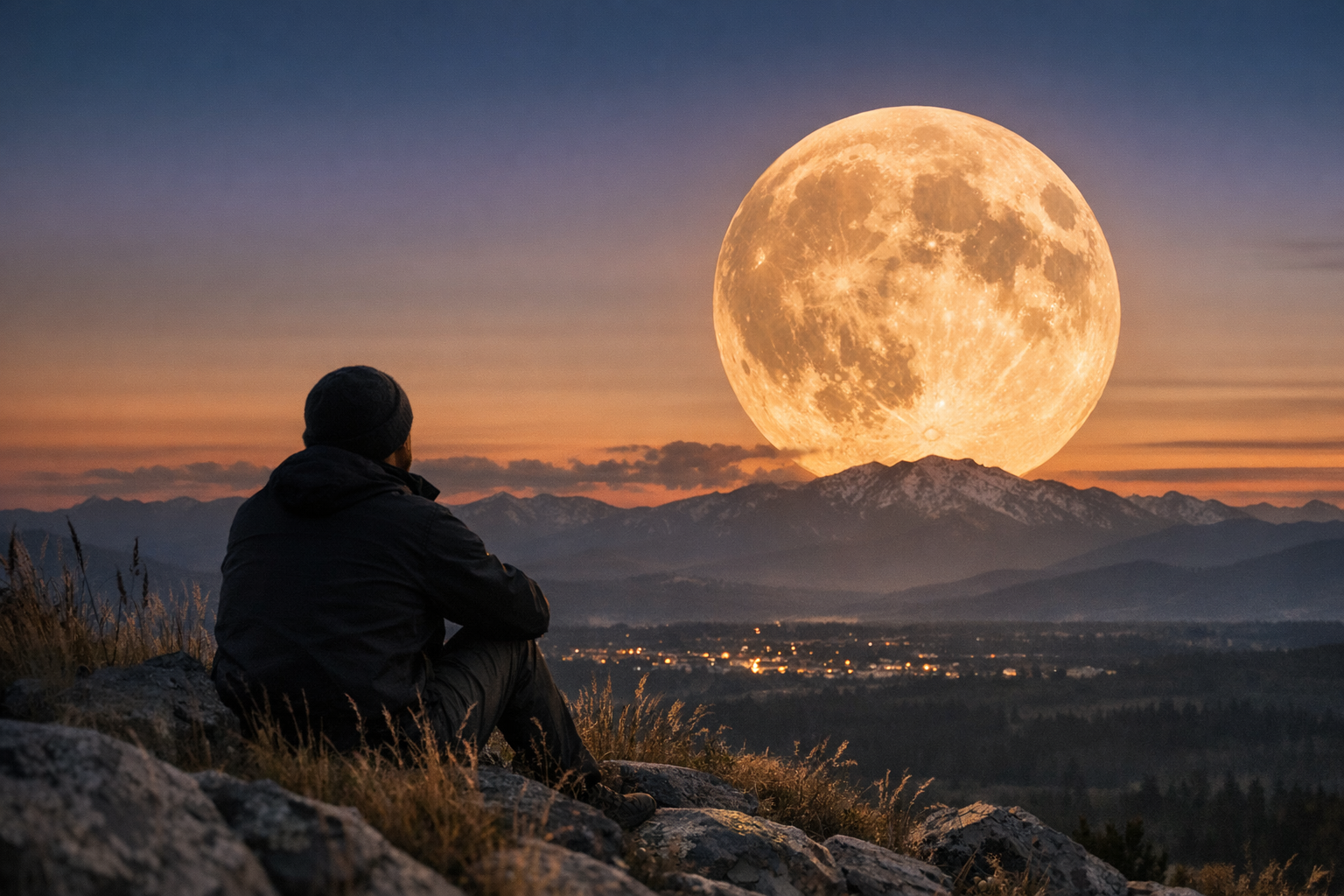
Supermoons are more than just astronomy. They connect us emotionally, culturally, and historically.
A. Ancient Civilizations
Many cultures used the Moon to track time, seasons, and festivals.
B. Storytelling and Mythology
Supermoons inspired legends about:
Werewolves
Gods and goddesses
Harvest rituals
Lunar celebrations
C. Modern Photography and Social Media
Supermoons are some of the most shared sky events online.
D. Human Connection
Millions of people around the world look up at the same Moon on the same night. It’s a shared cosmic moment.
8. Common Myths About Supermoons
Myth 1: Supermoons cause disasters
No scientific evidence supports this.
Myth 2: The Moon becomes physically bigger
It only appears bigger — it doesn’t grow.
Myth 3: Supermoons are extremely rare
They happen several times a year.
Myth 4: You need a telescope
Your eyes are enough.
9. Why Supermoons Look So Beautiful
A supermoon combines:
Real physical closeness
Extra brightness
Atmospheric color effects
The Moon Illusion
Human emotion and storytelling
This mix creates a sky moment that feels magical, even though the science is simple.
Final Takeaway
A supermoon is a beautiful reminder that the universe is always moving, always changing, and always offering something new to explore. It’s a simple event — the Moon being a little closer — but it creates a powerful emotional and visual experience for people everywhere.