Rain is one of the most intimate experiences we share with our planet. On Earth, it nourishes forests, feeds rivers, and shapes civilizations. But beyond our world, rain becomes something far stranger—violent, beautiful, and terrifying. Across the cosmos, clouds condense not only water but molten glass, sulfuric acid, methane, gemstones, and even diamonds.
What if rain didn’t fall as water—but as burning acid, shards of glass, or glittering jewels?
This journey through the Solar System and beyond explores the most extraordinary precipitation ever imagined—and in many cases, scientifically supported.
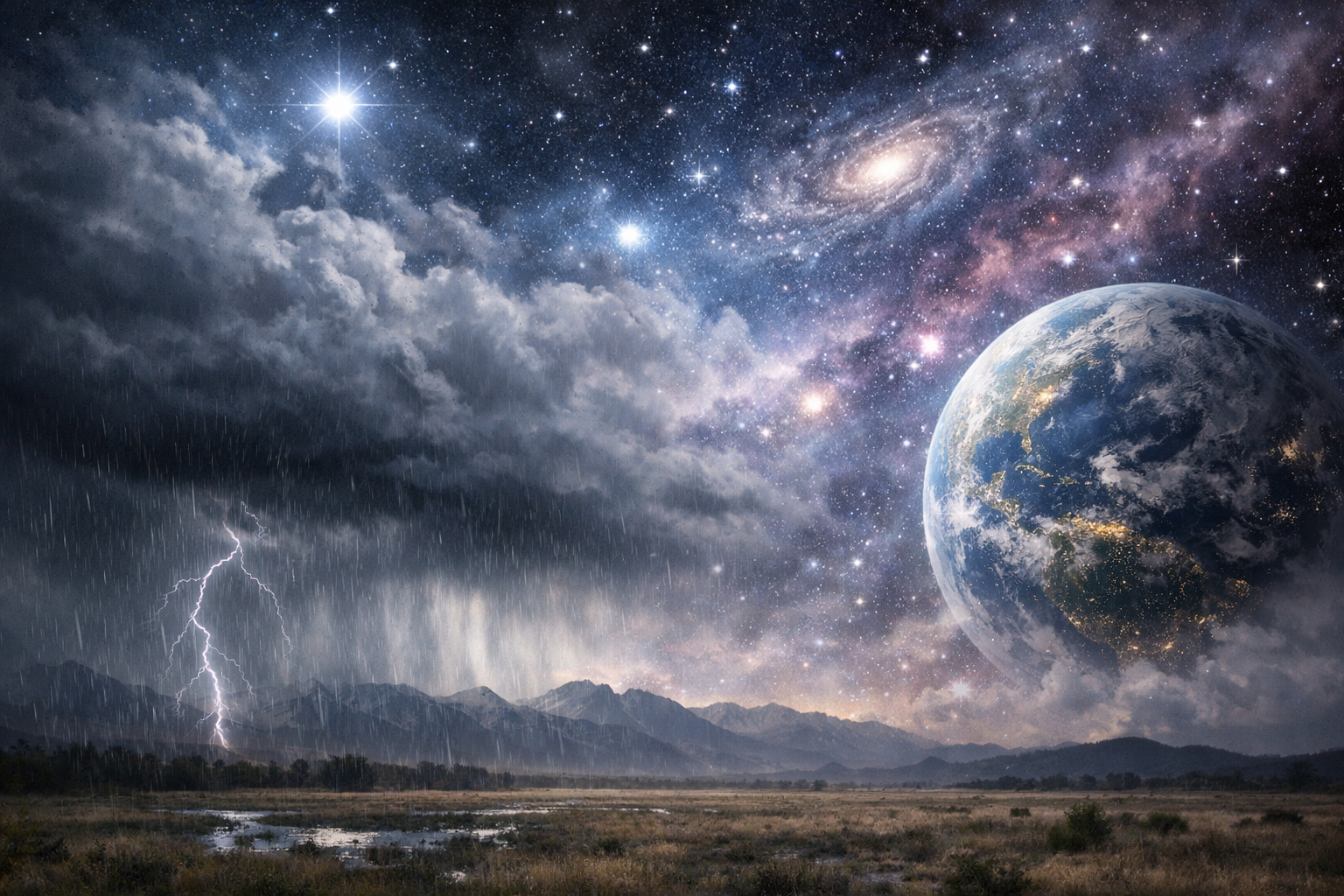
🌍 Rain on Earth: The Familiar Benchmark
Before we explore alien skies, we must understand our baseline: Earth.
Water Rain: Driven by evaporation, condensation, and precipitation, Earth’s water cycle is a delicate balance that sustains life.
Climate Engine: Rain redistributes heat across the planet, influencing weather systems and ecosystems.
Cultural Meaning: From ancient myths to modern poetry, rain symbolizes renewal, emotion, and survival.
Earth’s rain is gentle compared to what exists elsewhere. It is predictable, life-giving, and essential—making it the perfect contrast to the chaos beyond.
☀️ Strange Rains in Our Solar System
🔥 Venus: Acid Rain That Never Lands
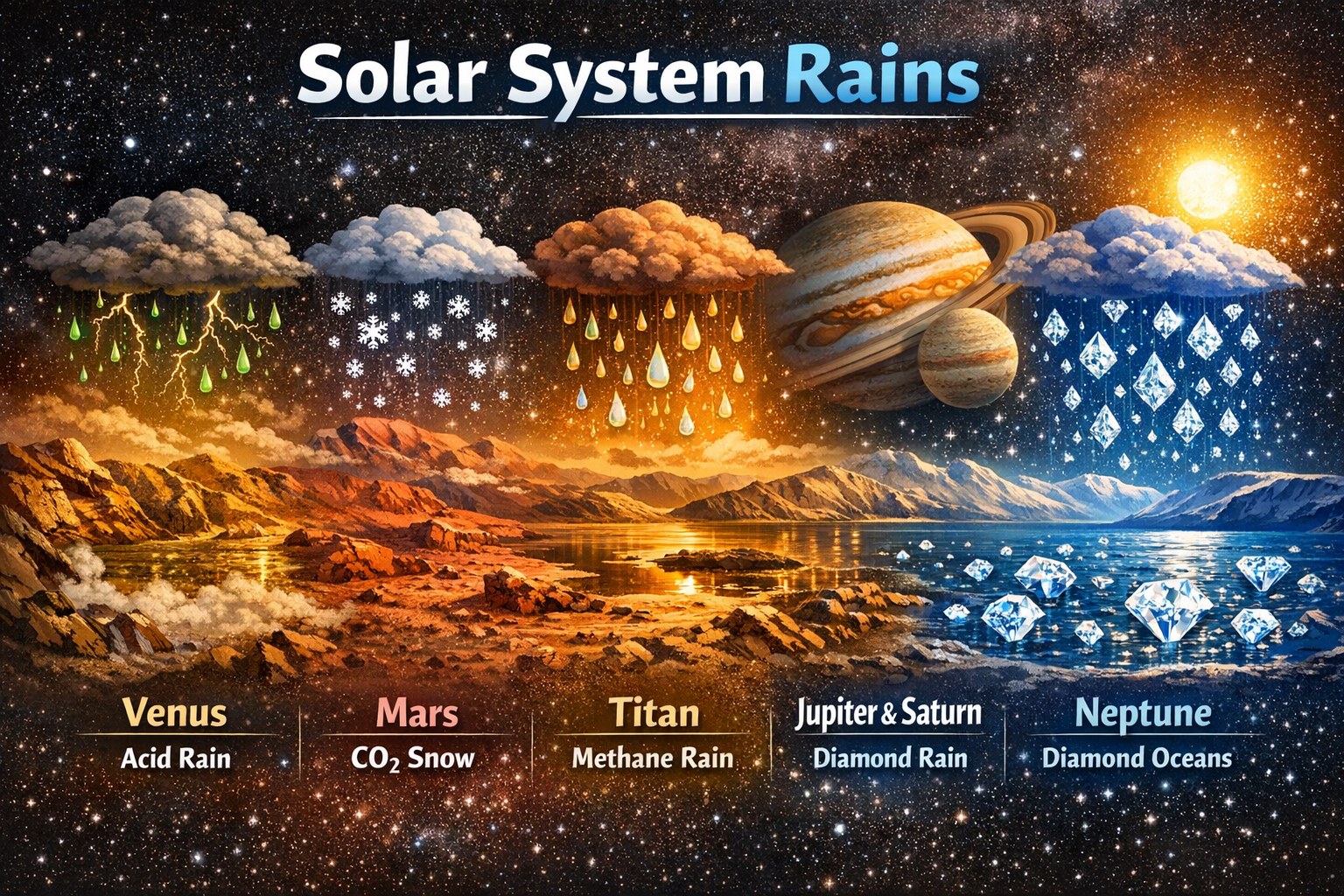
Venus is a world of crushing pressure and extreme heat. Its thick atmosphere is composed mostly of carbon dioxide, with clouds of sulfuric acid. Acid droplets form high in the atmosphere, but temperatures (~460°C) cause them to evaporate before reaching the surface. The result is a constant cycle of “phantom rain.”
❄️ Mars: Carbon Dioxide Snow
Mars lacks a thick atmosphere to support liquid rain. Instead, dry ice snow (solid CO₂) falls near the poles. Seasonal changes grow and shrink polar caps. Snowflakes may form as tiny cubes rather than hexagons like on Earth. It’s a silent, frozen version of precipitation.
🌊 Titan: Methane Rain and Alien Lakes
Titan is one of the most Earth-like worlds—yet completely alien. Methane replaces water in its cycle. Clouds form, rain falls, rivers flow. Lakes and seas of liquid methane and ethane exist. Titan is the only known world besides Earth with stable surface liquids, making it a prime target in astrobiology.
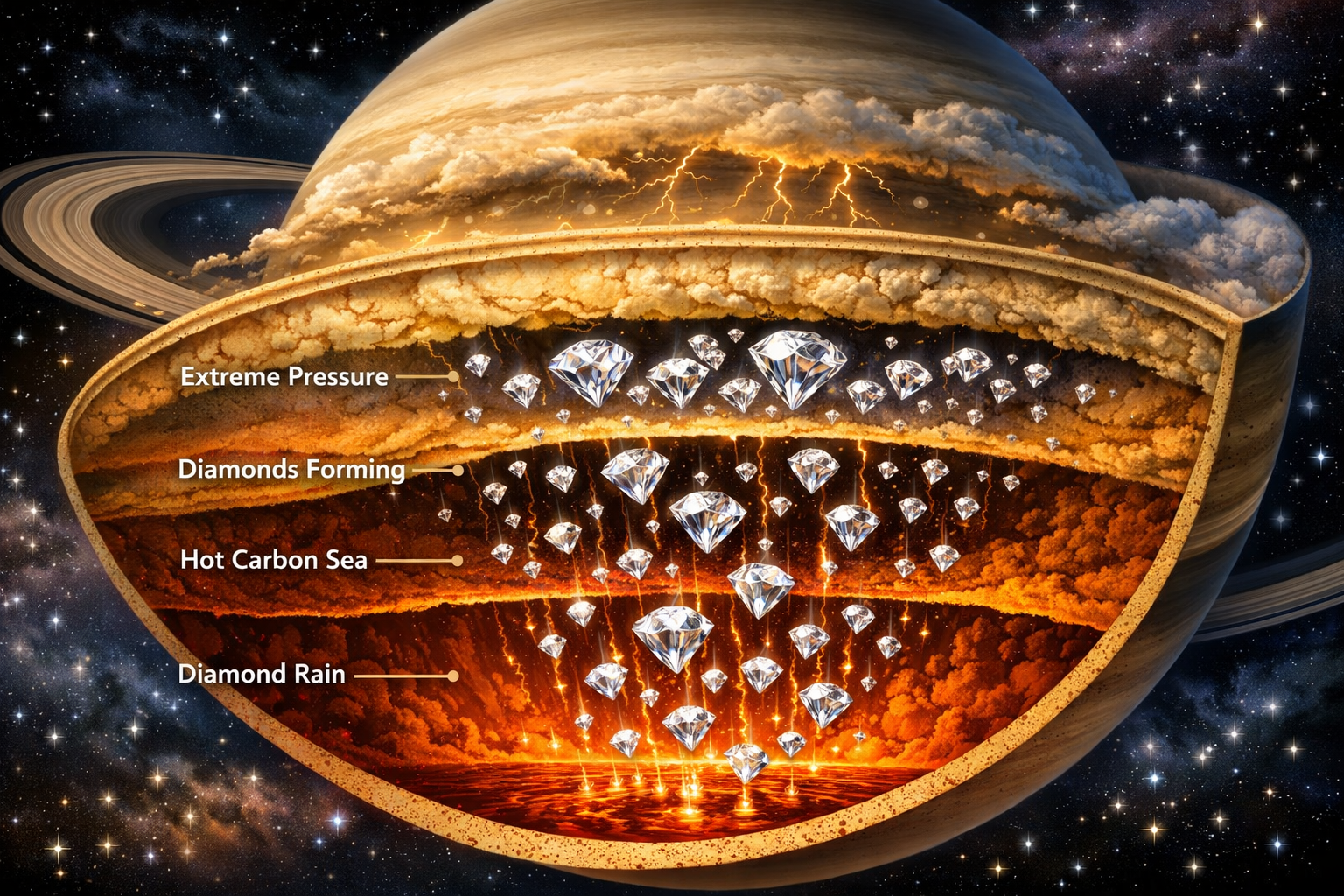
💎 Jupiter: Diamond Rain
Deep within Jupiter’s massive atmosphere, methane molecules break apart under pressure. Carbon atoms compress into diamond structures. Diamonds fall like hailstones through dense layers. Some models suggest diamonds melt into liquid diamond seas deeper inside.
💎 Saturn: A Jewel Factory in the Sky
Saturn likely hosts even more dramatic diamond storms. Lightning storms break methane into carbon. Carbon forms soot, then graphite, then diamonds. Diamonds may grow large as they fall. Scientists estimate billions of tons of diamonds could form every year.
🌌 Neptune: Diamond Oceans
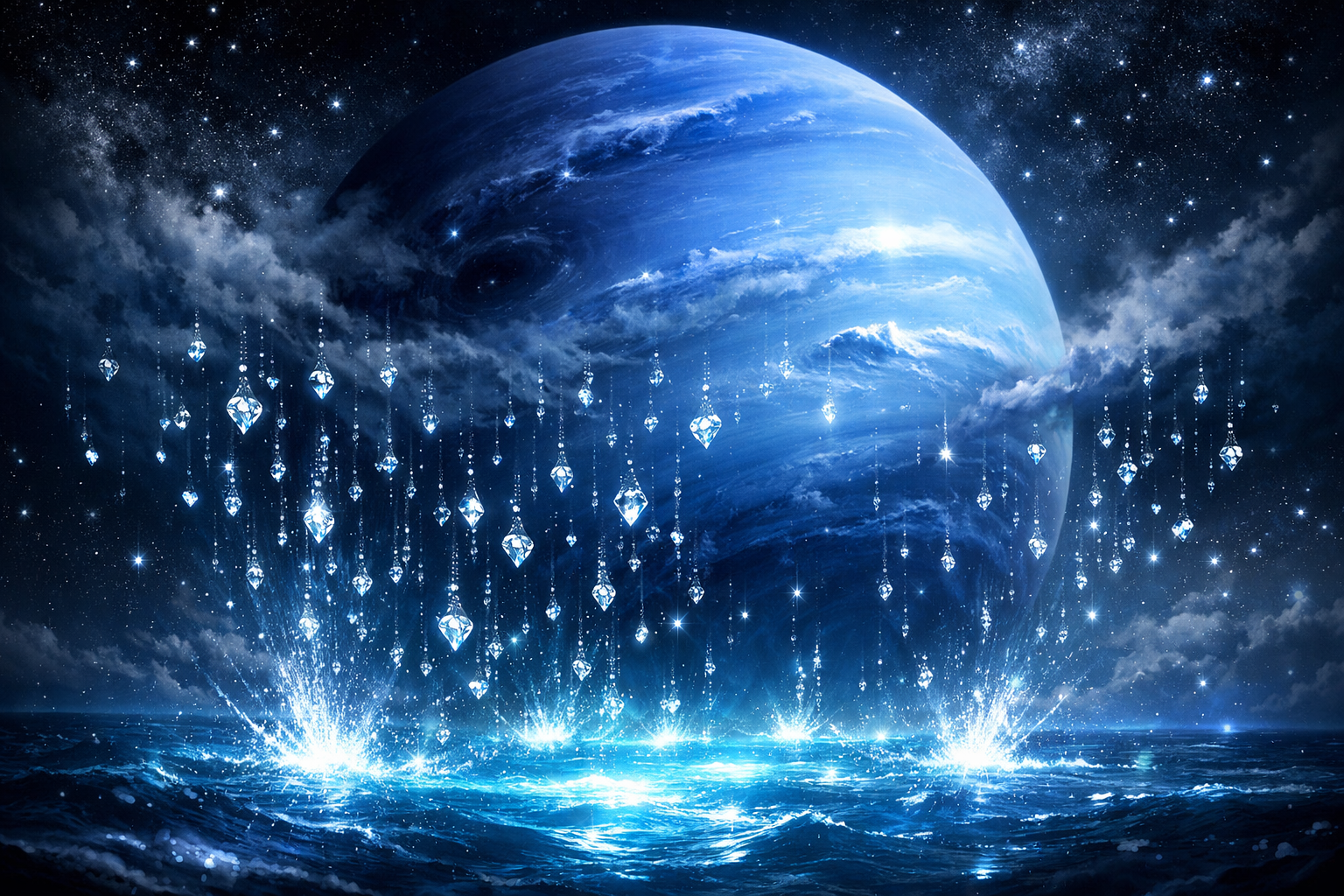
Neptune takes the concept further. Extreme pressure compresses carbon into diamonds. Diamonds may sink and accumulate, possibly forming vast liquid diamond oceans. Laboratory experiments on Earth have recreated these conditions, confirming that diamond formation is not just theoretical.
🌌 Beyond the Solar System: Exotic Exoplanet Rains
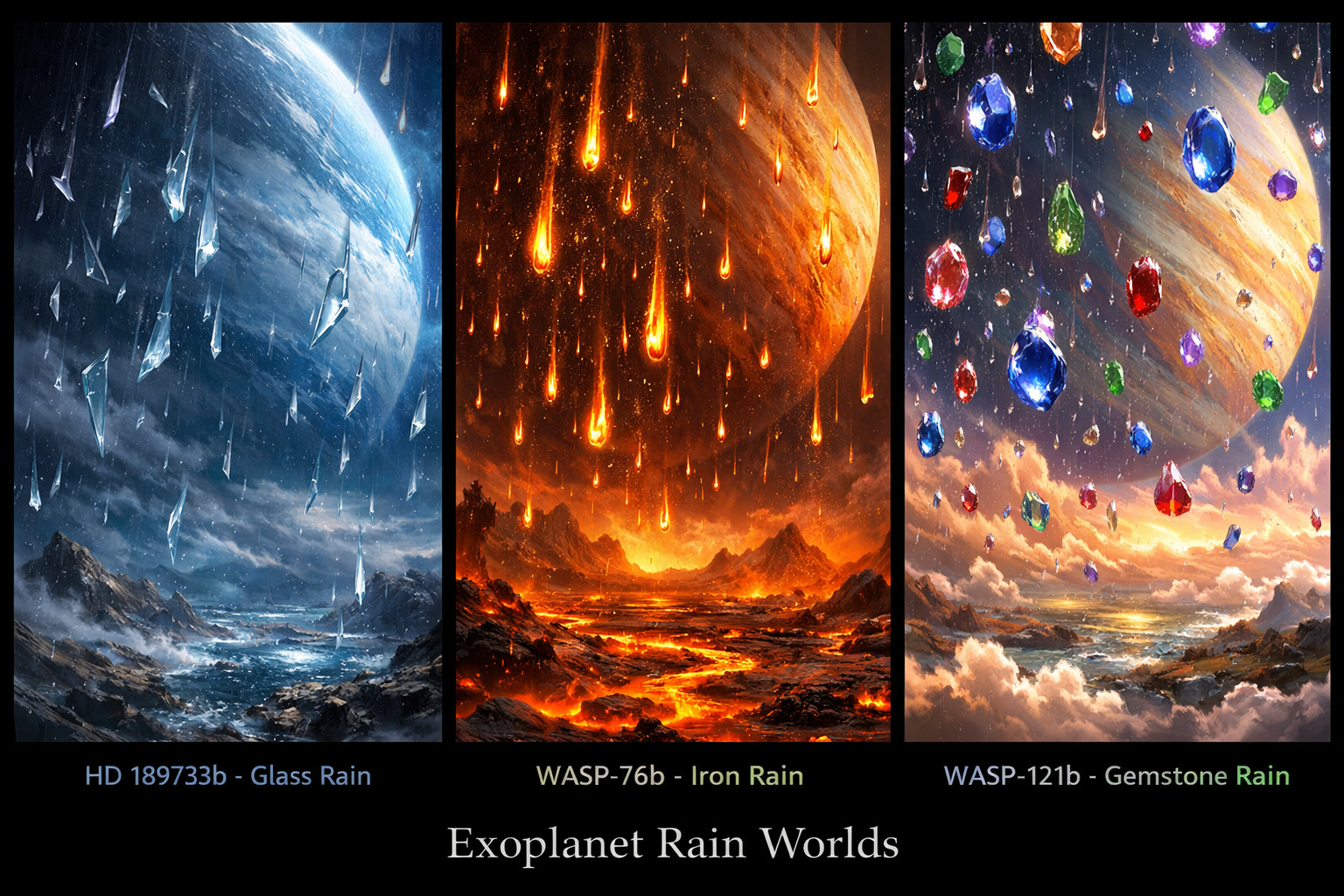
🌪️ HD 189733b: Winds exceed 7,000 km/h. Silicate particles form molten glass droplets. Rain falls sideways due to intense winds.
🔥 WASP-76b: A tidally locked planet with two extremes. Day side: iron vaporizes at extreme temperatures. Night side: cooler temperatures condense iron. Result: molten iron rain.
⚡ Luhman 16B: This failed star exhibits dynamic weather. Clouds of molten metals, rapid atmospheric changes, possibly iron precipitation.
💎 WASP-121b: Ruby and Sapphire Rain
Aluminum oxide forms under extreme heat. Condenses into ruby and sapphire droplets. Falls through a blazing atmosphere. This is likely one of the most visually stunning storms in the universe.
💠 PSR J2322-2650b: A Diamond World
Orbiting a pulsar, this planet challenges expectations. Carbon-rich composition. Conditions allow diamond formation. Possibly a low-pressure diamond rain system.
🧪 The Science Behind Diamond and Ruby Rains
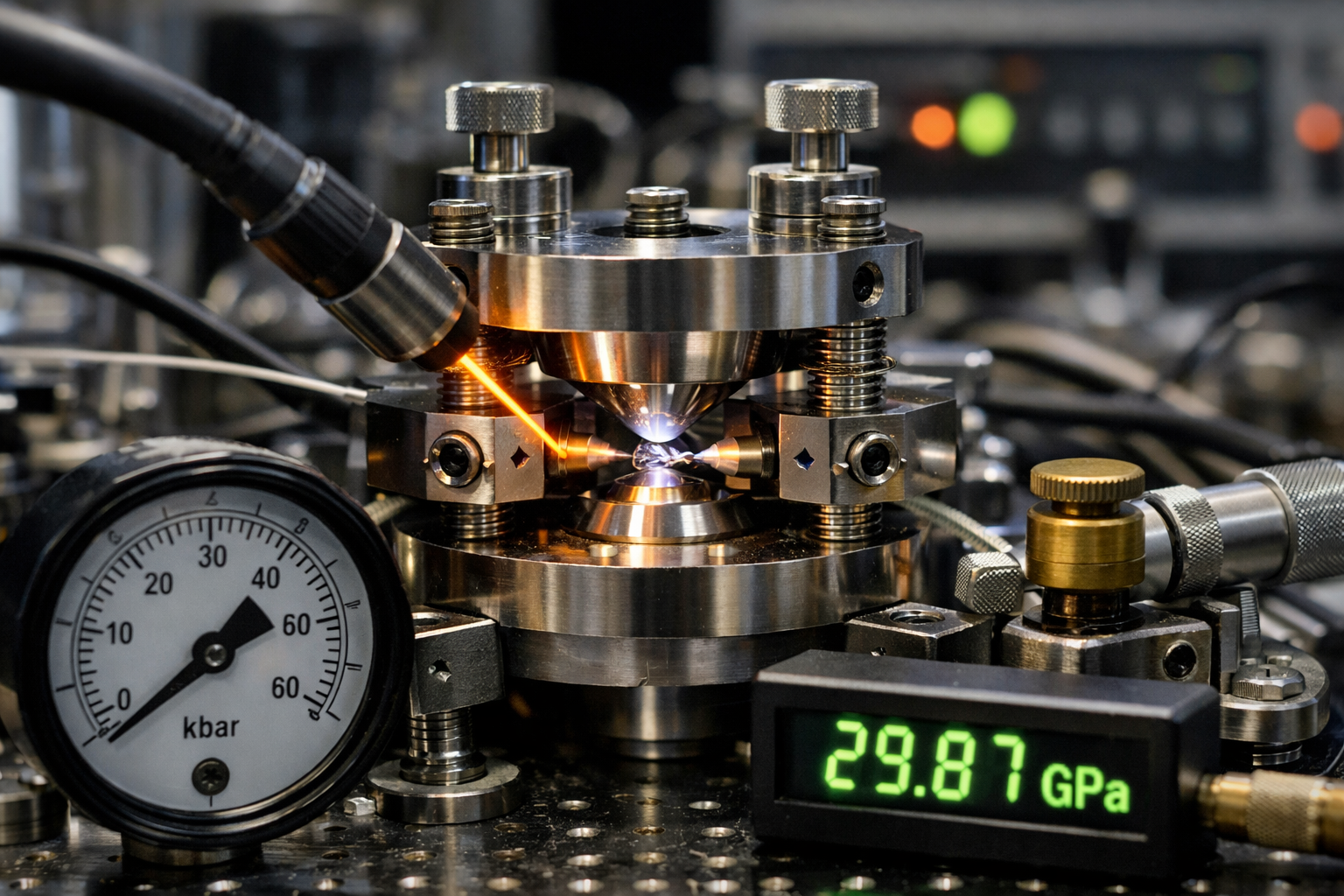
These phenomena are grounded in physics: Pressure + Heat break molecular bonds (like methane → carbon). Crystallization forms structured solids like diamonds. Condensation turns vapor into droplets (glass, iron, gemstones). Laboratory tools like diamond anvil cells simulate these conditions, proving that such exotic rains are scientifically plausible.
🌠 Why Cosmic Rains Matter
These aren’t just curiosities—they reveal deep truths: Planetary Formation, Interior Structure, Magnetic Fields, and Astrobiology. Exotic rains expand our understanding of habitable environments.
✨ Conclusion: A Universe Written in Storms
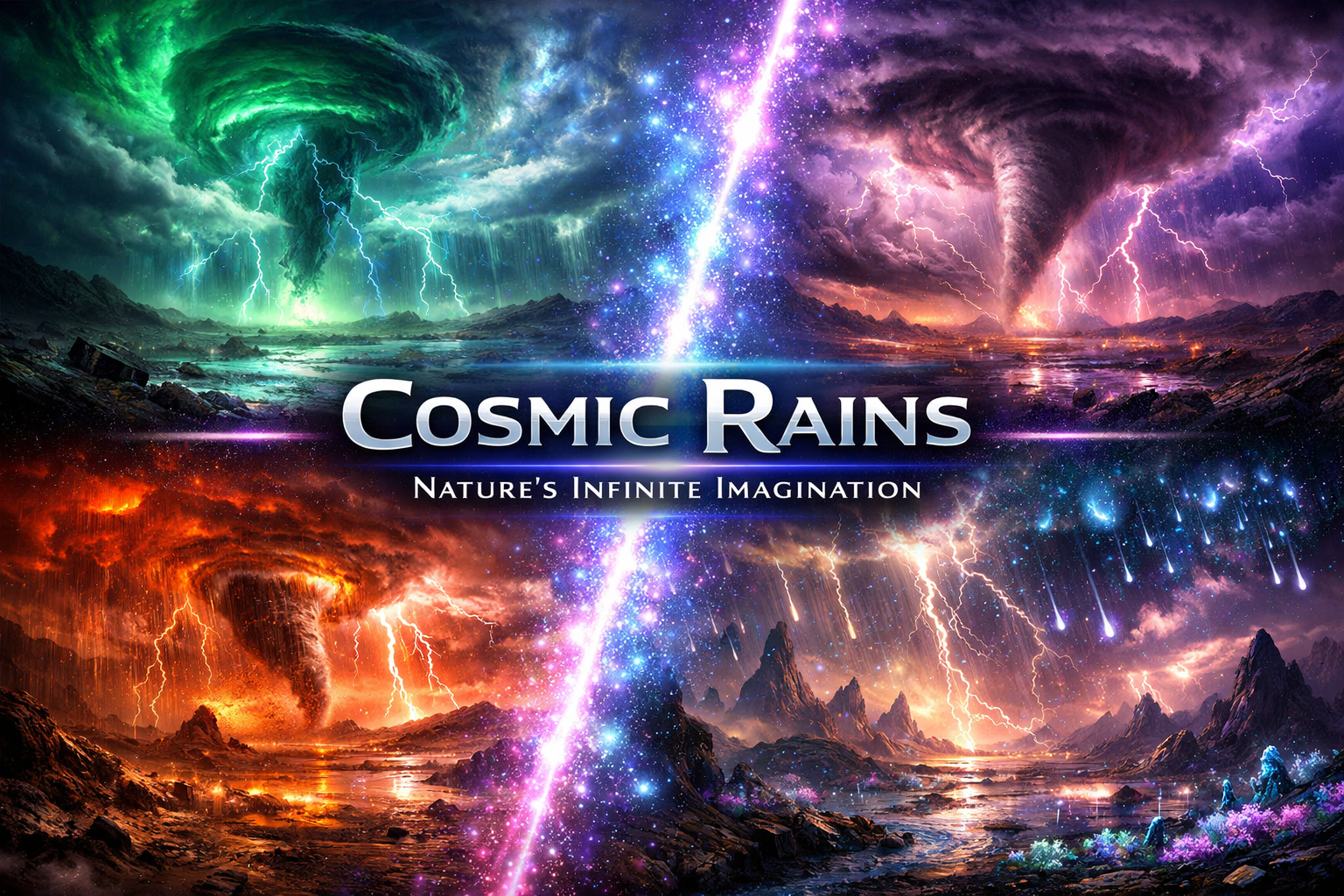
Rain is not just Earth’s story. Across the cosmos, it falls as acid, methane, glass, iron, rubies, and diamonds. Each type of rain is a signature of its world—a reflection of chemistry, physics, and cosmic extremes. In these alien skies, weather becomes something more than climate. It becomes art, violence, and wonder combined.
📚 Sources & References
NASA – Planetary science missions and atmospheric studies
ESA – Exoplanet and Solar System research
Nature Astronomy – Research on diamond formation in ice giants
Science Journal – High-pressure physics experiments
MIT planetary science publications
Caltech exoplanet discoveries
Laboratory experiments on diamond formation under extreme pressure (diamond anvil cell research)
Observational data from Hubble and ground-based telescopes on exoplanet atmospheres