

Introduction
Not every planet orbits a star. Some worlds drift alone through the darkness of interstellar space, untethered to any sun, wandering endlessly across the galaxy. These mysterious objects are known as rogue planets — planetary-mass worlds that travel freely through the cosmos after being ejected from their solar systems or forming entirely on their own.
Scientists believe there may be more rogue planets in the Milky Way than stars themselves. Hidden in the vast darkness between stellar systems, these cosmic wanderers challenge everything we know about planetary formation and survival. Their existence reveals that the galaxy is far more chaotic, dynamic, and mysterious than once imagined.
In this article, we’ll explore what rogue planets are, how astronomers detect them, real examples discovered across the galaxy, and whether these lonely worlds could even support life.
What Is a Rogue Planet?
A rogue planet is a planetary-mass object that does not orbit a star. Unlike Earth or Jupiter, which are gravitationally bound to the Sun, rogue planets travel independently through the galaxy.
Key Traits
No parent star: They are not gravitationally tied to any stellar system.
Size range: They may be as small as Earth or several times more massive than Jupiter.
Formation pathways:
Ejection: Formed inside a planetary system but violently expelled through gravitational interactions.
Independent formation: Created directly from collapsing gas clouds like stars, but without enough mass to ignite fusion.
Though invisible to the naked eye, rogue planets may be among the most common planetary objects in the universe.
Discovery Timeline
1999 (Japan): First hints of free-floating planetary objects in the Chamaeleon I cloud.
2000 (UK/Spain): Candidate rogue planets identified in the Orion Nebula and Sigma Orionis cluster.
2004 (USA): Spectroscopic confirmation of planetary-mass wanderers.
2011 (Japan/New Zealand): Microlensing surveys revealed Jupiter-mass rogue planets.
2020 (OGLE Collaboration): Detection of one of the smallest rogue planets ever discovered.
These findings gradually proved that planets can exist without stars.
How Astronomers Detect Rogue Planets
Direct Imaging
Young rogue planets still glow faintly in infrared wavelengths from leftover formation heat.
Gravitational Microlensing
Astronomers detect rogue planets when their gravity bends and magnifies the light of distant background stars.
Infrared Surveys
Space observatories such as WISE search for faint thermal signatures drifting through space.
Real Examples of Rogue Planets
PSO J318.5-22
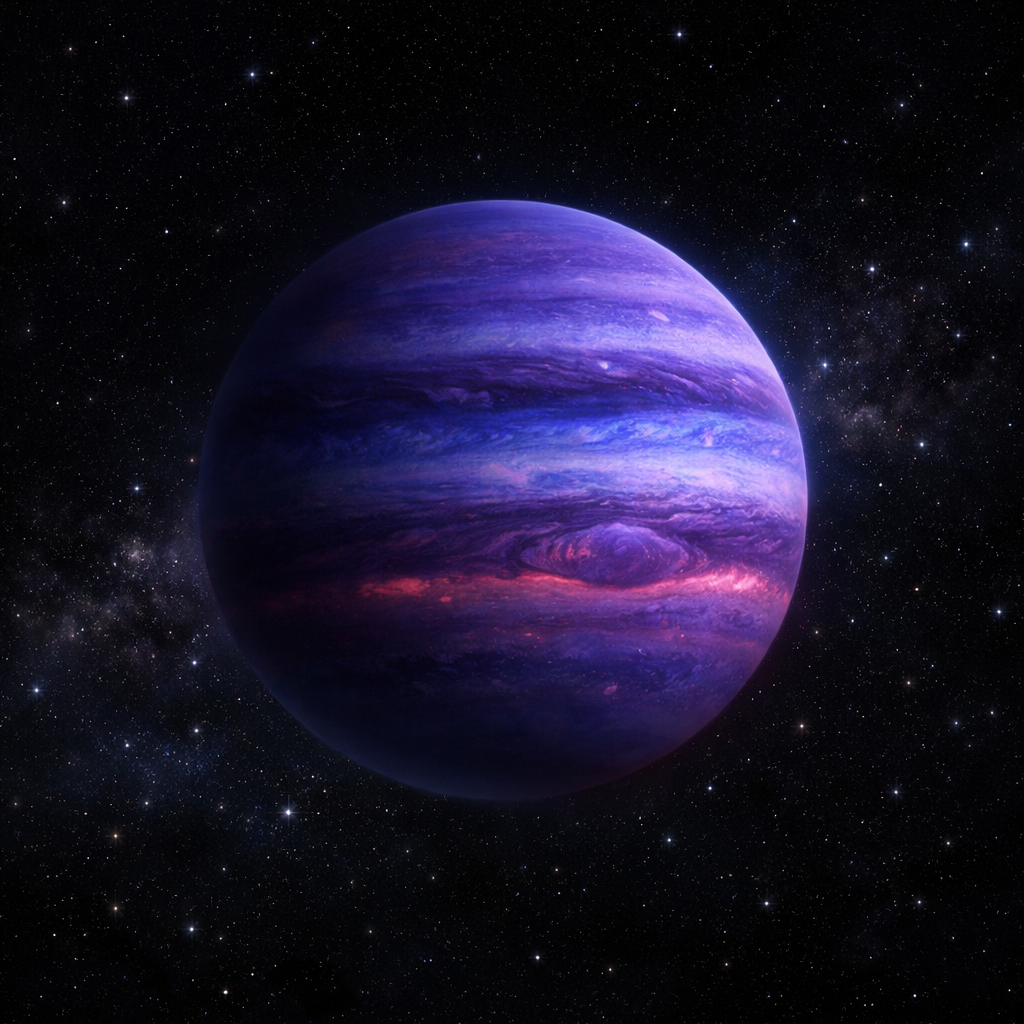
Location: About 80 light-years away.
Discovery: 2013.
Description: A young free-floating object with a mass similar to Jupiter.
Significance: One of the clearest known examples of a rogue planet.
CFBDSIR 2149-0403
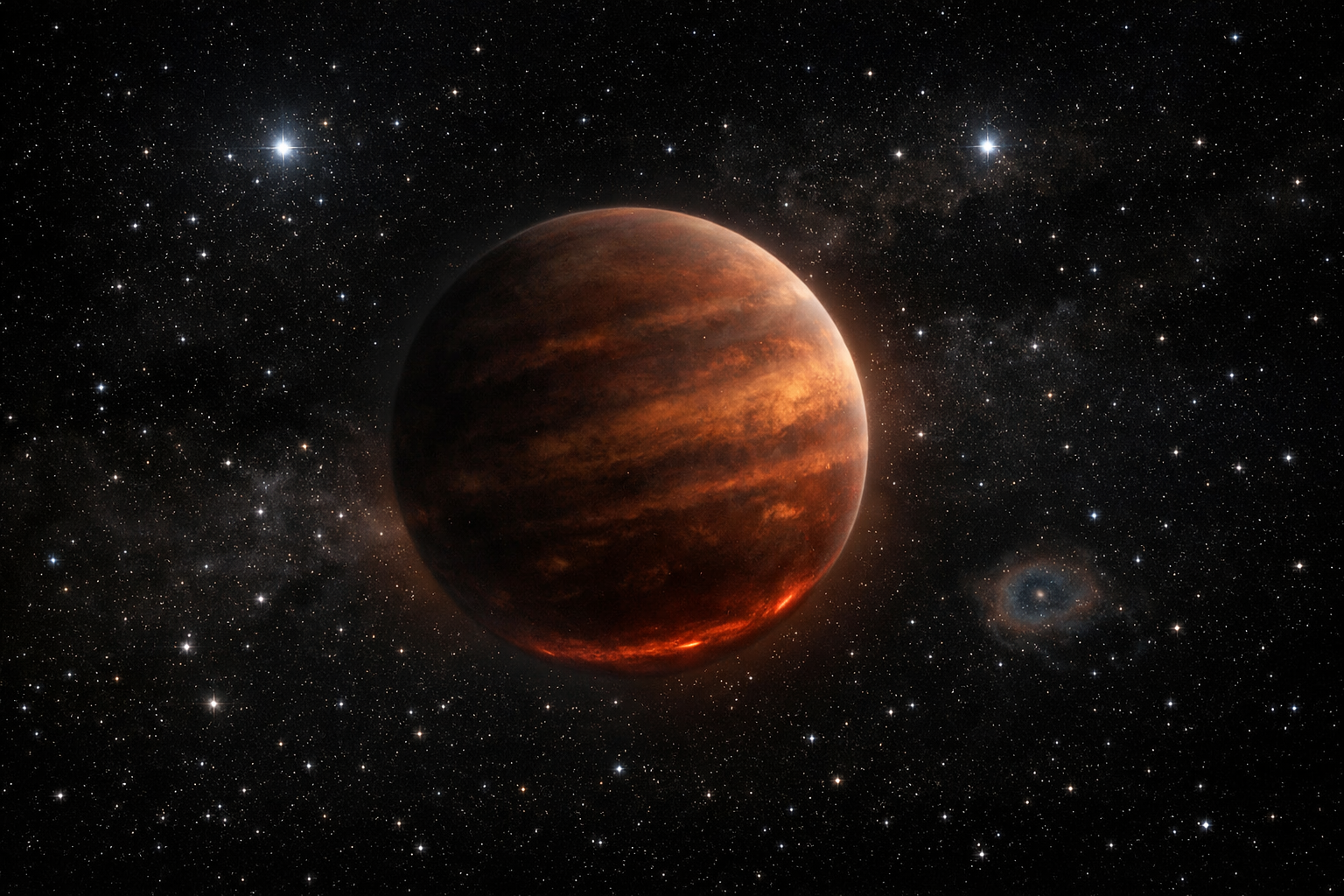
Location: Aquarius constellation.
Discovery: 2012.
Description: A Jupiter-sized wanderer with a faint infrared glow, possibly a rogue planet or failed brown dwarf.
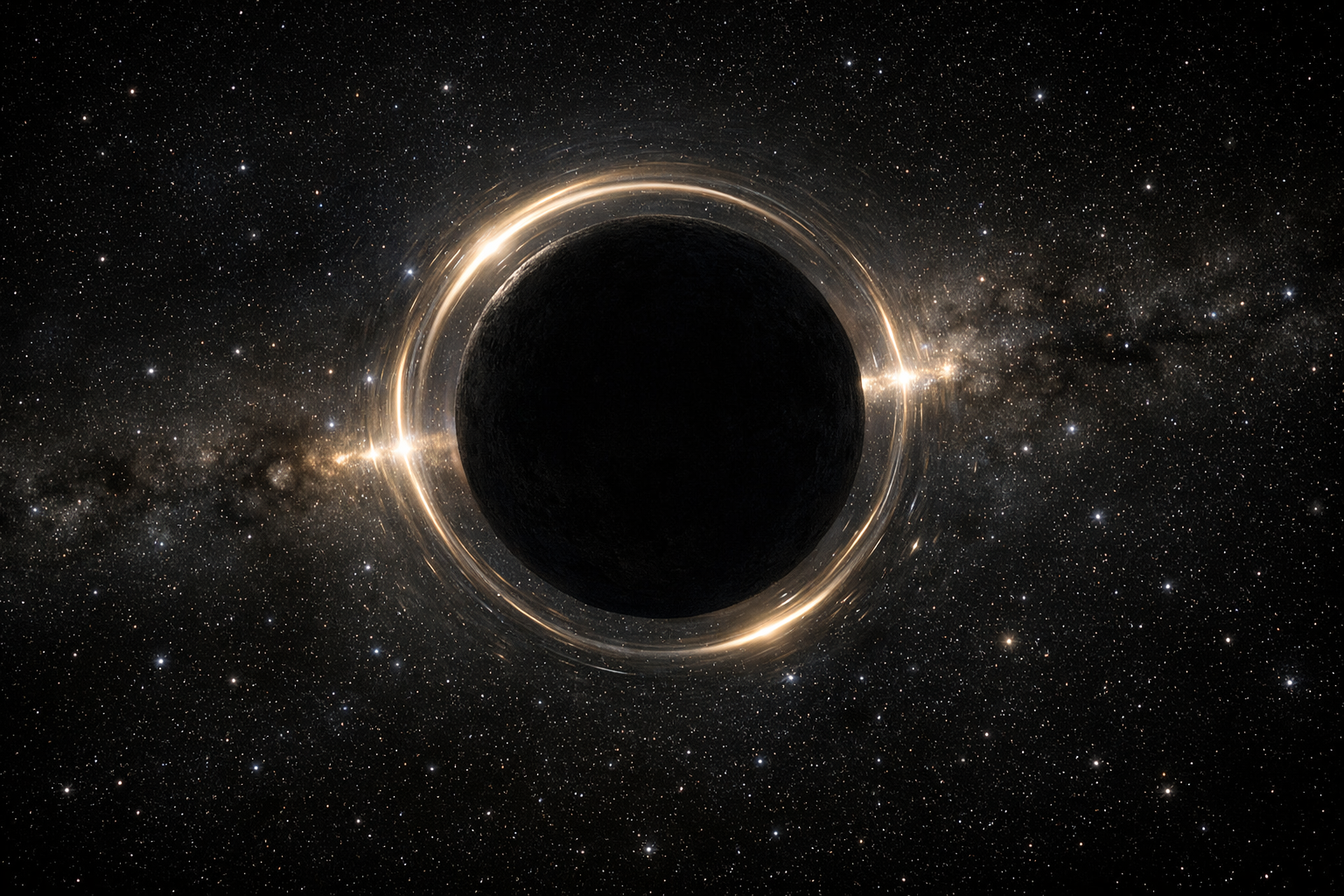
OGLE-2016-BLG-1928
Location: Galactic bulge.
Discovery: 2020 using microlensing.
Description: One of the smallest rogue planet candidates ever detected, possibly Earth-mass.
Significance: Revealed only through the distortion of background starlight.
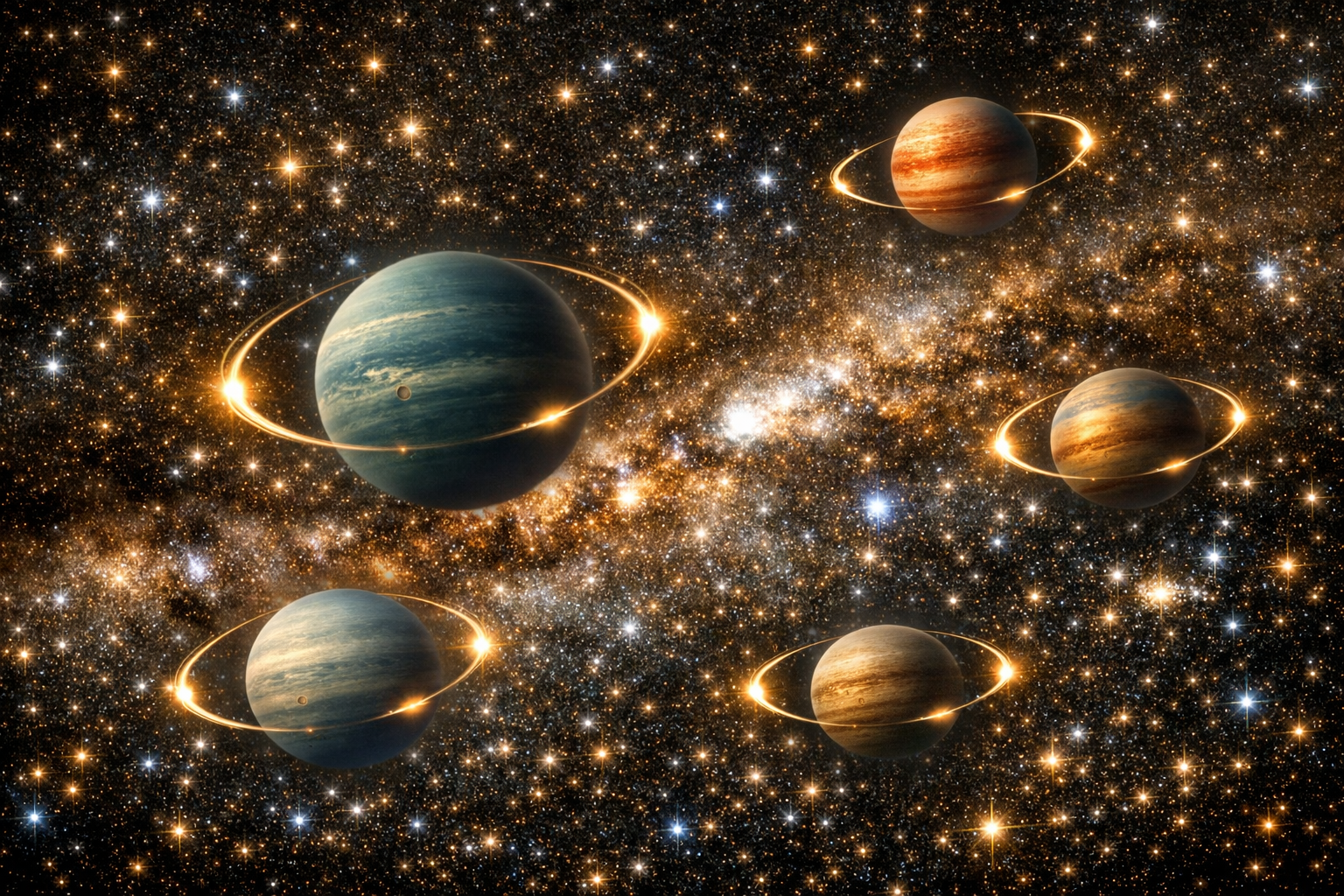
2011 Microlensing Discoveries
Location: Toward the galactic center.
Discovery: Multiple Jupiter-mass rogue planets.
Significance: Suggested rogue planets may outnumber stars in the Milky Way.
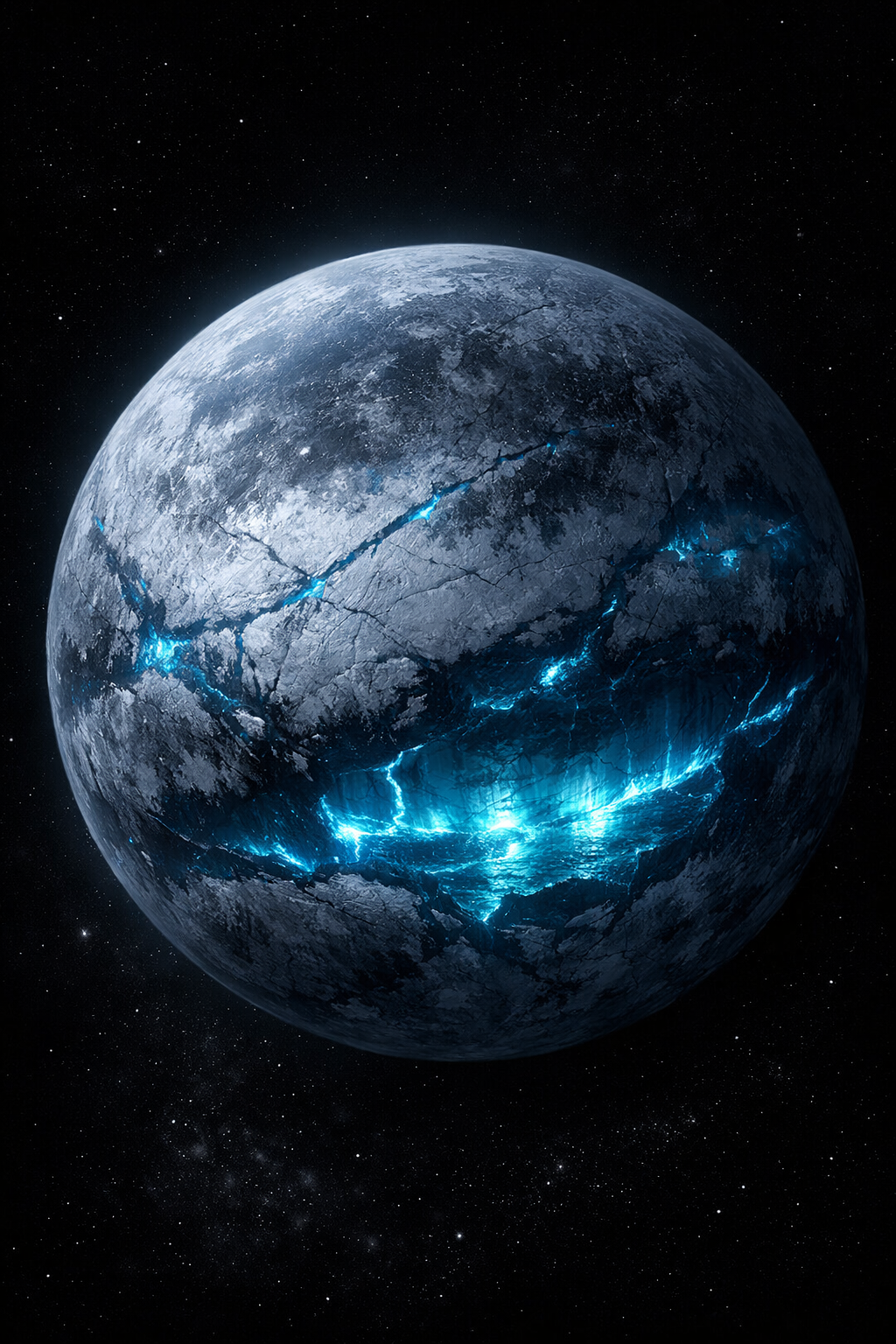
Rogue Planets in the Milky Way (Simulation View)
Scientific Significance
Rogue planets reshape our understanding of the cosmos:
Planetary Formation: Evidence of violent gravitational interactions inside young solar systems.
Galactic Population: Potentially trillions may exist within the Milky Way.
Astrobiology: Some rogue planets might contain hidden subsurface oceans.
These discoveries reveal that planetary systems are far more unstable and dynamic than once believed.
Rogue Planets and the Possibility of Life
Could life survive on a planet without sunlight?
While most rogue planets are likely frozen wastelands, scientists speculate that some may still support microbial ecosystems.
Possible Heat Sources
Radioactive decay inside the planet.
Residual heat from formation.
Gravitational pressure beneath thick atmospheres.
Potential Habitats
Subsurface oceans trapped beneath layers of ice could remain liquid for billions of years.
Exotic Life
Life forms might rely on chemical energy rather than sunlight, similar to organisms near deep-sea hydrothermal vents on Earth.
Though highly speculative, rogue planets expand the boundaries of astrobiology and the search for life.
Future Research
Upcoming missions such as the Nancy Grace Roman Space Telescope are expected to revolutionize rogue planet research.
Future observatories may:
Detect smaller Earth-mass rogue planets.
Measure how common free-floating worlds truly are.
Search for atmospheres and possible biosignatures.
Discover rogue planets closer to Earth.
Next-generation infrared telescopes and advanced microlensing surveys will likely uncover thousands more hidden wanderers.
Cultural and Philosophical Impact
Rogue planets capture the imagination because they symbolize isolation, mystery, and survival in the darkness.
In science fiction, they are often portrayed as hidden worlds, exiled civilizations, or forgotten cosmic refuges. Philosophically, they remind humanity that the universe does not always follow familiar rules.
They challenge our solar-centric view of existence and reveal that planets can survive even without the warmth of a star.
Conclusion
Rogue planets are among the universe’s most mysterious worlds — silent wanderers drifting endlessly between the stars. Their existence reveals the violent nature of planetary systems, the hidden diversity of the galaxy, and the possibility that life may survive in places once thought impossible.
From faint infrared glows to the bending of distant starlight, astronomers continue developing new ways to uncover these invisible worlds. Every discovery pushes the boundaries of our understanding and proves that the cosmos is far stranger than humanity once imagined.
Somewhere in the darkness beyond the stars, countless unseen worlds drift alone — waiting to be discovered.