



Cosmic Update – May 20, 2026
The universe never stays quiet for long. This week, astronomers and space agencies revealed discoveries so powerful and mysterious that they could reshape how we understand galaxies, stars, and cosmic magnetic fields. From an unbelievably energetic supernova powered by a newborn magnetar to a giant magnetic twist hidden inside the Milky Way, scientists are uncovering clues about forces that shape the cosmos itself.
At the same time, NASA’s Psyche spacecraft delivered breathtaking views of Mars during its deep-space journey toward one of the strangest objects in the solar system — a metallic asteroid unlike anything humanity has explored before.
These discoveries are not only visually spectacular but scientifically important. Together, they show that the universe is far more dynamic, violent, and mysterious than we once imagined.
A Supernova Powered by a Magnetar
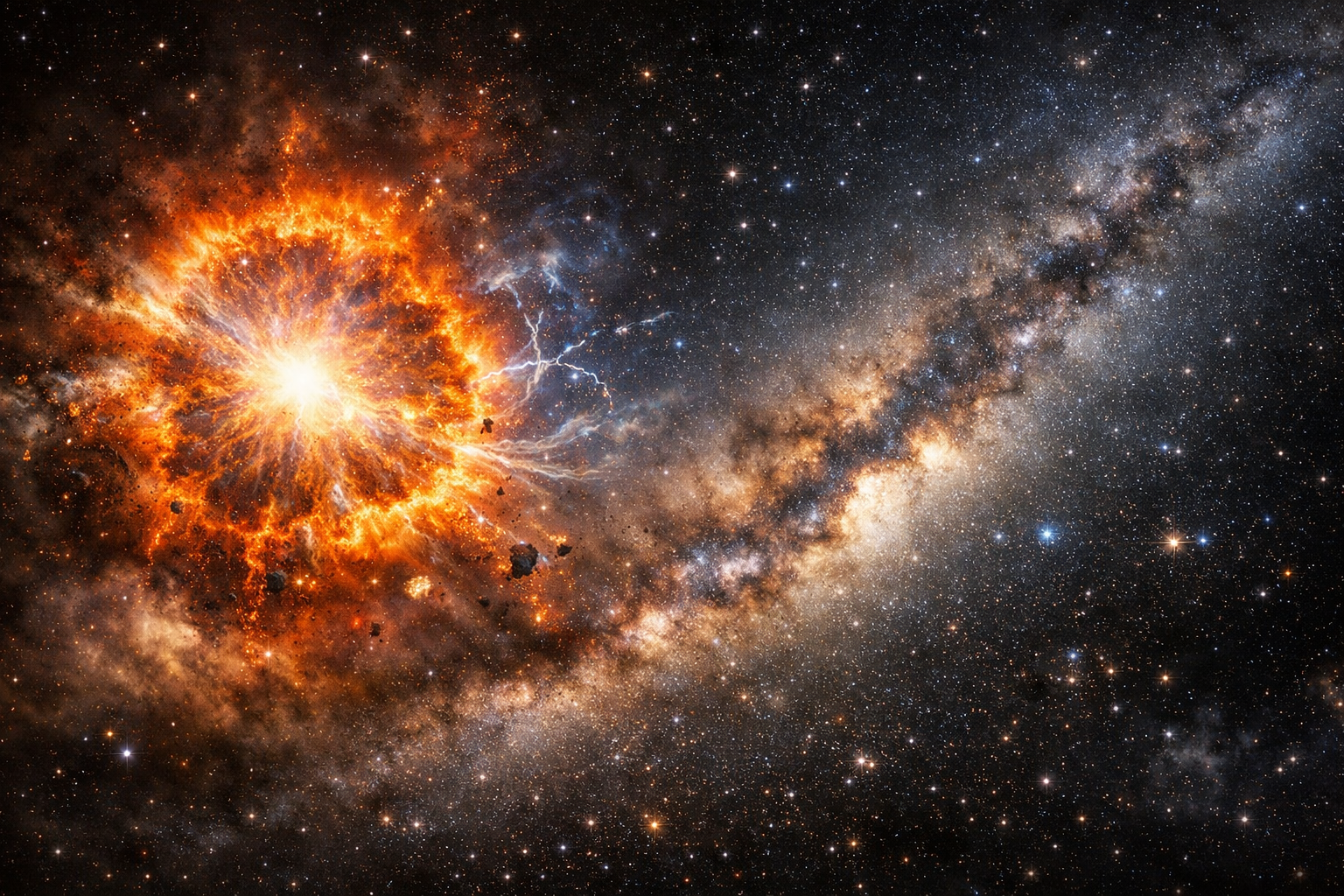
One of the most exciting discoveries came from NASA’s Fermi Gamma-ray Space Telescope, which detected an extremely energetic supernova unlike typical stellar explosions. Supernovas already rank among the most powerful events in the universe, but this one appeared even brighter and more energetic than scientists expected.
Researchers believe the explosion was powered by a newborn magnetar — one of the most extreme objects known in astrophysics.
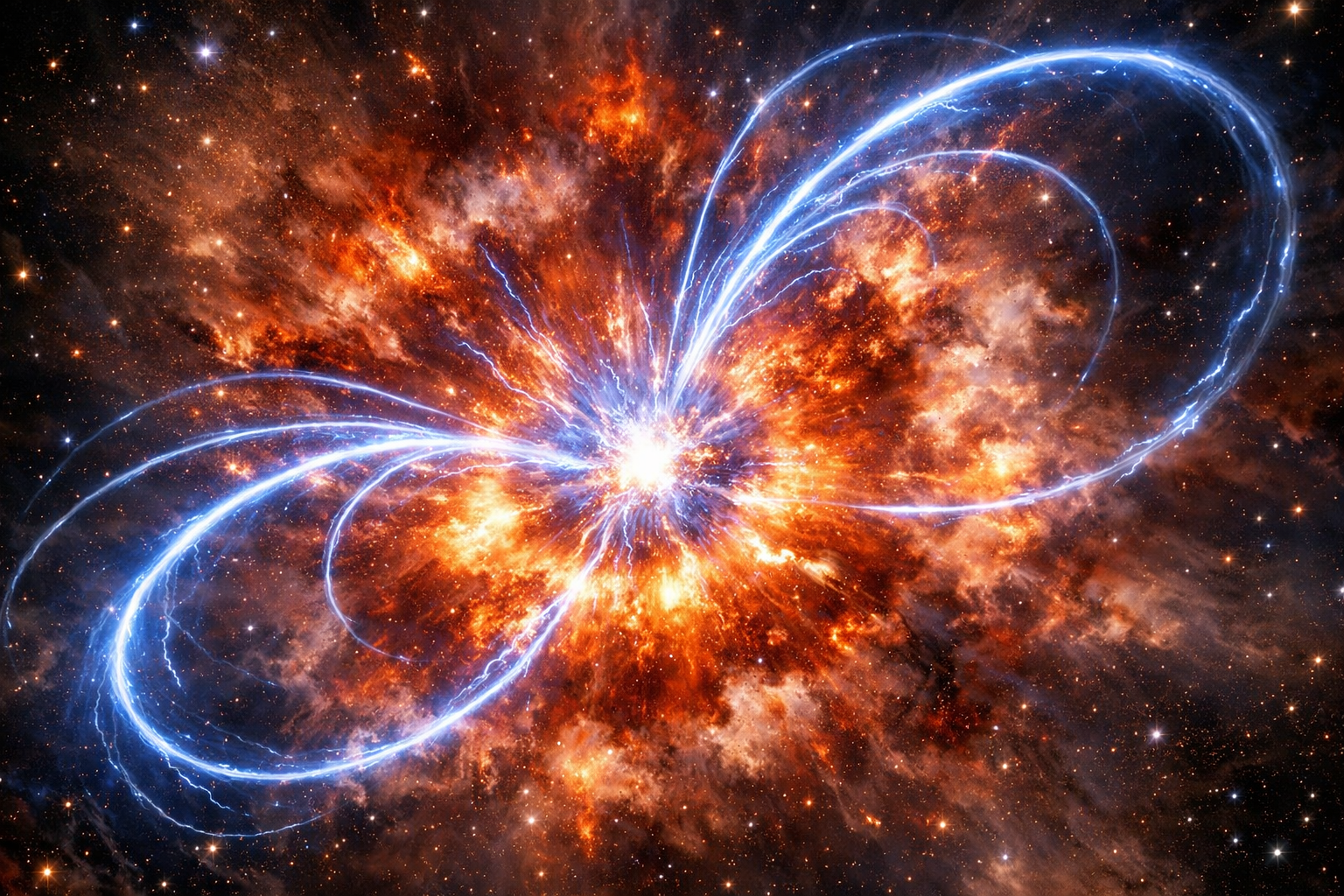
A magnetar is a special type of neutron star formed after a massive star collapses. While neutron stars are already incredibly dense, magnetars possess magnetic fields so powerful that they can distort atoms and generate bursts of radiation detectable across vast cosmic distances.
This newly observed supernova appears to have been energized by the rapid spinning motion and intense magnetic energy of the magnetar at its center. Scientists think the newborn object released enormous amounts of energy into the surrounding explosion, causing the supernova to shine far brighter than ordinary stellar deaths.
Some astronomers describe these events as “superluminous supernovas” because they can briefly outshine entire galaxies.
The discovery gives researchers another opportunity to study how magnetars form and how their extreme magnetic fields influence surrounding matter. It may also help scientists understand how the heaviest elements in the universe are created during violent stellar explosions.
What Makes Magnetars So Dangerous and Fascinating?
Magnetars are among the most terrifying objects in the known universe. Their magnetic fields are trillions of times stronger than Earth’s magnetic field. If a magnetar passed too close to Earth, its magnetic energy could disrupt electronics and potentially damage atoms inside living tissue.
Fortunately, all known magnetars are safely far away from our planet.
Despite their danger, scientists are fascinated by these cosmic objects because they represent physics under extreme conditions that cannot be recreated on Earth. Studying them allows astronomers to test theories about gravity, magnetic forces, and matter compressed to unbelievable densities.
The recent supernova discovery suggests magnetars may play a larger role in shaping powerful cosmic explosions than previously thought.
Astronomers are now searching for more examples across the universe, hoping to understand why some stars produce ordinary neutron stars while others become magnetars capable of powering extraordinary explosions.
A Giant Magnetic Flip Hidden Inside the Milky Way
As if the magnetar discovery was not dramatic enough, astronomers studying our own galaxy uncovered another mystery hidden within the Milky Way itself.
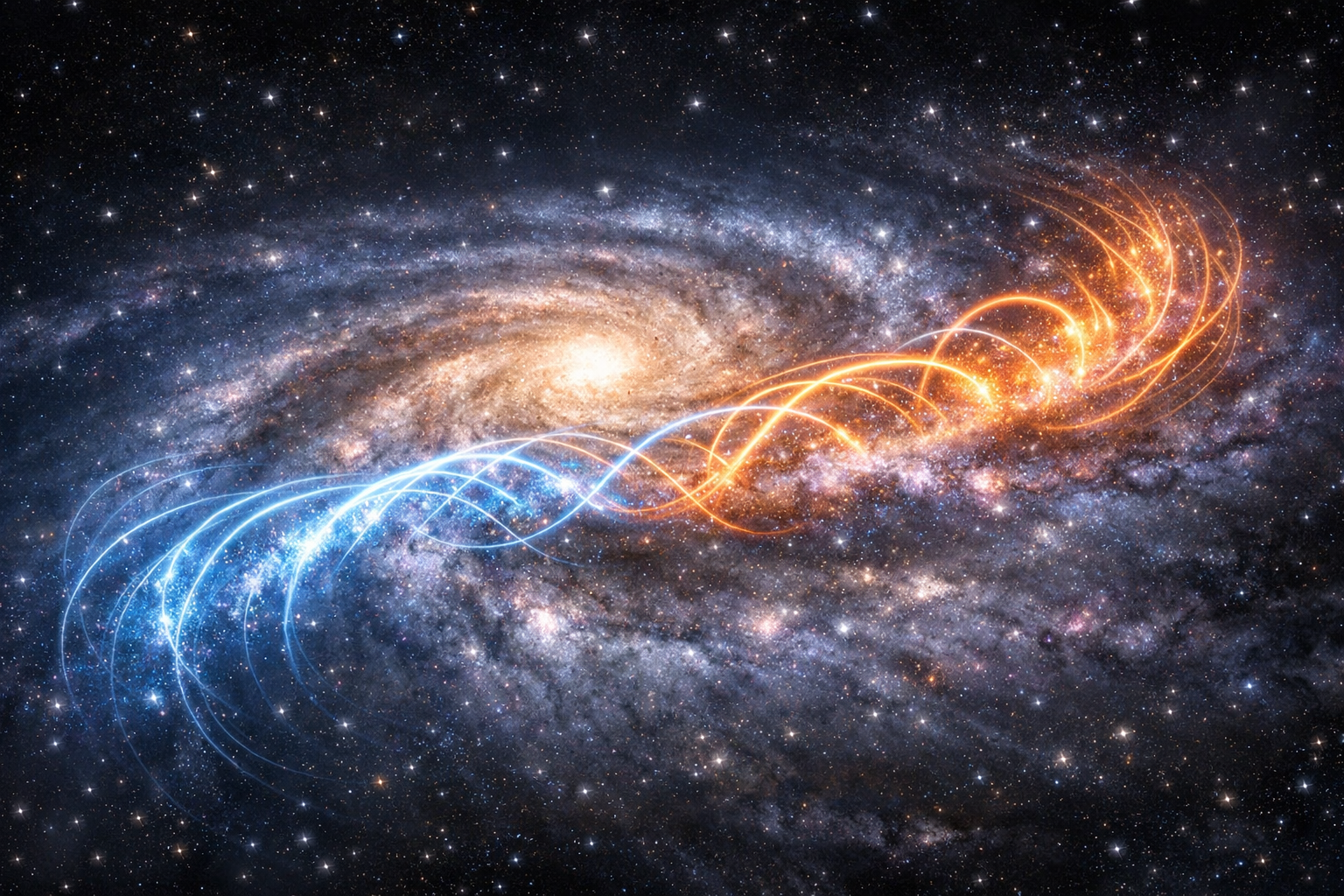
Using advanced radio observations and magnetic mapping techniques, researchers discovered a giant magnetic reversal inside the Sagittarius arm of the Milky Way. This region contains dense clouds of gas, dust, and active star formation.
The discovery revealed that the galaxy’s magnetic field suddenly changes direction across a massive region of space.
This “cosmic flip” surprised researchers because galactic magnetic fields are incredibly difficult to observe and map. Unlike stars or planets, magnetic fields cannot be seen directly. Scientists detect them by studying how radio waves and charged particles move through space.
The Milky Way’s magnetic field plays a major role in controlling how gas moves across the galaxy. Because gas clouds eventually collapse into stars, magnetic fields may influence where stars form and how quickly galaxies evolve.
The newly discovered reversal could therefore reshape scientific understanding of galactic structure and star formation.
Why Galactic Magnetic Fields Matter
For decades, astronomers focused mainly on gravity when studying galaxies. However, magnetic fields may be equally important in shaping cosmic environments.
Magnetic fields influence:
- Star formation
- Cosmic ray movement
- Gas cloud behavior
- Galactic evolution
- Plasma activity in deep space
The newly discovered magnetic reversal inside the Milky Way suggests our galaxy may contain far more complex magnetic structures than scientists realized.
Some researchers compare galactic magnetic fields to invisible highways guiding energy and matter through space.
Understanding these structures could eventually help explain why galaxies evolve differently and why certain regions produce stars more actively than others.
This discovery also highlights how much humanity still does not understand about our own galaxy despite centuries of astronomical observation.
NASA’s Psyche Spacecraft Captures Mars Views
Meanwhile, NASA’s Psyche spacecraft continues its historic mission toward the metallic asteroid Psyche, believed to be the exposed core of an ancient protoplanet.
During a recent flyby of Mars, the spacecraft captured stunning images of the Red Planet, including dramatic views near the icy south polar region.
The flyby was not only visually impressive but scientifically useful. NASA used Mars’ gravity to help accelerate the spacecraft deeper into space, a maneuver known as a gravity assist.
The mission is especially important because asteroid Psyche may contain huge amounts of metal, including iron and nickel. Scientists believe studying it could provide clues about how rocky planets — including Earth — formed billions of years ago.
Unlike most asteroids, Psyche appears unusually metallic, making it one of the strangest known objects in the solar system.
The mission could therefore offer humanity a rare look at what planetary cores may resemble beneath the surfaces of worlds like Earth and Mars.
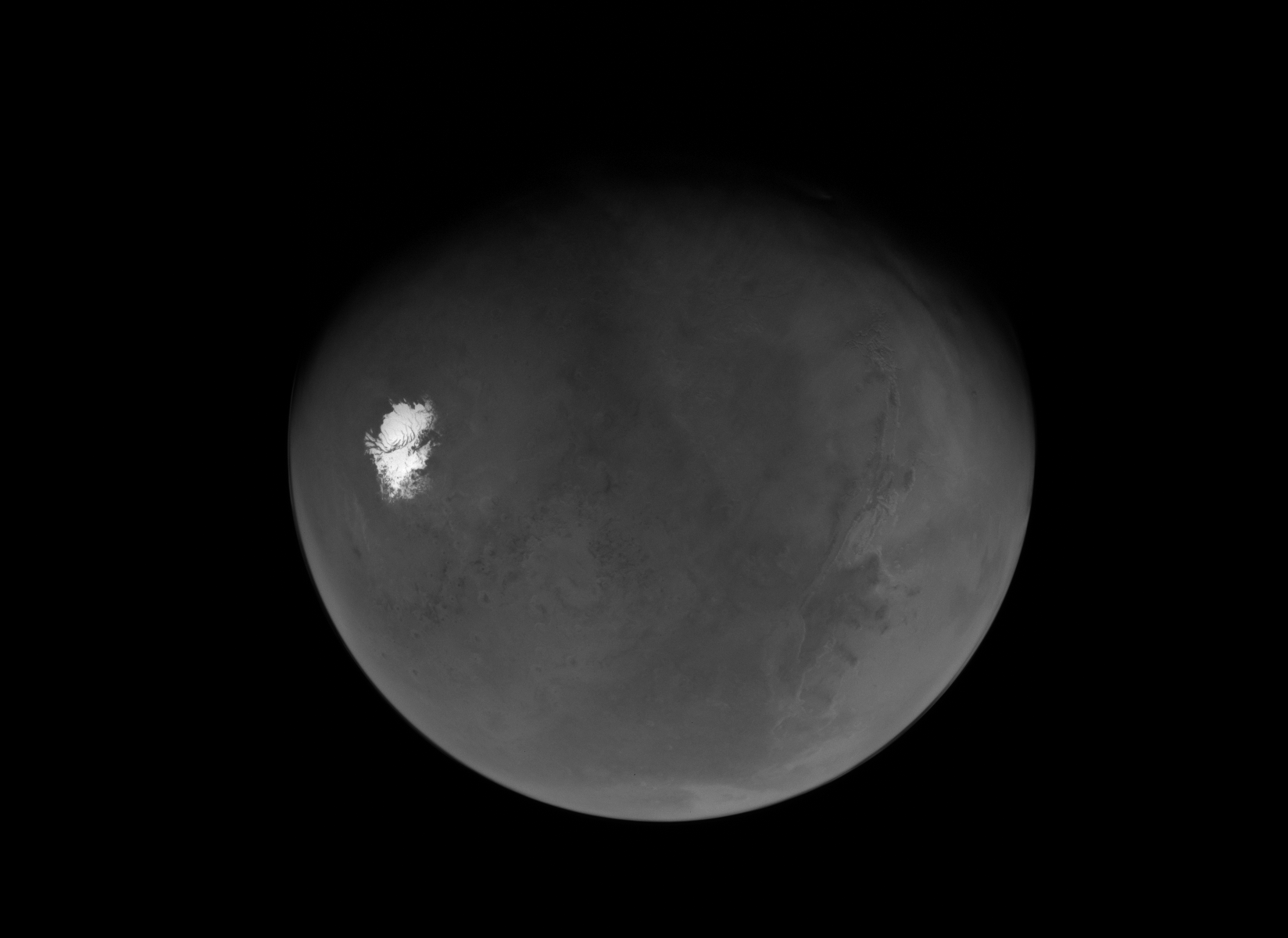
Image Credit: NASA
The Universe Is Becoming More Mysterious
What makes these discoveries exciting is not just their scale, but what they reveal about the hidden complexity of the cosmos.
A magnetar-powered supernova shows the unbelievable violence possible during stellar death. A magnetic reversal inside the Milky Way reveals that invisible forces shape our galaxy in ways scientists are only beginning to understand. And NASA’s Psyche mission reminds us that even nearby objects in our solar system still contain major mysteries waiting to be explored.
Every year, astronomy uncovers discoveries that challenge older theories and force humanity to rethink its place in the universe.
The cosmos is not static. It is active, evolving, explosive, and full of hidden structures we are only beginning to detect.
As telescopes become more powerful and space missions travel farther into the solar system, scientists expect even more shocking discoveries in the years ahead.
Final Thoughts
The events revealed in this cosmic update highlight an important truth: space is far stranger than science fiction ever imagined.
From stars collapsing into ultra-magnetic monsters to invisible galactic forces stretching across thousands of light-years, the universe continues to surprise even the world’s top astronomers.
And perhaps the most incredible part is that these discoveries are happening right now, during our lifetime.
Humanity is entering a new golden age of astronomy, where every week seems to bring another revelation about the hidden workings of the cosmos.
For space enthusiasts, this is one of the most exciting times in history to look toward the stars.
Suggested SEO Keywords
- Magnetar supernova
- Milky Way magnetic field
- Sagittarius arm discovery
- NASA Psyche mission
- Mars flyby images
- Cosmic update May 2026
- Astronomy discoveries
- Space news
- Supernova explosion
- Galaxy magnetic reversal